

Ancient Cities Collection: 50 Artay Models Named After Anatolian Sites

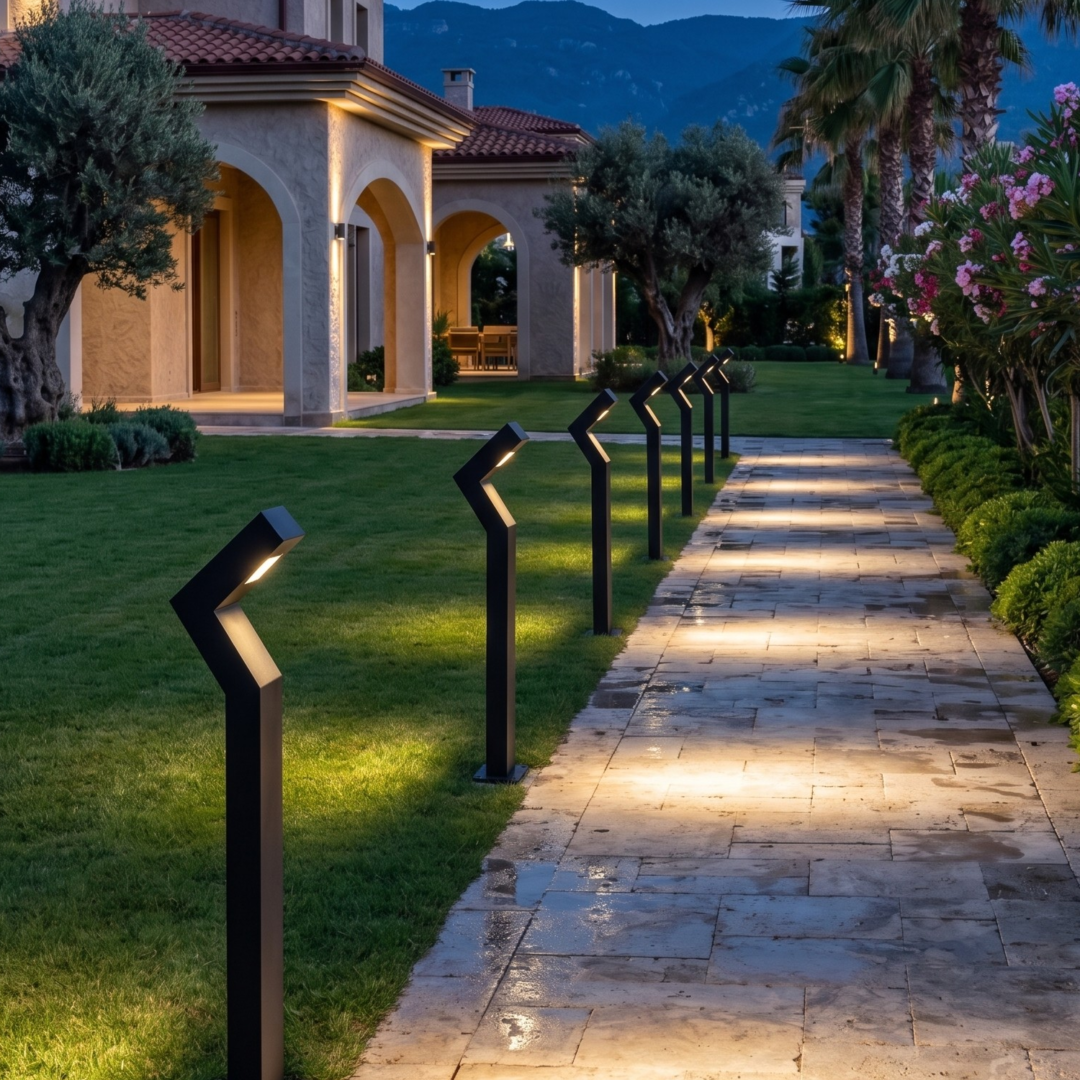
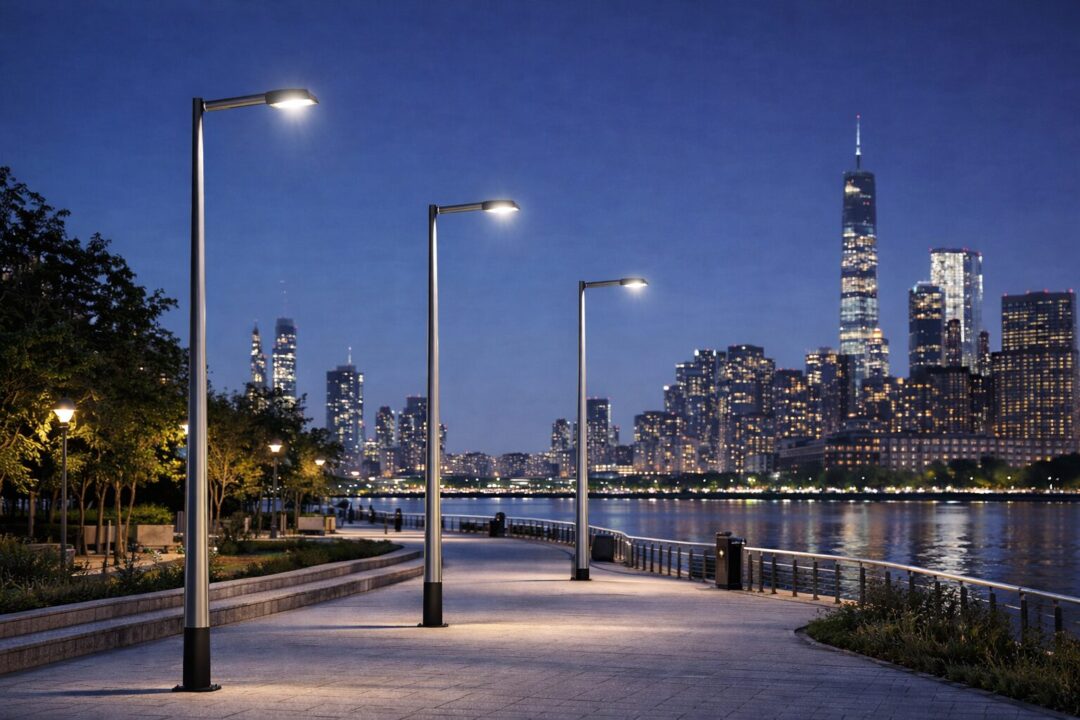
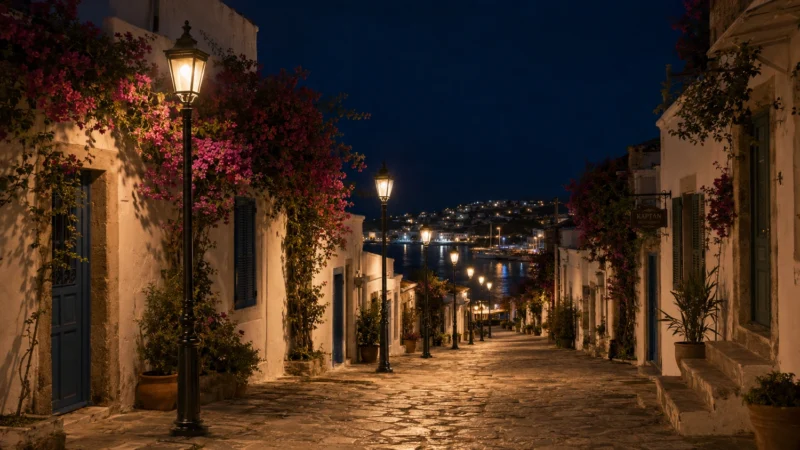
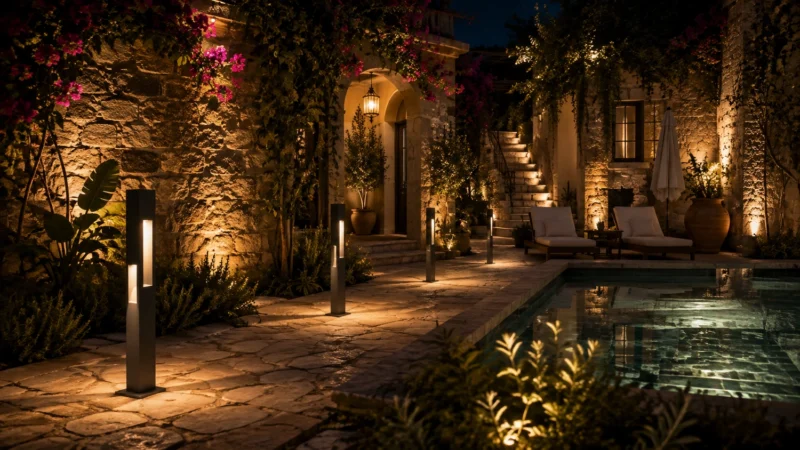
Fifty of Artay Lighting’s bollard and pole models are named after ancient settlements in Anatolia — Ephesus, Aphrodisias, Zeugma, Xanthos, Sardis, Troy and forty-four others. Six of those names belong to sites inscribed on the UNESCO World Heritage List.

This page is the complete list. It gives every model name, its product code, the ancient region the settlement belonged to, the modern Turkish province it lies in, and what the site is known for. If you are specifying an Artay product and want to know where its name comes from, or you are looking for a model and only remember the name, this is the index.

Why are Artay lighting models named after ancient cities?

Artay Lighting has cast aluminium in its own die-cast foundry in Istanbul since 1999, and what it casts is street and urban lighting: poles that stand in squares, promenades and old town centres, and bollards that light the paths through them. A lighting pole installed today will still be standing in the same square in thirty years.

Anatolia has a longer version of the same idea. The settlements these models are named after have stood on their sites for two thousand years and more — several of them still with their theatres, colonnaded streets and harbour walls in place. Naming a pole after Patara or Aspendos is a small acknowledgement of that: these are objects made for public space, in a country with a very long record of building public space.

The naming is also how the ranges are organised internally, which is why two families — bollards and urban poles — draw on two different sets of names.

Which Artay bollard models are named after ancient cities?

Thirty models in the bollard range carry the names of ancient settlements. Every name below links to the product page for that model.

ModelCodeAncient regionModern provinceKnown for
EphesusART 1903Ioniaİzmir (Selçuk)Library of Celsus and the Great Theatre
MiletART 1500IoniaAydın (Didim)Grid-planned harbour city with a great theatre
AssosART 1501TroadÇanakkale (Ayvacık)Archaic Doric temple; Aristotle taught here
TeosART 1502Ioniaİzmir (Seferihisar)Temple of Dionysos and the Dionysiac artists’ guild
SardesART 1503LydiaManisa (Salihli)Temple of Artemis, gold refinery, monumental synagogue
NysaART 1508Caria–Lydia borderAydın (Sultanhisar)Theatre with Dionysos friezes and a library building
LabrandaART 1509CariaMuğla (Milas)Sanctuary of Zeus with its andron banqueting halls
TroiaART 1510TroadÇanakkaleNine superimposed settlement layers
PergeART 1511PamphyliaAntalya (Aksu)Colonnaded street with a central water channel
KaunosART 1512CariaMuğla (Dalyan)Rock-cut temple-façade tombs above the delta
XanthosART 1513LyciaAntalya (Kaş)Lycian pillar tombs; capital of ancient Lycia
KnidosART 1514CariaMuğla (Datça)Twin harbours; home of Praxiteles’ Aphrodite
OlymposART 1515LyciaAntalya (Kumluca)Wooded harbour city beside the Chimaera flames
AphrodisiasART 1516CariaAydın (Karacasu)Sculpture school, stadium and Temple of Aphrodite
PataraART 1518LyciaAntalya (Kaş)Lycian League assembly hall and an ancient lighthouse
Herakleia under LatmosART 1519CariaMuğla (Milas)Hellenistic city walls on the shore of Lake Bafa
SideART 1521PamphyliaAntalya (Manavgat)Seaside Temple of Apollo and a Roman theatre
AnemuriumART 1526CiliciaMersin (Anamur)Necropolis of vaulted tombs on Anatolia’s southern cape
AlabandaART 1527CariaAydın (Çine)Bouleuterion and Temple of Apollo
MyraART 1528LyciaAntalya (Demre)Rock-cut tombs in the cliff above a Roman theatre
LimyraART 1530LyciaAntalya (Finike)Heroon of Perikle and hundreds of rock-cut tombs
DidymaART 1532IoniaAydın (Didim)Colossal Temple of Apollo and its oracle
TermessosART 1533PisidiaAntalya (Korkuteli)Mountain city Alexander chose not to besiege
ArykandaART 1535LyciaAntalya (Elmalı)Terraced city built up a steep mountainside
SagalassosART 1537PisidiaBurdur (Ağlasun)Re-erected Antonine nymphaeum high in the Taurus
HierapolisART 1538PhrygiaDenizli (Pamukkale)Travertine terraces and a vast necropolis
LetoonART 1539LyciaMuğla (Seydikemer)Sanctuary of Leto and the trilingual stele
PhaselisART 1542LyciaAntalya (Kemer)Three harbours linked by a monumental street
StratonikeiaART 1543CariaMuğla (Yatağan)Ancient city overlapping a still-inhabited village
EuromosART 1544CariaMuğla (Milas)Temple of Zeus Lepsynos, sixteen columns still standing
Bollard models named after ancient Anatolian settlements. The modern province is given with the district the site lies in.

Two further bollards take their names from Anatolia without naming a single city. Lykia (ART 1529) is named for the ancient region of Lycia rather than a city — the Teke peninsula across today’s Antalya and Muğla, homeland of Xanthos, Patara, Myra and the Lycian League. Antioch (ART 1531) is named for Antioch on the Orontes — today Antakya in Hatay, and the one outlier in this list, since the ancient city belonged to Syria rather than to Asia Minor.

Which Artay urban lighting pole models are named after ancient cities?

Eighteen models in the urban pole range are named for ancient settlements. These are the poles specified for squares, promenades, park paths and pedestrian streets.

ModelCodeAncient regionModern provinceKnown for
MylasaART 1310CariaMuğla (Milas)The Gümüşkesen tomb monument and the Baltalı gate
PinaraART 1315LyciaMuğla (Seydikemer)A cliff face honeycombed with rock tombs
TralleisART 1317Caria–Lydia borderAydınÜçgözler, three surviving vaults of a Roman gymnasium
SelgeART 1318PisidiaAntalya (Manavgat)Theatre above Köprülü Canyon and a Roman bridge
Magnesia on the MaeanderART 1322IoniaAydın (Germencik)Temple of Artemis Leukophryene by Hermogenes
LaodikeiaART 1323PhrygiaDenizliTwo theatres; one of the Seven Churches of Revelation
AspendosART 1324PamphyliaAntalya (Serik)One of the best-preserved Roman theatres in Anatolia
KibyraART 1325KibyratisBurdur (Gölhisar)Odeon with a Medusa mosaic floor and a vast stadium
SidymaART 1328LyciaMuğla (Seydikemer)Roman tombs standing among the houses of a village
OinoandaART 1330LyciaMuğla (Seydikemer)Diogenes’ Epicurean text, the largest known Greek inscription
AnazarbosART 1332CiliciaAdana (Kozan)A long colonnaded street below a rock-cut fortress
KorykosART 1335CiliciaMersin (Erdemli)Twin castles, one on land and one on an islet
ElaiussaART 1337CiliciaMersin (Erdemli)A former island city with a theatre and grave avenue
ArsameiaART 1338CommageneAdıyaman (Kâhta)Relief of Antiochos I greeting Herakles
AndriakeART 1345LyciaAntalya (Demre)Harbour of Myra; Hadrian’s granary still stands
SimenaART 1346LyciaAntalya (Demre)Castle above the sunken ruins of Kekova
KyaneaiART 1359LyciaAntalya (Kaş)A dense field of Lycian sarcophagi on a hilltop
ZeugmaART 1362CommageneGaziantep (Nizip)Roman villa mosaics, including the Gypsy Girl
Urban lighting pole models named after ancient Anatolian settlements.

One entry needs a qualification. Andriake (ART 1345) was not an independent city but the harbour of Myra, about five kilometres from it, at Çayağzı in Demre. Hadrian’s granary still stands there and now houses the Museum of Lycian Civilizations.

Which of these are UNESCO World Heritage Sites?

Six of the model names belong to properties inscribed on the UNESCO World Heritage List, across seven models — Xanthos and Letoon are the two halves of a single inscribed property, and Artay makes a bollard named after each.

World Heritage propertyInscribedArtay model
Hierapolis-Pamukkale1988Hierapolis (ART 1538)
Xanthos-Letoon1988Xanthos (ART 1513) and Letoon (ART 1539)
Archaeological Site of Troy1998Troia (ART 1510)
Ephesus2015Ephesus (ART 1903)
Aphrodisias2017Aphrodisias (ART 1516)
Sardis and the Lydian Tumuli of Bin Tepe2025Sardes (ART 1503)
Sardis was inscribed on 12 July 2025 as Türkiye’s twenty-second World Heritage property. Source: UNESCO World Heritage Centre.

A number of the other settlements in the list appear on Türkiye’s Tentative List, the register of properties a country intends to nominate. That list changes, so it is not reproduced here; the UNESCO World Heritage Centre publishes the current version.

Where are these sites?

Lycia supplies the largest group — Xanthos, Letoon, Patara, Myra, Andriake, Simena, Kyaneai, Limyra, Olympos, Phaselis, Pinara, Sidyma, Oinoanda and Arykanda, spread across Antalya and Muğla. Caria comes next, with Knidos, Kaunos, Labranda, Euromos, Stratonikeia, Alabanda, Aphrodisias, Mylasa and Herakleia in Muğla and Aydın.

Ionia contributes Ephesus, Miletus, Didyma, Teos and Magnesia; Pamphylia gives Perge, Aspendos and Side; Pisidia gives Termessos, Sagalassos and Selge; and Cilicia gives Anemurium, Anazarbos, Korykos and Elaiussa Sebaste in Mersin and Adana. Phrygia supplies Hierapolis and Laodikeia in Denizli, Lydia supplies Sardis in Manisa, and the Troad supplies Troy and Assos in Çanakkale. Two names come from further east, in Commagene on the Euphrates: Arsameia in Adıyaman and Zeugma in Gaziantep.

Can these models be made in a form that is not in the catalogue?

Yes. The aluminium bodies in both families are cast rather than fabricated, in Artay’s own die-cast foundry in Başakşehir, Istanbul, in EN AC-46000 (AlSi9Cu3) alloy. Casting means the shape comes from a die, so a form that does not yet exist can be made — a base carrying a municipality’s emblem, a column profile matched to a facade, a pole family unique to one city.

A new die is cut in Artay’s own tool shop in four to six weeks; a first delivery follows seven to nine weeks after drawing approval, and repeat orders on an existing die ship in three weeks. Changing only the dimensions, finish or colour of an existing model needs no die and carries no tooling cost at all.

Artay luminaires are CE marked; manufacturing is certified to TSE under TS EN 40 for lighting columns and to ISO 9001 for quality management. The company exports to more than 33 countries and manufactures under other brands’ names as OEM and private label. Send a drawing, a 3D model, a photograph or a written specification to info@artaylighting.com.

Related guides

Urban Lighting: A Specifier’s Guide

Urban lighting is not road lighting with nicer poles. Road lighting is solved by a calculation: illuminance, uniformity and glare on a carriageway. Urban lighting has to do that and then answer questions a calculation cannot — how the street looks by day, whether people feel safe crossing the square at eleven at night, what the light does to the trees and the residents’ bedrooms, and whether the town still owns spare parts in twelve years.

This guide is for the person writing the specification: the municipal engineer, the lighting designer, the landscape architect, the contractor pricing a public-realm package. It covers what urban lighting includes, the standards that govern it, the decisions that are expensive to reverse, and where project-specific manufacturing changes the answer.

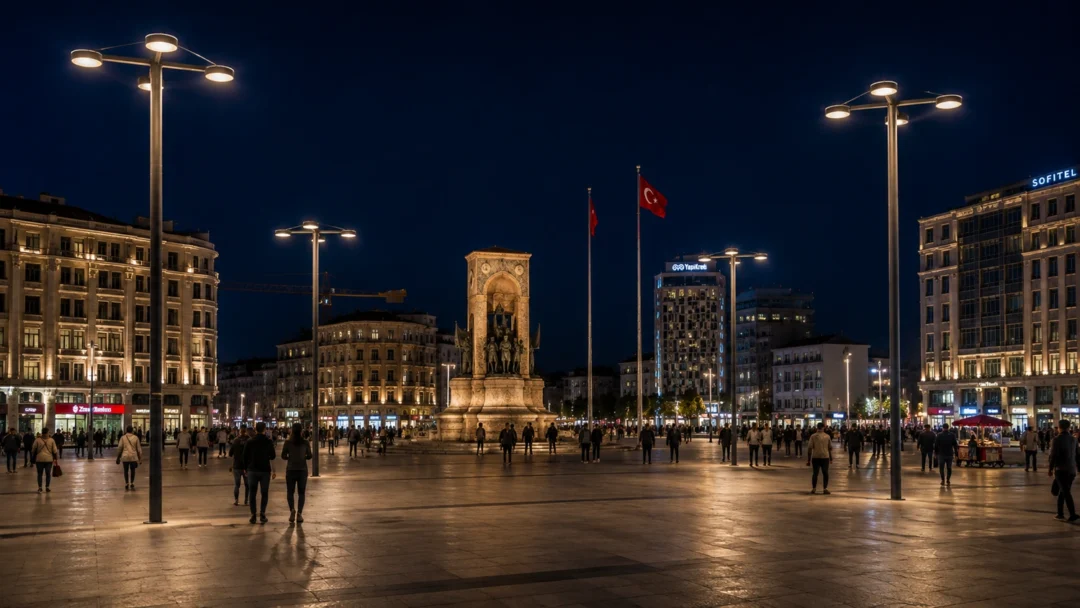
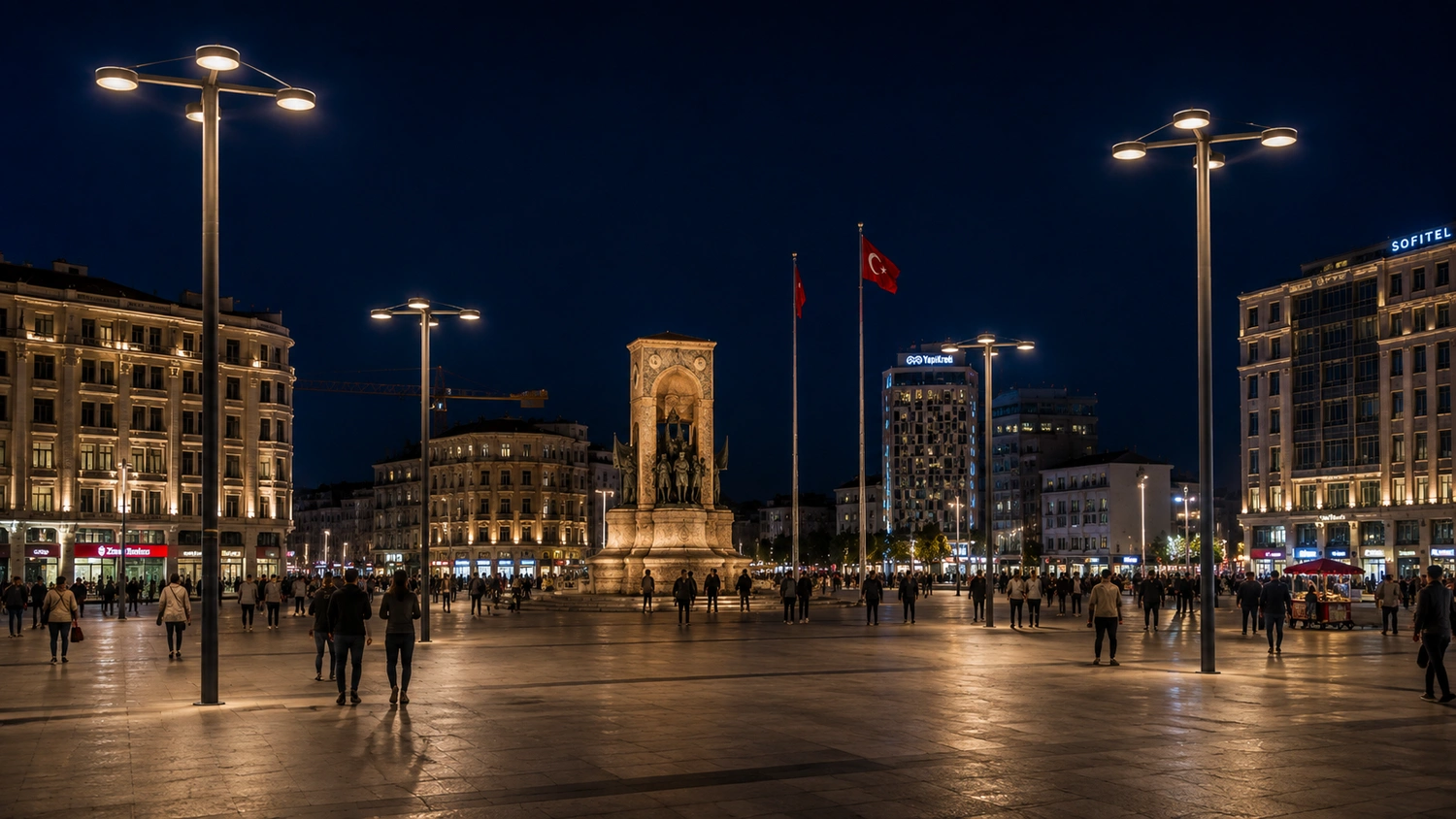
Artay Zeugma ART-1362 urban lighting poles installed on a city main square
Zeugma ART-1362 urban lighting poles on a city main square. View the product.

What does urban lighting actually cover?

Urban lighting is the lighting of the public realm. In practice a public-realm package usually contains five product families, and they are specified against different criteria:

  • Street and road lighting — poles from 6 to 12 m with road luminaires, specified to a lighting class.
  • Pedestrian and amenity lighting — 3 to 5 m poles in squares, promenades and residential streets, where vertical illuminance on faces matters as much as horizontal levels on the ground.
  • Bollards and low-level lighting — 0.6 to 1.2 m, for paths, landscape and building approaches, where glare control at eye level is the whole point.
  • Decorative and architectural poles — the same lighting job, but the pole is part of the streetscape identity and is judged by daylight as much as at night.
  • Park and landscape lighting — the family with the strongest ecological constraints, and the one most often over-lit.

Mixing families across one district without a coherent pole strategy is the most common reason a finished scheme looks unresolved. Deciding early that one pole family will carry every fitting — road, amenity, decorative — is worth more than any individual product choice.

Which standards govern urban lighting?

Three sets, and they answer different questions.

Lighting performance: the EN 13201 series. EN 13201-2 sets the performance requirements by lighting class — M classes for motorised traffic, C classes for conflict areas such as junctions and roundabouts, P classes for pedestrian and low-speed areas. EN 13201-3 covers how the calculation is performed, EN 13201-4 how the installation is measured once built, and EN 13201-5 energy performance indicators. The class is chosen from the road’s function, speed and conflict density; it is not a preference.

The pole: the EN 40 series. EN 40-2 for dimensions, EN 40-3-1 for characteristic loads, EN 40-3-3 for verification by calculation, EN 40-5 for steel columns and EN 40-6 for aluminium columns. Hot-dip galvanizing is covered by EN ISO 1461. Where poles sit close to traffic, EN 12767 covers passive safety — whether the pole is designed to absorb or yield in an impact.

The luminaire: EN 60598-2-3 for road and street lighting luminaires, plus the IP and IK ratings. IP66 and IK08 are common baselines in the public realm; IK10 where vandalism is a real risk.

Artay luminaires are CE marked, and our manufacturing is certified to TSE under TS EN 40 for lighting columns and to ISO 9001 for quality management. For Turkish municipal work, TEDAS type-project approval is the document the tender will ask for.

Obtrusive light: the requirement that arrives late and costs the most

Light that leaves the site is the fastest-growing source of objection to urban schemes, and it is usually raised after the design is fixed. CIE 150 sets the framework, using environmental zones from E0 (intrinsically dark, such as a national park) through E1 and E2 (rural and low-district brightness) to E3 and E4 (suburban and city centre). Each zone has limits on upward light, on light trespass into windows, and on luminaire intensity toward observers.

Three decisions carry most of the outcome. Optical control: a full cut-off distribution with an upward light ratio of zero puts light on the ground rather than the sky, and costs nothing extra to specify. Mounting height and tilt: tilting a flat-glass luminaire to gain reach is the single most common way a compliant product becomes a non-compliant installation. Colour temperature: warmer sources around 3000K, and increasingly 2700K near habitats, reduce blue content — which matters for sky glow, for insects and for residents, and is now written into many municipal specifications by default.

None of these are luxury items. Getting them wrong produces complaints, and complaints produce retrofits.

Choosing the pole: the decision that outlives the luminaire

Artay Kyaneai ART-1359 urban lighting pole on a pedestrian promenade
Kyaneai ART-1359 on an urban pedestrian promenade — a 4–6 m scale where the pole is seen close up. View the product.

LED modules and drivers will be replaced once or twice in the life of a scheme. The pole will not. It is the longest-lived component in the package and it carries the visual identity of the street, so it deserves more specification attention than it usually gets.

Material is decided by environment before aesthetics. Hot-dip galvanized steel for road poles inland; aluminium at the coast, at ground level and wherever the shape matters. Bollards are aluminium — we do not make them from galvanized steel at all, because ground level is the harshest position on any site. The full comparison is in our guide to lighting pole materials, including what happens at the joint where steel meets aluminium.

Type and height follow the lighting class and the street section. Our guide to street lighting pole types covers conical and cylindrical steel, extruded profile, die-cast aluminium and bollards, with the height bands each is normally specified in.

Finish is where long-term appearance is won or lost. Every aluminium part we produce goes through a chromate conversion pre-treatment before electrostatic powder coating. Ask every supplier which conversion coating they use, not just which paint — it is the invisible step that decides how a bollard looks in year five.

Can a city have its own pole?

Artay Anazarbos ART-1332 urban lighting pole in a historic town square
Anazarbos ART-1332 in a historic town square — where the form of the pole is part of the streetscape. View the product.

Yes, and this is where urban lighting separates from road lighting most clearly. A district that wants a recognisable identity does not get it from a catalogue everyone else buys from.

Two levels are worth distinguishing, because suppliers blur them. Changing dimensions — height, diameter, arm length, door position, base plate pattern, RAL colour — is a fabrication change. It carries no tooling cost and no minimum order, and if your specification differs from a catalogue only in numbers you should not be paying for a mould.

Changing the form — a base carrying the municipality’s emblem, a fluted column, a housing profile matched to a heritage facade — has to be cast, and casting needs a die. Artay has cast aluminium in its own die-cast foundry in Istanbul since 1999, in EN AC-46000 (AlSi9Cu3) alloy, so this is routine work rather than a special request. Send a technical drawing, a 3D model, or a photograph of a form you have seen in another city.

The figures, which almost nobody in this market publishes: a new mould is a one-time cost of 4,000-50,000 USD depending on part size and stays reserved for you; minimum order on a new mould is 1,000-2,000 units; the die takes 4-6 weeks and series production a further 3 weeks, so first delivery lands 7-9 weeks after drawing approval. Every repeat order on that mould ships in 3 weeks with no further mould charge and no minimum — which is what makes a bespoke pole family viable for a city that will keep extending it for a decade.

Specifying for the twelfth year, not the first

Urban lighting is bought once and maintained for decades, so the questions that decide total cost are rarely the ones in the tender.

Will the parts still exist? A custom mould that stays reserved means the twentieth pole matches the first one, years later. A catalogue product from a supplier who changes range every three years does not give you that.

Can one person replace a module? Toolless access, a plug-in driver and a documented spare-part list turn a two-hour job into a fifteen-minute one, multiplied by every fitting in the district.

What is actually warranted? Ask for the coating warranty stated separately for coastal and inland conditions, with the film thickness, and for the LED lifetime as an L-value at a stated ambient temperature rather than a single hour figure.

Who did the wind-load calculation? EN 40-3-1 and EN 40-3-3, covering the pole, the base plate and the foundation anchors together. If the answer is vague, the calculation may not exist.

Working with Artay on an urban lighting project

We manufacture street lighting poles, decorative and urban poles, LED street luminaires and bollard lighting for municipalities, infrastructure contractors, architects, lighting designers and distributors, and we export to more than 33 countries. Housings and cast pole components are produced in our own die-cast foundry in Istanbul; steel shafts are fabricated and hot-dip galvanized to EN ISO 1461; aluminium parts are chromate pre-treated before powder coating.

We do not make high-mast poles, and for a standard galvanized road pole in volume a dedicated steel fabricator will often beat us on price. Where we are the right supplier is when a project needs a form that does not exist yet, or a single supplier for poles, luminaires and bollards that have to look like one family.

Send a drawing, a 3D model, a photograph or a written specification to info@artaylighting.com and we will return a technical drawing with a wind-load calculation.

Related guides

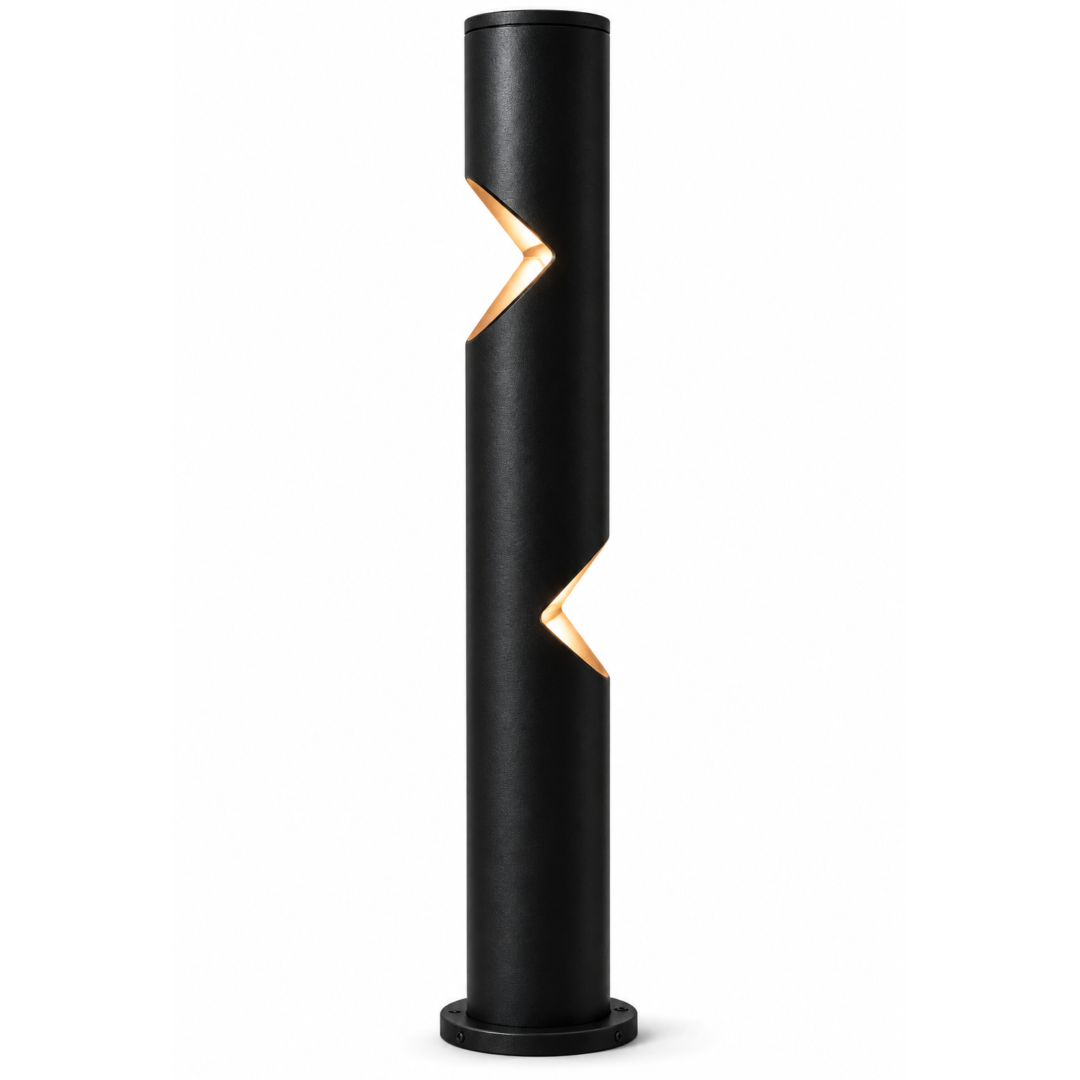
Specifying bollards? Bollard lights: how to choose and specify them — why they are aluminium and not galvanized steel, glare control at eye level, and which standard actually applies.

Modern outdoor lighting poles: LED-Ready Designs, Materials, and How to Select Poles for Streets, Parks & Developments

Modern outdoor lighting poles are built for today’s projects: clean architectural lines, reliable outdoor durability, and seamless compatibility with LED luminaires. They’re used in streets, parks, promenades, campuses, residential communities, and commercial landscapes where the pole must look premium in daylight and perform perfectly at night.

This guide explains what makes an outdoor pole “modern,” which materials and coatings last longest, the key specs to check, and a simple checklist to select modern poles without costly mistakes.

What makes outdoor lighting poles “modern”?

“Modern” in outdoor lighting isn’t only a visual style—it’s a combination of form, engineering, and LED compatibility. Modern outdoor poles typically feature:

  • Minimal silhouettes: tapered conical, clean round, or crisp octagonal profiles
  • LED-ready integration: designed for modern luminaires and mounting standards
  • Cleaner details: tidy access doors, hidden cable routing, and refined base proportions
  • Project consistency: a family of matched heights, arms, and finishes across the site
  • Smart-ready options: support for controllers, sensors, cameras, or banners when needed

Where modern outdoor lighting poles are used

  • Urban streets and boulevards
  • Parks, pathways, and waterfront promenades
  • Residential communities and mixed-use developments
  • Commercial zones, parking areas, and business districts
  • Campuses, hospitals, and public institutions
  • Industrial sites where a clean, durable standard is required

Types of modern outdoor lighting poles

The “best” pole type depends on the lighting plan, area scale, wind exposure, and luminaire requirements. Here are the most common modern configurations:

1) Tapered conical modern poles

  • Most popular for streets and large outdoor projects
  • Strong structural behavior under wind load
  • Premium, minimal appearance

2) Straight round or octagonal poles

  • Sharper architectural expression than conical forms
  • Often used in campuses, plazas, and modern developments

3) Single-arm vs. double-arm modern poles

  • Single-arm: cleaner look, common for streets and one-side illumination
  • Double-arm: wider roads, medians, and boulevard projects

4) Smart-ready modern poles

  • Supports accessories (controllers, sensors, cameras, banners)
  • Requires cleaner wiring paths and service access

Recommended heights (practical ranges)

Use these as a starting point—final heights should follow photometrics and spacing design:

  • 3–5 m: pedestrian zones, parks, pathways
  • 6–8 m: residential streets, smaller roads, community areas
  • 9–12 m: boulevards, main roads, larger open spaces, parking areas and large commercial or industrial zones

Materials and durability: what to choose

Galvanized steel (hot-dip galvanized)

  • Strong and cost-effective for modern outdoor projects
  • Excellent corrosion resistance when galvanizing is done correctly
  • Ideal base for powder coating (premium finishes)

Aluminum

  • Lightweight and naturally corrosion resistant
  • Often selected for premium landscapes and easier handling
  • Supports refined finishing and clean surface appearance

Key point: long-term performance depends on coating quality and surface preparation as much as the metal itself.

Coatings & finishes for modern outdoor poles

Modern poles often use matte or satin powder-coated finishes for a premium look. To keep that look outdoors, the finish system must match the environment:

  • Hot-dip galvanizing as base protection
  • Powder coating for color + extra durability
  • Multi-layer coating systems for harsh climates (coastal/industrial)

Define in your spec:

  • Color (RAL code)
  • Texture (matte / satin)
  • UV resistance expectations
  • Touch-up and maintenance approach

Key specifications to check before you buy

1) Wind load and structural compliance

Modern poles can be slimmer and taller, so wind engineering is critical. Confirm structural calculations for the project location.

2) Base plate, anchor bolts, and foundation details

  • Foundation must match wind load + height + luminaire weight
  • Ask for anchor bolt pattern and base dimensions

3) Arm/bracket type and outreach

  • Outreach affects beam distribution and glare control
  • Match pole arms to luminaire photometrics

4) Access door, wiring, and grounding

  • Service access should be durable and easy for maintenance teams
  • Cable routing and grounding provision must be clear

5) Luminaire compatibility

  • Spigot/top diameter compatibility
  • Mounting method and tilt adjustability if needed

How to choose modern outdoor lighting poles (simple checklist)

  1. Define the area type (street, park, development, parking)
  2. Select height range based on coverage and spacing
  3. Choose pole profile (conical/round/octagonal) for project style
  4. Pick arm/bracket type and outreach
  5. Select material + coating system for the climate
  6. Confirm wind load and foundation requirements
  7. Standardize a pole family for consistent design and maintenance

Browse modern outdoor pole models

If your project is street-focused, browse models in our Street Lighting category and select a modern pole family that matches your target heights and bracket style.

Need help selecting modern outdoor lighting poles?

Share your project location, target heights, road widths, wind exposure level, and the luminaire model. We can recommend a modern pole family and finish system designed for long-term outdoor performance.

Related pole guides

Specifying bollards? Bollard lights: how to choose and specify them — why they are aluminium and not galvanized steel, glare control at eye level, and which standard actually applies.

Steel or aluminium? Lighting pole materials: galvanized steel or aluminium — coastal performance, chromate pre-treatment, and what happens at the joint where the two metals meet.

Not sure which type you need? Street lighting pole types: how to choose the right one — steel, extruded aluminium, die-cast and bollards compared on height, corrosion environment, EN 40 standards and what changes when the form is made to your own drawing.

Choosing a supplier? Street lighting pole manufacturers in Turkey: how to compare them — what nine Turkish manufacturers publish about casting, standards, certificates and lead times, and the five questions worth asking every supplier.

All of these poles are produced by the same manufacturer: Artay casts housings and pole components in its own die-cast foundry in Istanbul, which is why a form that exists in no catalogue can still be produced. See the LED lighting fixtures manufacturer in Istanbul behind these guides, or browse the full outdoor and street lighting product range.

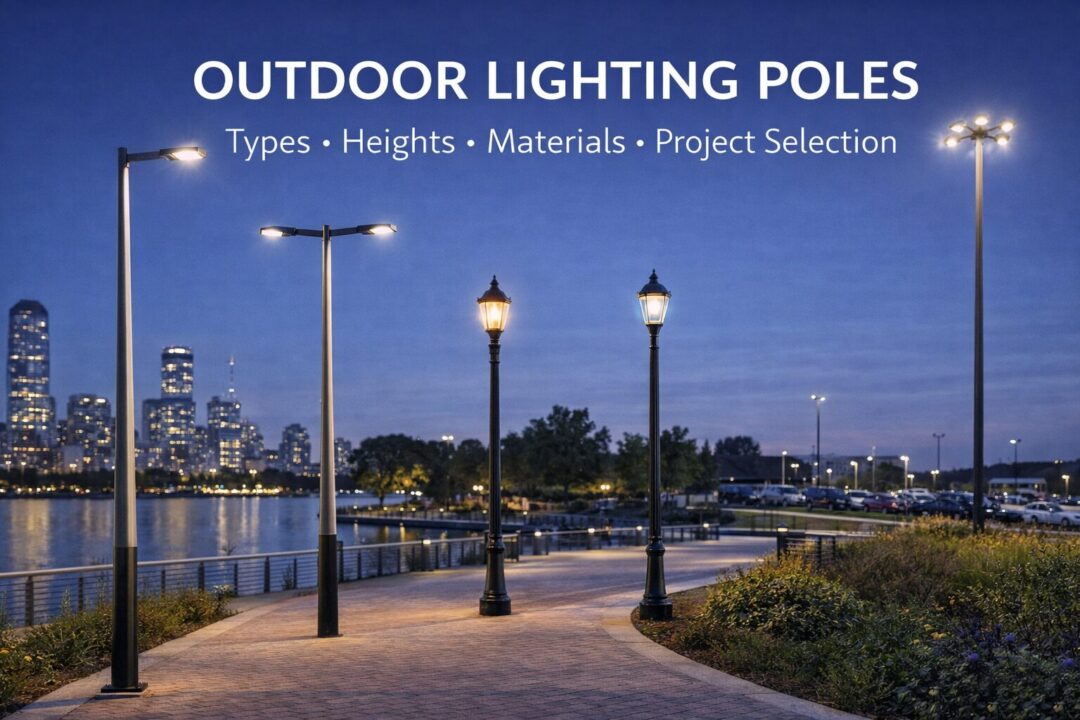
Outdoor lighting poles: Types, Heights, Materials, and How to Choose the Right Pole for Any Outdoor Project

Outdoor lighting poles are the backbone of safe and reliable outdoor illumination. Whether it’s a city street, a park path, a parking area, an industrial site, or a residential community, the pole is the structural system that carries the luminaire, protects wiring, and survives weather year after year.

In this guide, we’ll cover outdoor pole types, typical heights, materials and coatings, essential technical specifications, and a simple checklist to help you choose correctly.

What are outdoor lighting poles used for?

Outdoor poles are used anywhere you need consistent night-time visibility, safety, and long-term durability:

  • Streets, boulevards, and highways (street lighting)
  • Parks, promenades, and walking paths
  • Parking lots and commercial zones
  • Residential communities and campuses
  • Ports, logistics areas, and industrial zones
  • Sports facilities and open public spaces

Types of outdoor lighting poles

Choosing the right type depends on area size, wind exposure, luminaire weight, and the lighting plan.

1) Street lighting poles

  • Designed for roads and vehicle-focused illumination
  • Commonly single-arm or double-arm configurations
  • Height selection is tied to road width and spacing

Browse models in our Street Lighting category.

2) Park & pathway poles

  • Lower heights for pedestrian comfort and visual harmony
  • Often paired with glare-controlled optics
  • Chosen for uniform light distribution without harsh hotspots

3) Parking lot poles

  • Higher mounting to cover wide areas with fewer poles
  • Requires careful wind and foundation design
  • Often uses stronger luminaires and wider optics

4) Decorative outdoor poles

  • Selected for plazas, promenades, and premium landscapes
  • Appearance is part of the project identity
  • Must still meet structural and durability requirements

Typical heights for outdoor lighting poles

Use these ranges as a practical baseline (final selection should follow the lighting design and photometrics):

  • 3–5 m: parks, pedestrian zones, pathways, landscaped areas
  • 6–8 m: residential streets, smaller roads, community areas
  • 9–12 m: boulevards, main roads, wider streets and open areas, large commercial zones, parking areas and industrial sites

Materials: galvanized steel vs. aluminum

Galvanized steel (hot-dip galvanized)

  • Strong, reliable, and cost-effective for outdoor projects
  • Excellent base corrosion protection when properly galvanized
  • Compatible with powder coating for premium finishes

Aluminum

  • Naturally corrosion resistant and lightweight
  • Useful where transport/handling advantages matter
  • Common in premium and decorative outdoor installations

Real durability is not just the metal: it’s also surface preparation, galvanizing quality, and the coating system used for the environment.

Coatings & finishes for outdoor environments

Outdoor poles face UV exposure, rain, salt, and abrasion. Choose a finish system that matches the climate and project expectations.

  • Hot-dip galvanizing: core protection against corrosion
  • Powder coating: aesthetic finish + added protection
  • Multi-layer paint systems: recommended for harsh climates (coastal/industrial)

What to specify:

  • Color (RAL code if needed)
  • Surface texture (matte / satin)
  • UV resistance expectations
  • Maintenance/touch-up approach for long-term appearance

Key specifications to check before you buy

1) Wind load and structural calculation

Wind engineering matters more as pole height and arm outreach increase. Confirm structural compliance for the project location.

2) Base plate, anchor bolts, and foundation detail

  • Foundation must match wind load + height + luminaire weight
  • Ask for anchor bolt pattern and base dimensions

3) Arm/bracket type and outreach

  • Outreach affects beam distribution and glare control
  • Match pole geometry to luminaire photometrics

4) Access door, wiring, and grounding

  • Serviceability matters (door quality, position, and size)
  • Safe cable routing and grounding provision should be clear

5) Luminaire compatibility

  • Spigot/top diameter compatibility
  • Mounting method and tilt adjustability if needed

How to choose outdoor lighting poles (simple checklist)

  1. Define the area type (street, park, parking, industrial)
  2. Select target height range based on coverage and spacing
  3. Choose arm/bracket type and outreach
  4. Pick material + coating system based on climate
  5. Confirm wind load and foundation requirements
  6. Lock luminaire compatibility and service access
  7. Standardize models for consistency and easier maintenance

Common mistakes

  • Choosing height without lighting design: leads to poor uniformity or over-lighting
  • Ignoring wind exposure: taller poles need proper engineering
  • Weak coating choice: outdoor poles can age badly if the finish system is wrong

Need help selecting outdoor lighting poles?

Share your project location, target area type, preferred heights, and luminaire details. We can recommend a pole family and coating system suitable for long-term outdoor performance.

Related pole guides

Specifying bollards? Bollard lights: how to choose and specify them — why they are aluminium and not galvanized steel, glare control at eye level, and which standard actually applies.

Steel or aluminium? Lighting pole materials: galvanized steel or aluminium — coastal performance, chromate pre-treatment, and what happens at the joint where the two metals meet.

Not sure which type you need? Street lighting pole types: how to choose the right one — steel, extruded aluminium, die-cast and bollards compared on height, corrosion environment, EN 40 standards and what changes when the form is made to your own drawing.

Choosing a supplier? Street lighting pole manufacturers in Turkey: how to compare them — what nine Turkish manufacturers publish about casting, standards, certificates and lead times, and the five questions worth asking every supplier.

All of these poles are produced by the same manufacturer: Artay casts housings and pole components in its own die-cast foundry in Istanbul, which is why a form that exists in no catalogue can still be produced. See the LED lighting fixtures manufacturer in Istanbul behind these guides, or browse the full outdoor and street lighting product range.

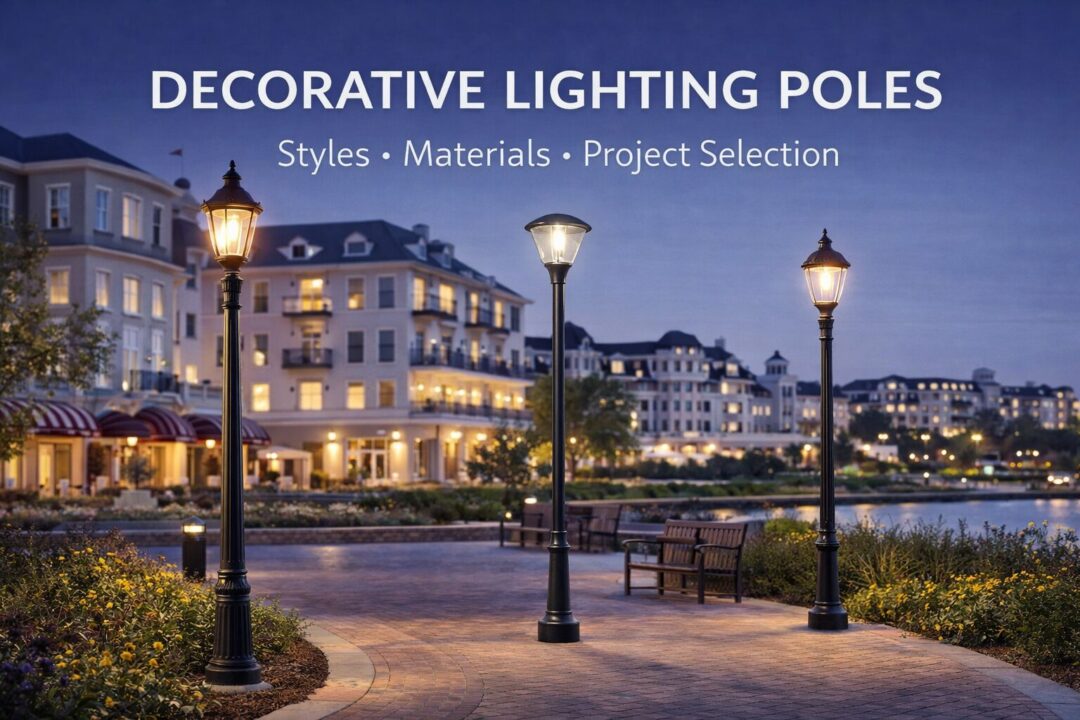
Decorative lighting poles: Styles, Materials, and How to Choose Poles for Parks, Streets & Plazas

Decorative lighting poles are chosen when the pole must do more than “hold a luminaire.” In parks, promenades, historic streets, boutique districts, and landscaped communities, the pole becomes part of the architecture. The goal is simple: visual character in daylight, reliable illumination at night, and durability for years of outdoor exposure.

In this guide, we’ll cover the main decorative styles, best materials and finishes, key technical specs to check, and a practical selection checklist so your project looks cohesive and performs correctly.

What are decorative lighting poles?

Decorative poles are outdoor lighting structures designed with aesthetics as a primary requirement—without sacrificing structural safety and corrosion resistance. They commonly feature classic silhouettes, ornamental details, and styled brackets that fit specific environments such as heritage areas or premium landscapes.

Where decorative lighting poles are used

  • Historic streets & heritage zones
  • Parks, gardens, and promenades
  • Town squares and public plazas
  • Hotels, resorts, and waterfronts
  • Residential communities and premium landscapes
  • Retail streets and pedestrian-focused districts

In these areas, the “look” is not optional. The pole must match paving, benches, signage, and the overall architectural language.

Popular styles of decorative lighting poles

1) Classic / heritage poles

  • Traditional profiles with ornamental bases and classic brackets
  • Works well in old-town streets, heritage promenades, and municipal squares

2) Contemporary decorative poles

  • Cleaner lines than heritage poles, but still “designed” and premium
  • Common in modern plazas, mixed-use developments, and commercial landscapes

3) Lantern-style and globe-style decorative poles

  • Creates a recognizable “street identity” for pedestrian zones
  • Important to control glare and light spill with proper optics/shields

4) Single vs. multi-luminaire decorative poles

  • Single-head: cleaner look, easier maintenance
  • Multi-head: iconic appearance for squares and entrances (requires careful photometrics)

Materials: what works best for decorative poles

Galvanized steel

  • Strong and cost-effective for municipal and public projects
  • Excellent corrosion protection when hot-dip galvanized
  • Ideal base for powder coating (decorative color finishes)

Aluminum

  • Naturally corrosion resistant and lighter to handle
  • Common in premium landscapes and coastal-friendly selections
  • Supports refined detailing and smoother surface finishing

Reality check: A decorative pole is only as good as its coating system and manufacturing quality. If the base preparation is weak, the most beautiful pole will age poorly outdoors.

Finishes & colors: the “project identity” layer

Decorative poles are often specified in signature colors to match a district brand or architectural palette. The finish must resist UV exposure, moisture, and abrasion.

  • Powder coating (most common for decorative color finishes)
  • Hot-dip galvanizing as base protection
  • Multi-layer coating systems for harsh climates (coastal/industrial)

What to define in your spec:

  • Color code (commonly RAL)
  • Surface texture (matte / satin)
  • UV resistance expectations
  • Touch-up and maintenance approach

Key specifications to check before you buy

1) Pole height (match the area type)

  • 3–5 m: pedestrian areas, parks, paths
  • 6–8 m: streets, residential roads
  • 9–12 m: boulevards and wider roads (less common for “ornamental” styles)

2) Bracket style and outreach

  • Bracket outreach affects light distribution and uniformity
  • Choose bracket style that matches both aesthetics and photometrics

3) Glare control and optics

  • Lantern/globe designs can cause glare if optics are poor
  • Ask for shield/optical options for pedestrian comfort

4) Base design and anchor system

  • Decorative bases should still meet structural requirements
  • Confirm base plate, anchor bolt pattern, and foundation details

5) Service access and wiring

  • Access door quality matters for long-term maintenance
  • Ensure safe cable routing and grounding provision

How to choose decorative lighting poles (simple checklist)

  1. Define the environment style (heritage, modern plaza, resort, park)
  2. Select pole family (same silhouette across the whole area)
  3. Choose height based on mounting and spacing
  4. Confirm bracket style + outreach with luminaire photometrics
  5. Pick material + coating system based on climate
  6. Lock the finish color and texture (project identity)
  7. Standardize spare parts and maintenance access

Common mistakes

  • Choosing style without photometrics: beautiful poles can still produce poor lighting
  • Ignoring glare: decorative optics must protect pedestrian comfort
  • Inconsistent families: mixing silhouettes makes the streetscape look random
  • Weak coatings: decorative colors fade and chip if the system is not specified properly

Need help selecting decorative lighting poles?

Share your project location, target heights, area type (park/street/plaza), and preferred luminaire style. We can recommend a decorative pole family and finish system that matches both aesthetics and durability requirements.

Browse outdoor models in our Street Lighting category and select a consistent pole family for your project.

Related pole guides

Specifying bollards? Bollard lights: how to choose and specify them — why they are aluminium and not galvanized steel, glare control at eye level, and which standard actually applies.

Steel or aluminium? Lighting pole materials: galvanized steel or aluminium — coastal performance, chromate pre-treatment, and what happens at the joint where the two metals meet.

Not sure which type you need? Street lighting pole types: how to choose the right one — steel, extruded aluminium, die-cast and bollards compared on height, corrosion environment, EN 40 standards and what changes when the form is made to your own drawing.

Choosing a supplier? Street lighting pole manufacturers in Turkey: how to compare them — what nine Turkish manufacturers publish about casting, standards, certificates and lead times, and the five questions worth asking every supplier.

All of these poles are produced by the same manufacturer: Artay casts housings and pole components in its own die-cast foundry in Istanbul, which is why a form that exists in no catalogue can still be produced. See the LED lighting fixtures manufacturer in Istanbul behind these guides, or browse the full outdoor and street lighting product range.

Modern lighting poles: Design, Materials, and How to Choose the Right Pole for Streets & Public Spaces

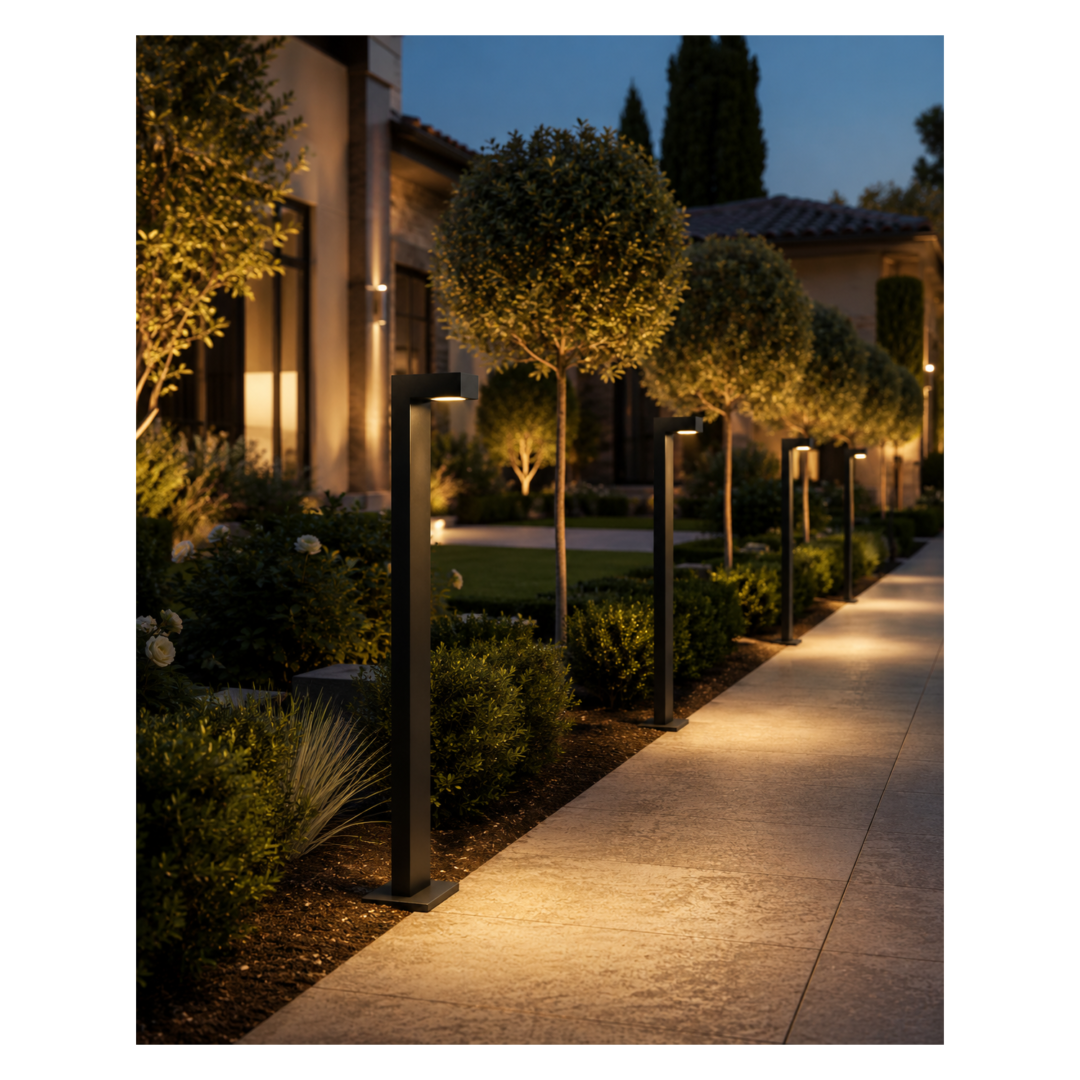
Modern Artay lighting poles installed along an urban street

A modern lighting pole is a structural component first and a design object second. It carries a luminaire on a lever arm in wind, stands in the same square for thirty years, and has to be verified to EN 40 before any of its styling matters. The design question — clean lines, concealed wiring, a form that suits the architecture — is real, but it is decided after the structure is settled, not instead of it.

Artay Lighting has cast aluminium in its own die-cast foundry in Istanbul since 1999 and fabricates steel and extruded aluminium poles alongside it, exporting to more than 33 countries. This guide covers what makes a pole modern, which materials and finishes matter, the standards that govern the structure, and what it costs and takes to have a pole made in a form that is not in anyone’s catalogue.

In this guide, we’ll break down what makes a pole “modern,” which materials and finishes matter most, what technical specs to check, and how to select the right pole for your project without guessing.

What makes a pole “modern” in lighting design?

“Modern” is not just a style label. In outdoor lighting, modern typically means:

  • Clean geometry: tapered round/conical, octagonal, or minimal square profiles
  • Integrated look: sleek brackets, hidden cable paths, tidy access doors
  • Material honesty: galvanized steel or aluminum with purposeful finishing
  • Performance compatibility: designed for modern LED luminaires and optics
  • Project consistency: a coherent family of heights, arms, and finishes across an area

A modern pole is intended to look intentional in daylight and perform reliably at night.

Where modern lighting poles are used

Modern poles are chosen when the environment is architectural, curated, or high-visibility:

  • Urban streets & boulevards
  • Public parks & walking paths
  • Residential communities & gated sites
  • Commercial zones, malls, and business districts
  • Campuses and hospitals
  • Airports / logistics zones (where durable, standardized solutions are needed)

Types of modern lighting poles

Even “modern” has categories. Choosing the right type is mostly about height, wind load, and the luminaires you plan to mount.

1) Tapered conical poles (most common)

  • Minimal silhouette
  • Strong structural behavior under wind load
  • Ideal for streets and large open areas

2) Straight round or octagonal poles

  • Sharper architectural expression
  • Often preferred for modern campuses, plazas, and promenades

3) Single-arm vs. double-arm modern poles

  • Single-arm: streets, one-side illumination, cleaner look
  • Double-arm: wider roads, medians, boulevards

4) Integrated / smart-ready poles

  • Designed to host add-ons: cameras, banners, sensors, smart controllers
  • Cleaner wiring and service access is critical here

Materials: what actually matters

Galvanized steel (hot-dip galvanized)

For most outdoor projects, galvanized steel is the workhorse:

  • Strong and cost-effective
  • Excellent corrosion resistance when properly galvanized
  • Compatible with additional powder coating for premium finishes

Best for: municipalities, streets, coastal-adjacent areas (with correct coating system), large-scale installations.

Aluminum

  • Naturally corrosion resistant
  • Lightweight (transport and handling advantages)
  • Often used in decorative/architectural contexts

Best for: premium landscapes, projects where weight and corrosion resistance are priorities.

Reality check: “Modern look” can be achieved with either material. Long-term durability depends more on the coating system and manufacturing quality than the word “modern.”

Finishes & coatings: the durability layer

A modern pole can look perfect for 6 months and then age badly if the finish is weak. For long service life, the finish system must match the environment.

Common systems:

  • Hot-dip galvanizing (base protection)
  • Powder coating (aesthetic + extra protection)
  • Optional multi-layer paint systems for harsh environments

What to specify:

  • Color (often RAL codes)
  • Surface texture (matte/satin)
  • UV resistance expectation (important in sunny climates)

Key specifications to check before you buy

If you want to choose modern lighting poles professionally (and avoid site headaches), verify these:

1) Pole height

  • 3–5 m: pedestrian zones, parks
  • 6–8 m: streets, residential roads
  • 9–12 m: boulevards, main roads, large open areas

2) Arm / bracket type and outreach

  • Outreach affects beam distribution and glare control
  • Match pole arm to luminaire photometrics (don’t guess)

3) Base plate and anchor bolts

  • Foundation detail must match wind load + height + outreach
  • Ask for anchor bolt pattern and base dimensions

4) Wind load and structural calculation

Modern poles are often slimmer, which makes wind engineering more important, not less.

5) Access door and wiring

  • Serviceability matters: access door size, position, and quality
  • Cable routing and grounding provision should be clear

6) Luminaire compatibility

  • Spigot/top diameter compatibility
  • Mounting method and tilt adjustability if needed

How to choose modern lighting poles (simple checklist)

  1. Define the area type (street, boulevard, park, campus)
  2. Select height based on required coverage and spacing
  3. Decide arm type (single/double, outreach)
  4. Choose material + coating based on climate and budget
  5. Confirm structural/wind requirements for the location
  6. Lock luminaire compatibility (top size, mounting, optics)
  7. Standardize models (choose 1–3 families to keep the project consistent)

Common mistakes (and how to avoid them)

  • Choosing by looks only: wind load and bracket outreach get ignored
  • One coating for every climate: coastal/industrial areas need stronger systems
  • Wrong arm/outreach: poor uniformity, glare, and complaints
  • No standardization: inconsistent look and harder maintenance
  • Copying competitor images: legal risk + weak SEO benefit

Which standards govern a modern lighting pole?

The EN 40 series is the reference for lighting columns: EN 40-2 for dimensions and tolerances, EN 40-3-1 for characteristic loads, EN 40-3-3 for verification by calculation, EN 40-5 for steel columns and EN 40-6 for aluminium columns. Hot-dip galvanizing is governed by EN ISO 1461, and the luminaires themselves by EN 60598-2-3. For Turkish municipal and TEDAŞ work, TEDAŞ type-project approval is the document that will be asked for.

Artay luminaires are CE marked, and manufacturing is certified to TSE under TS EN 40 for lighting columns and to ISO 9001 for quality management. Cast aluminium bodies are produced in EN AC-46000 (AlSi9Cu3) alloy, with a chromate pre-treatment before electrostatic powder coating.

Ask every supplier for the certificate together with its scope and expiry date, and read the scope rather than the logo — a certificate covering luminaires does not cover poles, and the two are frequently confused in tender documents.

What does a custom modern pole cost, and how long does it take?

This is the question almost nobody in this market answers publicly, so here are the figures. Changing the dimensions of an existing pole — height, diameter, wall thickness, arm length, door position, base plate pattern, RAL colour — carries no tooling cost and no minimum order, because those are cutting and rolling parameters rather than a new shape.

Changing the form is a different job. A shape that does not exist has to be cast, and casting needs a die. A new mould is a one-time cost of 4,000–50,000 USD depending on part size, with a minimum order of 1,000–2,000 units. Cutting the die takes 4–6 weeks and series production a further 3 weeks, so a first delivery lands 7–9 weeks after drawing approval. Every repeat order on that mould ships in 3 weeks, with no further mould charge and no minimum.

If your quantity does not reach that minimum, say so early. In many cases the form can be achieved in fabricated steel or extruded profile instead, without a die at all.

Where do modern poles fit in the Artay range?

The urban and decorative pole families are cast in our own foundry, and the models in them are named after ancient Anatolian settlements — Zeugma, Aspendos, Tralleis, Selge and others. The ancient cities collection lists all fifty with the site behind each name. For the technical decisions behind them, see street lighting pole types and lighting pole materials; for public-space projects specifically, the urban lighting guide covers the standards and the obtrusive-light requirement that arrives late in a project.

Why modern lighting poles are worth it

  • Cleaner streetscape and stronger project identity
  • Better LED integration (performance + maintenance)
  • Long-term durability with the right galvanized/coating system
  • Standardized parts that reduce operational cost

Need help selecting modern lighting poles?

Share your project location (wind/climate), required heights and road width, and preferred luminaire type. We can recommend a pole family and finish system that won’t age poorly.

Explore our Street Lighting product category to compare modern pole models for outdoor projects.

Related pole guides

Specifying bollards? Bollard lights: how to choose and specify them — why they are aluminium and not galvanized steel, glare control at eye level, and which standard actually applies.

Steel or aluminium? Lighting pole materials: galvanized steel or aluminium — coastal performance, chromate pre-treatment, and what happens at the joint where the two metals meet.

Not sure which type you need? Street lighting pole types: how to choose the right one — steel, extruded aluminium, die-cast and bollards compared on height, corrosion environment, EN 40 standards and what changes when the form is made to your own drawing.

Choosing a supplier? Street lighting pole manufacturers in Turkey: how to compare them — what nine Turkish manufacturers publish about casting, standards, certificates and lead times, and the five questions worth asking every supplier.

All of these poles are produced by the same manufacturer: Artay casts housings and pole components in its own die-cast foundry in Istanbul, which is why a form that exists in no catalogue can still be produced. See the LED lighting fixtures manufacturer in Istanbul behind these guides, or browse the full outdoor and street lighting product range.