
Lighting Pole Materials: Galvanized Steel or Aluminium?

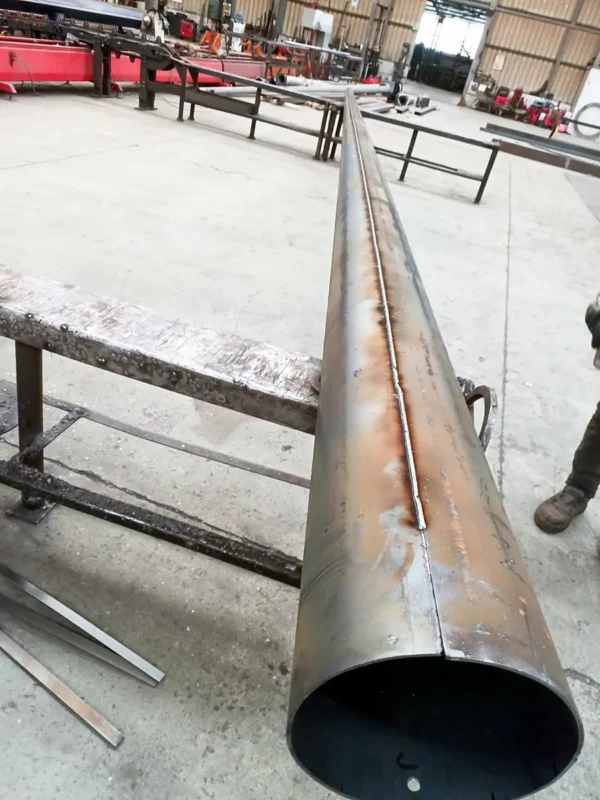
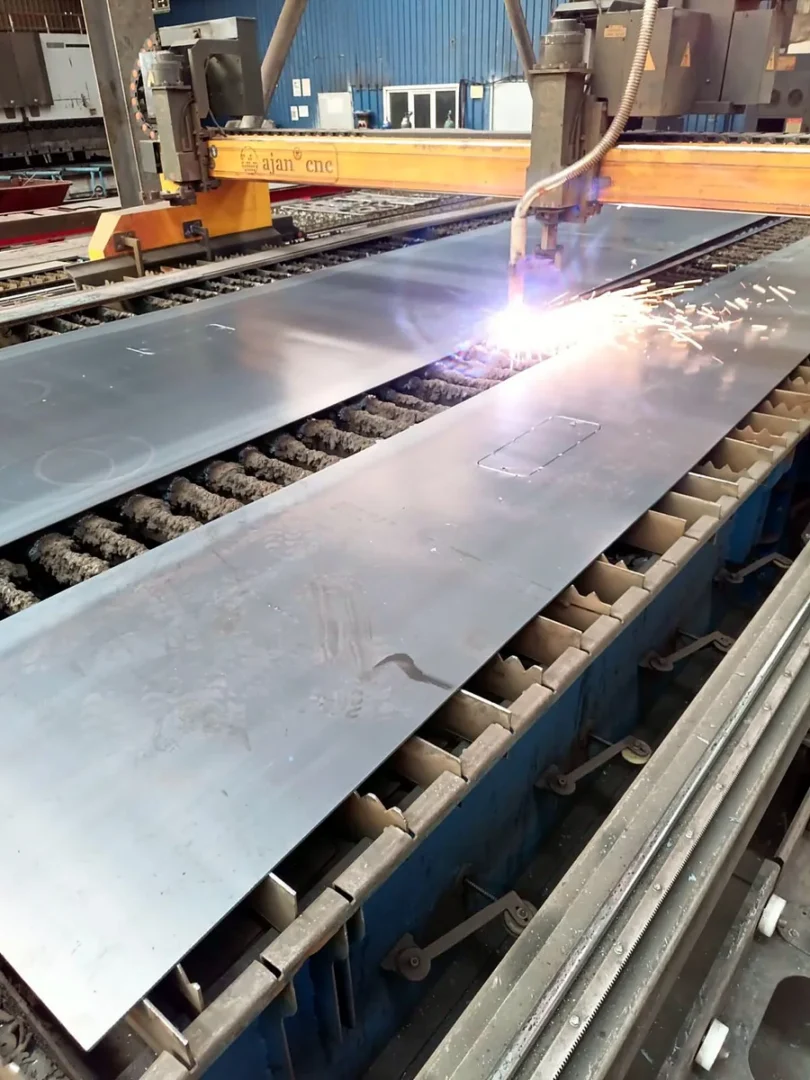
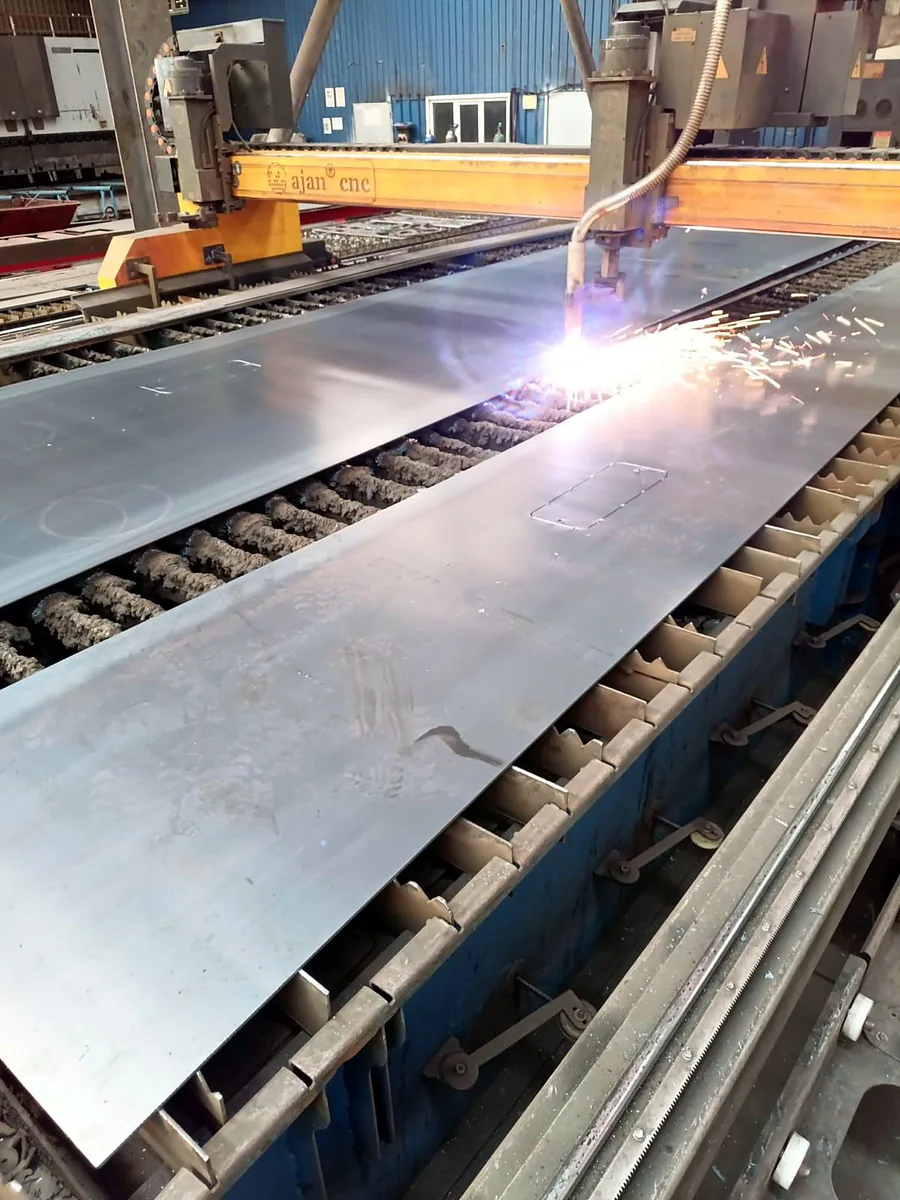
CNC plasma cutting of steel plate for a lighting pole shaft at Artay Lighting's workshop in Istanbul

Hot-dip galvanized steel is the right material for road and highway poles. Aluminium is the right material at the coast, at ground level, and wherever the pole’s shape matters. Those two sentences answer most projects. The rest of this guide is about the cases where they are not enough, and about the details that decide whether a pole reaches year fifteen looking acceptable.

Artay Lighting fabricates galvanized steel poles, fabricates poles and bollards from extruded aluminium profile, and casts aluminium in its own die-cast foundry in Istanbul. We make all three, so the comparison below is not a case for the material we happen to sell.
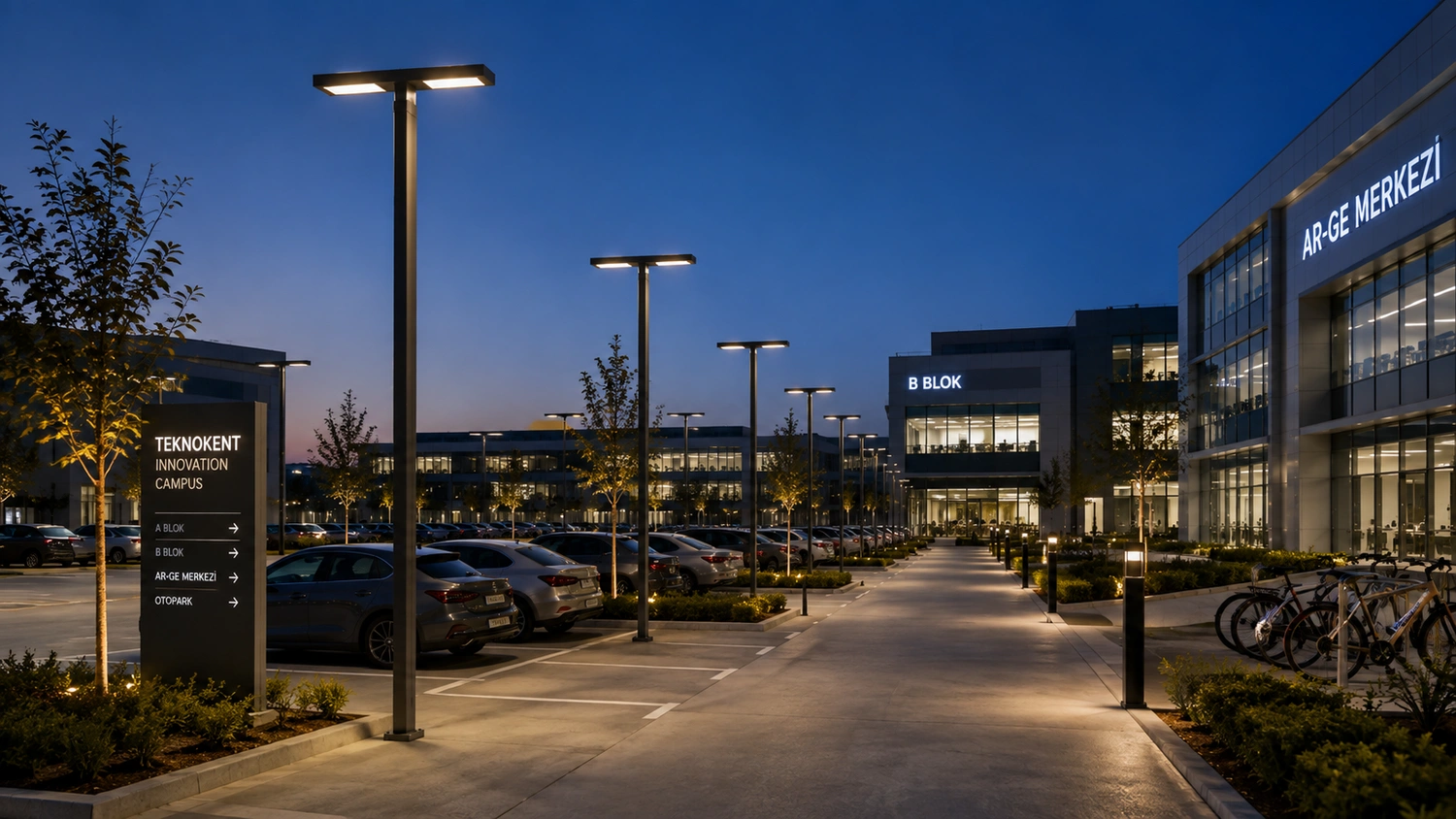
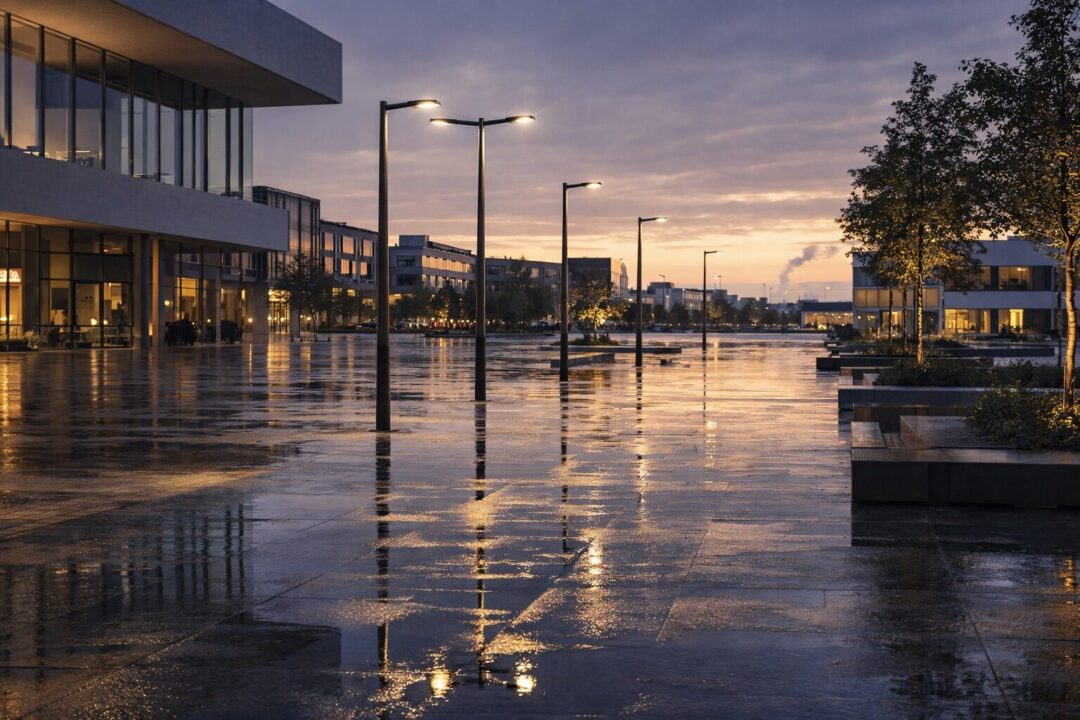
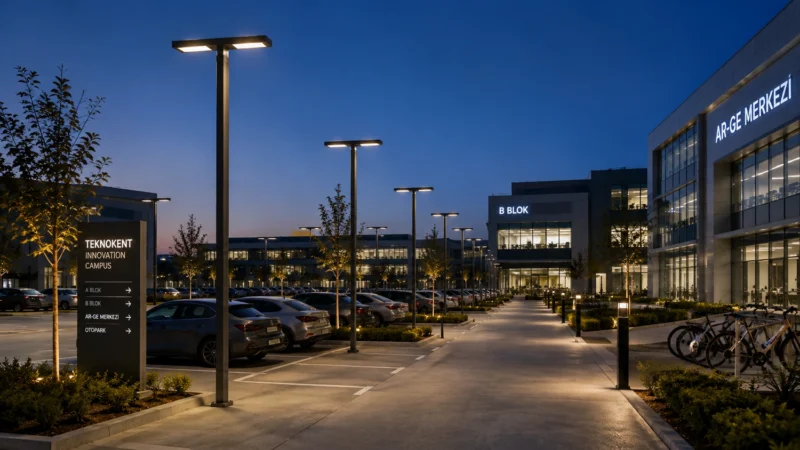
Artay Simena ART-1346 lighting pole in a technopark car park
Simena ART-1346 in a technopark car park. View the product.

What are street lighting poles actually made from?

Three materials cover almost the entire market. Hot-dip galvanized steel — steel sheet cut, rolled and welded into a conical or cylindrical shaft, then dipped in molten zinc. Extruded aluminium profile — aluminium alloy pushed through a die into tube, then cut and fabricated. Die-cast aluminium — alloy melted and injected into a mould to produce a shape rather than a section. A fourth, composite or GRP, exists in specialist use and is rare in general street lighting.

Most delivered poles combine two of them. A cast decorative base and a cast luminaire housing on a galvanized steel shaft is the single most common specification in decorative street lighting, because it puts the shape where people see it and the structure where the wind load is.

When is hot-dip galvanized steel the right choice?
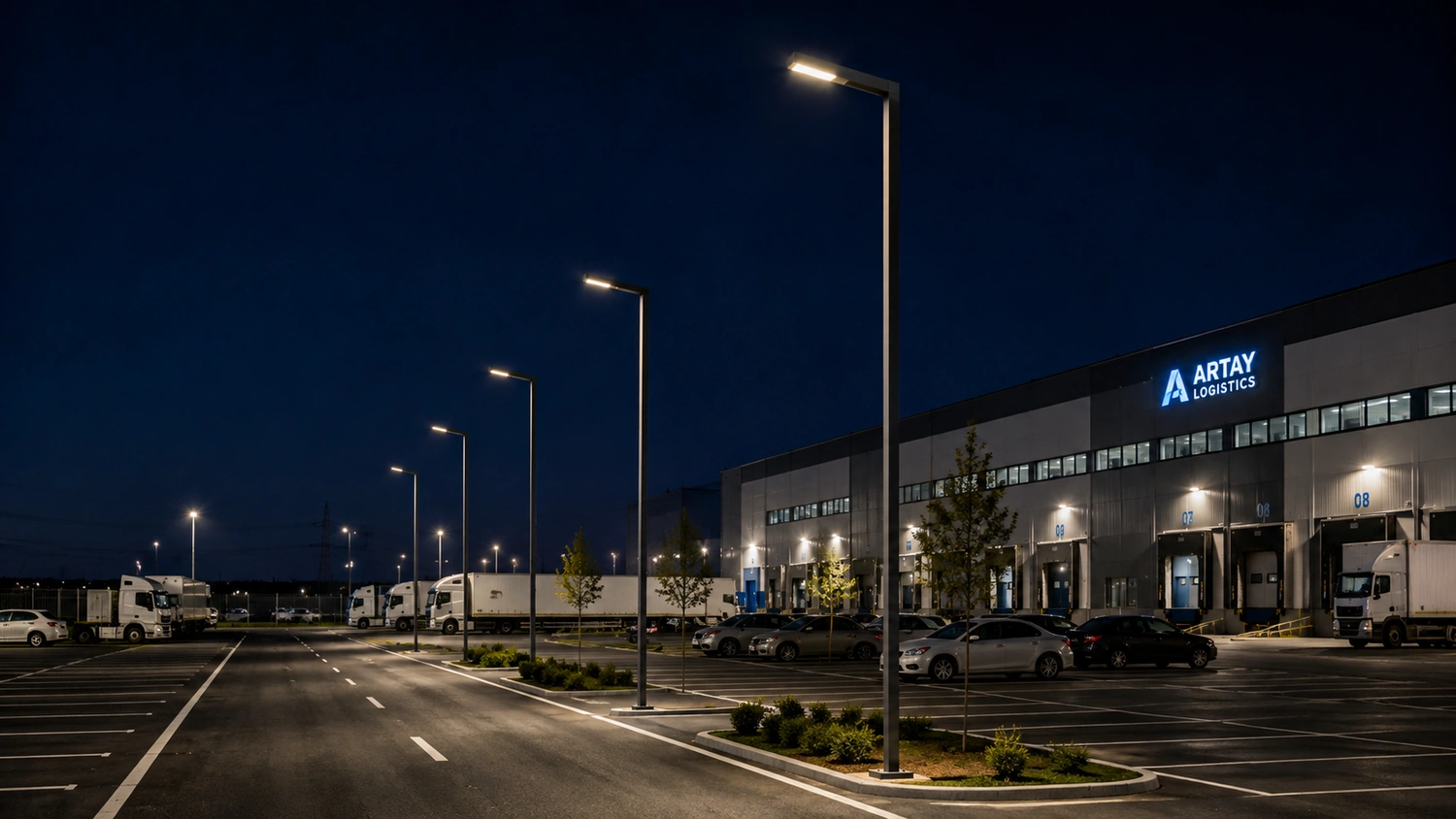
Artay Magnesia ART-1322 lighting pole at a logistics facility entrance
Magnesia ART-1322 at a logistics facility entrance — an inland, heavy-traffic setting, where load capacity and field repair count for more than weight. View the product.

Steel wins on structure and on price. It carries higher loads for less money than aluminium, which is why every 8-12 m road pole you see is steel. Galvanizing to EN ISO 1461 is not paint: the zinc metallurgically bonds to the steel and protects it sacrificially, so a scratch that exposes bare steel still does not rust at that point — the surrounding zinc corrodes first. Inland, that gives decades of service with no maintenance.

Steel is also the material that can be repaired in the field. A pole grazed by a vehicle can be straightened, and damaged galvanizing can be made good with a zinc-rich repair coating. Aluminium in the same situation is usually replaced.

One weakness matters most. Chloride: on the coast, zinc consumption accelerates, and the coating system has to be specified for that environment rather than assumed. This is the point at which aluminium usually becomes the better answer.

Project-specific work on a steel pole means changing height, diameter, wall thickness, arm geometry, door position or base plate pattern. All of these are cutting and rolling parameters, so there is no tooling cost and no minimum order.

When is aluminium the right choice?
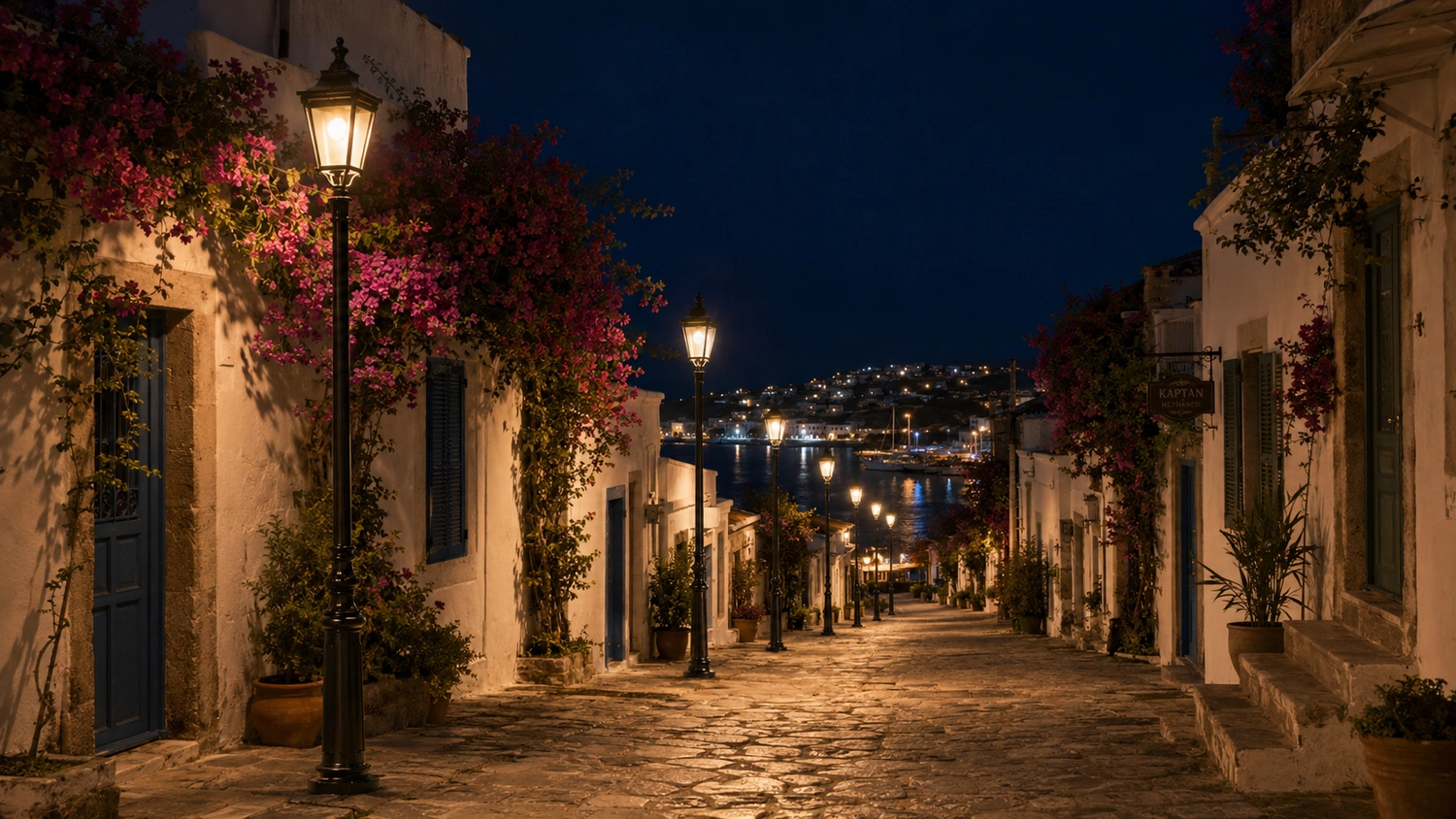
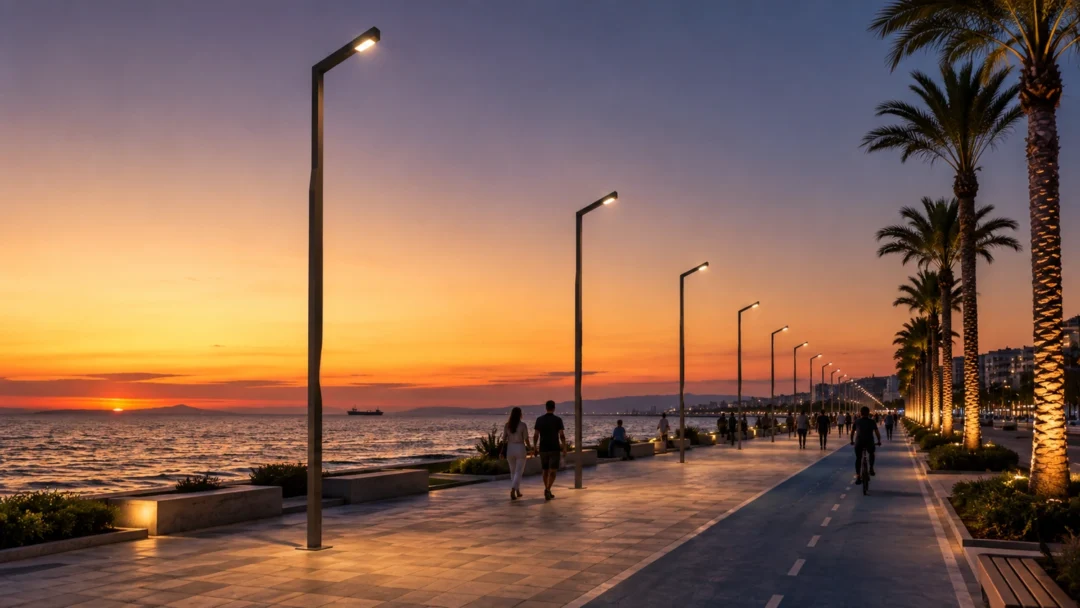
Artay Elaiussa ART-1337 lighting pole on a coastal town street
Elaiussa ART-1337 on a coastal town street — the chloride exposure that drives the argument above. View the product.

Aluminium does not rely on a coating to survive. It forms its own oxide layer immediately, so its corrosion behaviour is different in kind from steel’s rather than simply better or worse. That is why it dominates three situations.

Coastal and marine sites. Promenades, marinas, island projects and anywhere carrying salt-laden air. This is the clearest case for aluminium and it is worth paying for.

Ground level. A bollard sits in the splash zone, takes irrigation water, de-icing salt and cleaning chemicals, and is the first thing a mower reaches. We do not make bollards from galvanized steel at all — every Artay bollard is aluminium, cast or fabricated from profile.

Where the shape matters. Extrusion produces a section; casting produces a form. If a project needs a fluted column, a base carrying a municipal emblem, or a housing profile matched to a facade, that shape has to be cast, and casting needs a die. Our foundry in Basaksehir casts in EN AC-46000 (AlSi9Cu3) alloy, which is why a project-specific form is routine work here rather than an exception.

Aluminium’s own weaknesses are honest ones: lower stiffness per section, higher material cost, and poorer behaviour under impact repair. For a 10 m arterial pole in an inland city, steel is simply the better engineering answer.

How is aluminium finished, and why does it decide the outcome?

This is the part of the specification that gets written as three words — “electrostatic powder coating” — and then decides how the product looks in year five.

Aluminium is never coated straight from the die or the extruder. Every part first goes through a chromate conversion pre-treatment: the surface is cleaned and a chromate conversion layer is formed on the metal. That layer does two jobs. It gives the coating something to key into, and it stops corrosion creeping underneath the film from the first stone chip or scratch. Electrostatic powder coating follows, applied dry and oven-cured.

Leave the pre-treatment out and a powder coat can look perfect for one season, then lift in sheets from a single scratch. It costs little, it is invisible in the finished product, and it is the step most suppliers never mention. When you compare quotations, ask which conversion coating is used — not just which paint.

Steel or aluminium: side by side

 Hot-dip galvanized steelAluminium (profile or cast)
Structural capacityHigher — the default above 8 mLower per section
Corrosion protectionSacrificial zinc, EN ISO 1461Self-passivating oxide + chromate pre-treatment and powder coating
Coastal performanceNeeds a specified coating systemPreferred
Ground level and bollardsNot recommendedThe correct choice
Repairable in the fieldYes — straightening and zinc-rich repairUsually replaced
Custom dimensionsYes — no tooling costYes — no tooling cost
Custom shapeLimited to fabricationYes, by casting — mould required
Relative material costLowerHigher
General guidance for street lighting poles. Every project should still be verified by calculation to EN 40-3-1 and EN 40-3-3.

What happens where steel meets aluminium?

This is the failure almost nobody specifies against, and it is worth a paragraph of its own.

When two dissimilar metals are in contact and moisture is present, you have a galvanic cell: the less noble metal corrodes preferentially. A cast aluminium base bolted directly onto a galvanized steel shaft, or a stainless fastener through an aluminium flange, will corrode at the joint long before either component fails on its own — and it fails exactly where nobody inspects, at the base, under a cover.

The remedies are simple and cheap: isolate the two metals with a gasket or sleeve, choose fastener materials deliberately rather than by what is in the box, and keep the detail drained so water does not sit in the joint. Ask any supplier offering a mixed-material pole how they handle it. If the answer is vague, the joint has not been designed — it has been assembled.

Which material for which project?

Urban road or arterial, inland, volume quantities. Hot-dip galvanized steel, 8-12 m, specified to EN 40-5 with the wind-load calculation covering the foundation anchors.

Coastal promenade, marina, island. Aluminium, 4-6 m, with the chromate pre-treatment and coating warranty written for coastal conditions rather than a generic figure.

Park, plaza, pedestrian zone. Aluminium at 3-5 m, or aluminium bollards at 0.6-1.2 m. Close enough for people to touch, so finish quality is what will be judged.

Heritage street or a municipality that wants its own identity. Cast aluminium on a galvanized steel shaft, cast to your drawing, with the galvanic joint properly detailed. A new mould is a one-time 4,000-50,000 USD depending on part size, minimum order 1,000-2,000 units, first delivery 7-9 weeks from drawing approval, and every repeat order on that mould ships in 3 weeks with no further mould charge.

Distributor or private-label programme. Any of the above under OEM and private label agreements; we export to more than 33 countries and the mould, once cut, stays reserved for you.

Send a drawing, a 3D model, a photograph or a written specification to info@artaylighting.com and we will return a technical drawing with a wind-load calculation.

Five material mistakes that cost money

  1. Specifying galvanized steel for bollards. Ground level is the harshest position on the site. Aluminium belongs there.
  2. Buying a coating without asking about pre-treatment. The paint is not what fails; the interface underneath it is.
  3. Mixing metals without isolating the joint. Galvanic corrosion at the base is a design decision, not bad luck.
  4. Using an inland coating warranty on a coastal project. Ask for the warranty to be stated separately for chloride exposure, in writing.
  5. Paying for a mould you do not need. If your specification differs from a catalogue only in numbers, that is a fabrication change with no tooling cost. Say so before anyone quotes a die.

Related guides

Specifying bollards? Bollard lights: how to choose and specify them — why they are aluminium and not galvanized steel, glare control at eye level, and which standard actually applies.
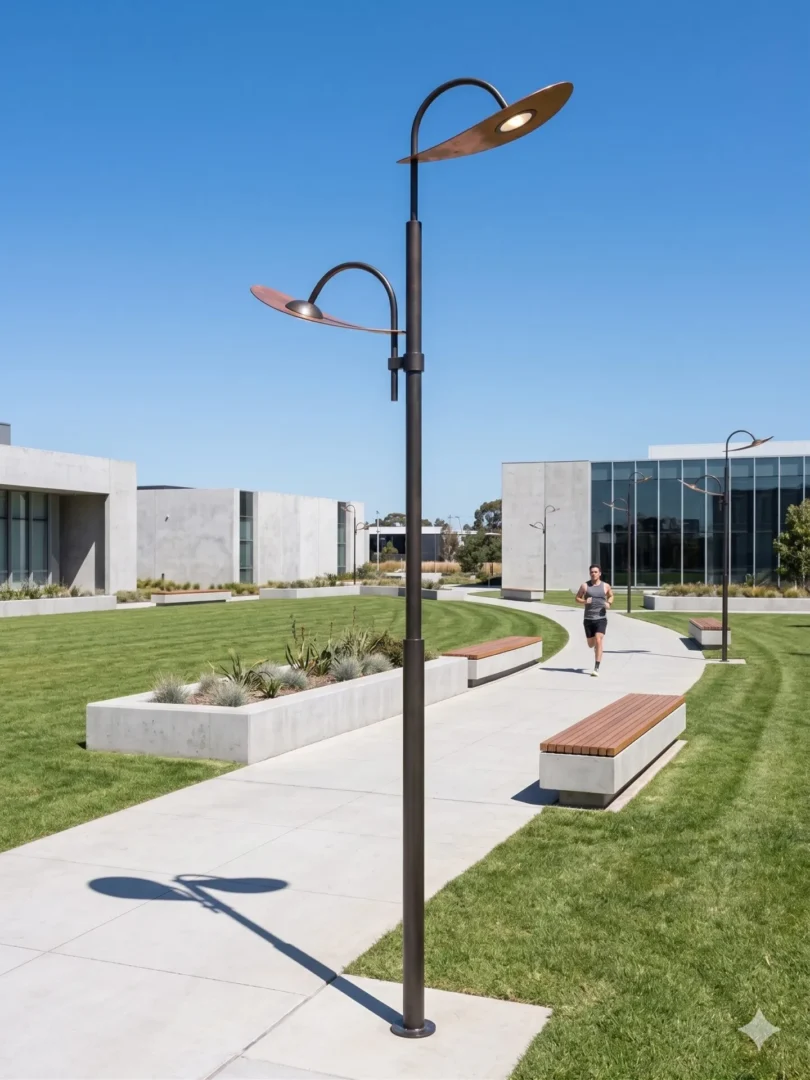
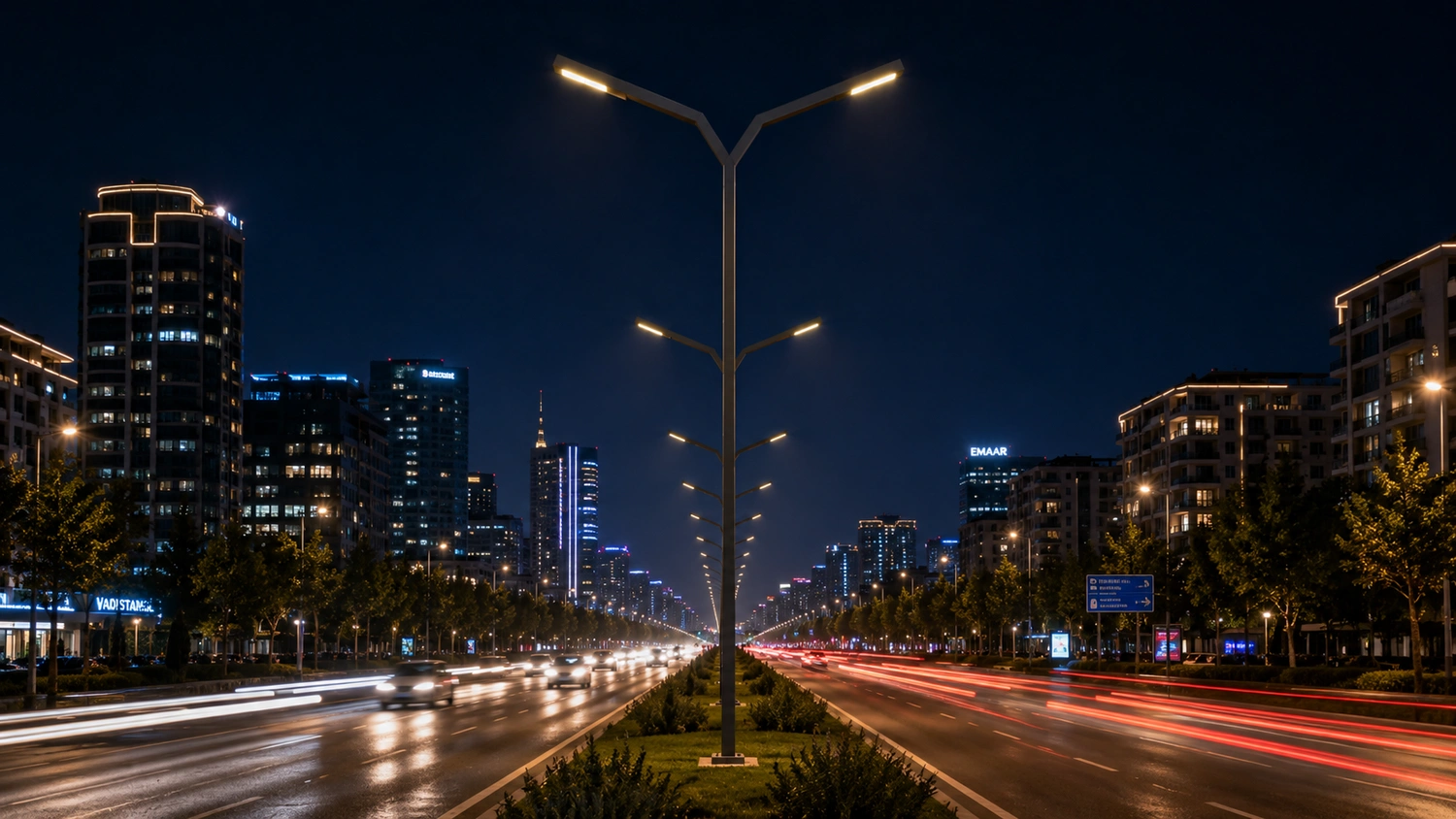
Street Lighting Pole Types: Which One Does Your Project Need?

Artay decorative street lighting pole ART-1128 installed on site

Street lighting poles fall into four families: conical and cylindrical steel poles, die-cast aluminium poles, extruded aluminium profile poles, and decorative and architectural poles. Which one your project needs is decided by three things in this order — the mounting height the lighting design calls for, the corrosion environment, and whether the form has to be unique to your project. Everything else is detail.

This guide covers each family, what it is genuinely good at, the standards that govern it, and what changes when you need a pole that is not in anyone’s catalogue. Artay Lighting has cast aluminium in its own die-cast foundry in Istanbul since 1999 and fabricates steel and extruded aluminium poles alongside it, so the comparisons below come from making all three rather than selling one.

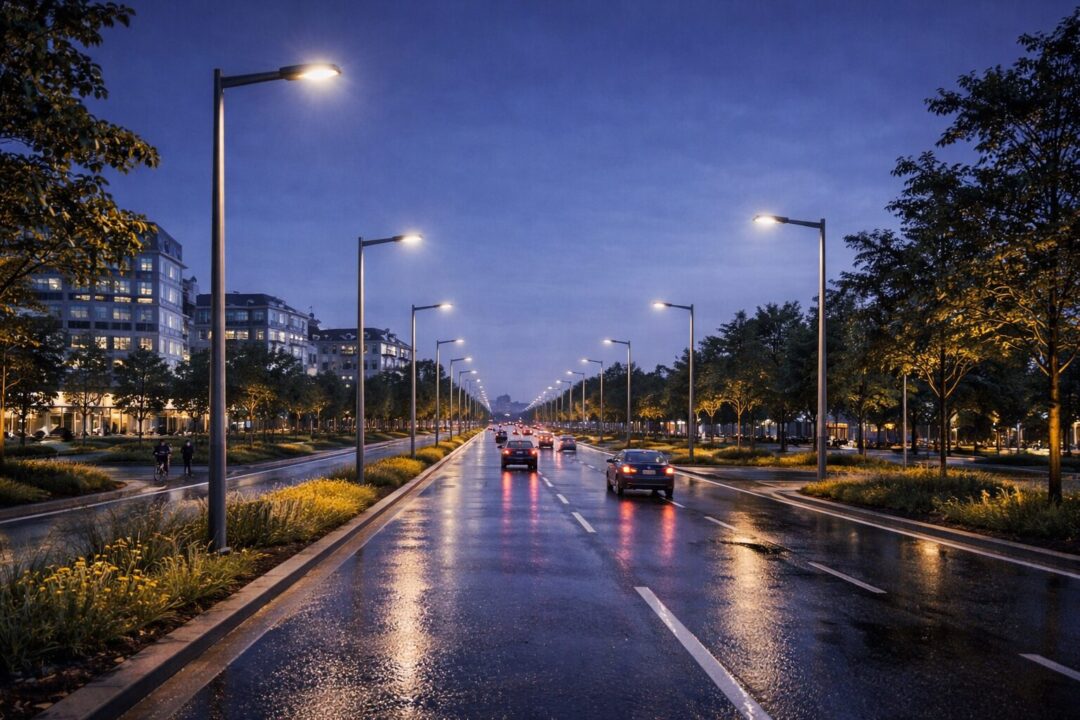
Artay Selge ART-1318 lighting pole on a divided main avenue
Selge ART-1318 on a divided main avenue — the 8–12 m band, where a pole is a structural component before it is anything else. View the product.

What are the different types of street lighting poles?

Pole typeTypical heightMaterialBest forCustom form?
Conical (tapered) steel6-12 mHot-dip galvanized steelUrban roads, arterials, highwaysDimensions only – no mould needed
Cylindrical steel4-10 mHot-dip galvanized steelResidential streets, car parks, campusesDimensions only – no mould needed
Extruded aluminium profile3-8 mAluminium alloy profileCoastal sites, pedestrian zones, plazasSection and finish – no mould needed
Die-cast aluminium3-6 mEN AC-46000 (AlSi9Cu3)Decorative bases, emblem work, unique housingsYes – cast to your drawing
Bollard0.6-1.2 mCast aluminium or profilePaths, landscape, building approachesYes – cast or fabricated to drawing
Height bands are the ranges these types are normally specified in, not manufacturing limits.

The families are not interchangeable. A 10 m road pole is a structural component carrying wind load and a luminaire at the end of a lever arm; a 4 m plaza pole is largely an aesthetic decision with a modest structural requirement. Specifying a decorative pole where a road pole belongs is the single most expensive mistake in this category, because it usually surfaces after installation.

Which material should you specify: galvanized steel, die-cast aluminium, or extruded profile?

Hot-dip galvanized steel is the default for road and highway lighting and it deserves to be. It carries the highest loads for the lowest cost, it can be repaired in the field, and galvanizing to EN ISO 1461 gives decades of service inland. Its weaknesses are weight, and coastal chloride exposure where the coating system has to be specified carefully. Custom work on a steel pole means changing height, diameter, wall thickness, door position or bracket geometry – all cutting and rolling parameters, so there is no tooling cost and no minimum order. We have set out the head-to-head reasoning, with the zinc corrosion figures behind it, in aluminium or galvanized steel: which should you specify.

Extruded aluminium profile is the right answer on the coast and anywhere weight matters. Aluminium forms its own oxide layer, so corrosion behaviour is fundamentally different from steel rather than simply better. Profile poles are also cleaner-looking, which is why they dominate pedestrian zones and plazas. Custom work here means selecting section, wall thickness, height and finish; again no mould, no tooling charge. Artay buys in extruded profile – like most of this market, we do not run an extrusion press – and fabricates poles, luminaire bodies and bollards from it.

Die-cast aluminium is the only one of the three that can produce a shape. Casting melts alloy into a mould, so a base carrying a municipality’s emblem, a fluted column, a housing profile matched to a facade – none of these exist without a die. This is what our foundry in Basaksehir does, in EN AC-46000 (AlSi9Cu3) alloy, and it is the reason a project-specific form is normal work here rather than an exception. Custom work means exactly that: we cut the die. The trade-off is real and stated below.

Most real poles are a combination. A common and sensible specification is a cast aluminium decorative base and luminaire housing on a hot-dip galvanized steel shaft – the shape where it is seen, the structure where it is needed.

Can a street lighting pole be made to your own design?

Artay Arsameia ART-1338 lighting pole on a historic stone bridge
Arsameia ART-1338 on a historic stone bridge — a form chosen for its setting rather than picked from a catalogue. View the product.

Yes, and this is worth separating into two different questions, because suppliers answer them as if they were one.

Changing the dimensions of an existing pole – height, diameter, wall thickness, arm length, door position, base plate pattern, RAL colour – is available from almost any fabricator, ours included, with no tooling cost and no minimum order. If your specification differs from a catalogue only in numbers, say so and ask for a price; you should not be paying for a mould.

Changing the form itself is a different job. A shape that does not exist has to be cast, and casting needs a die. Send a technical drawing, a 3D model, or simply a photograph of a form you have seen somewhere, and we return a technical drawing with a wind-load calculation. If it is approved, we cut the die in our own tool shop.

Here are the figures, because almost nobody in this market publishes them. A new mould is a one-time cost of 4,000-50,000 USD depending on part size, and the tool then stays reserved for you. Minimum order on a new mould is 1,000-2,000 units. Cutting the die takes 4-6 weeks and series production a further 3 weeks, so a first delivery lands 7-9 weeks after drawing approval. Every repeat order on that mould ships in 3 weeks, with no further mould charge and no minimum – which is why the second project with a custom form is usually easier than a standard one.

If your quantity does not reach that minimum, say so early. In many cases the form you want can be achieved in fabricated steel or profile instead, and we will tell you that rather than sell you a die you do not need.

How is a steel lighting pole actually made?

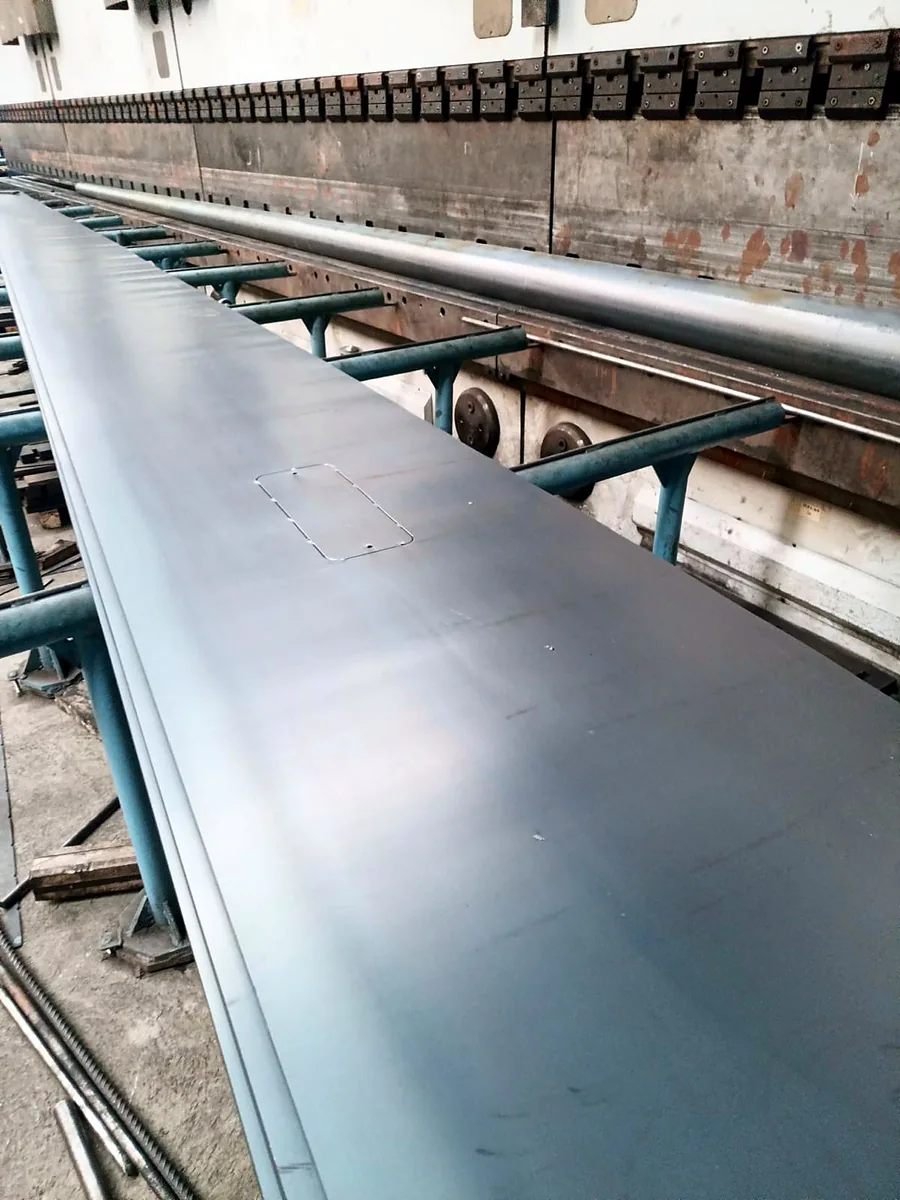
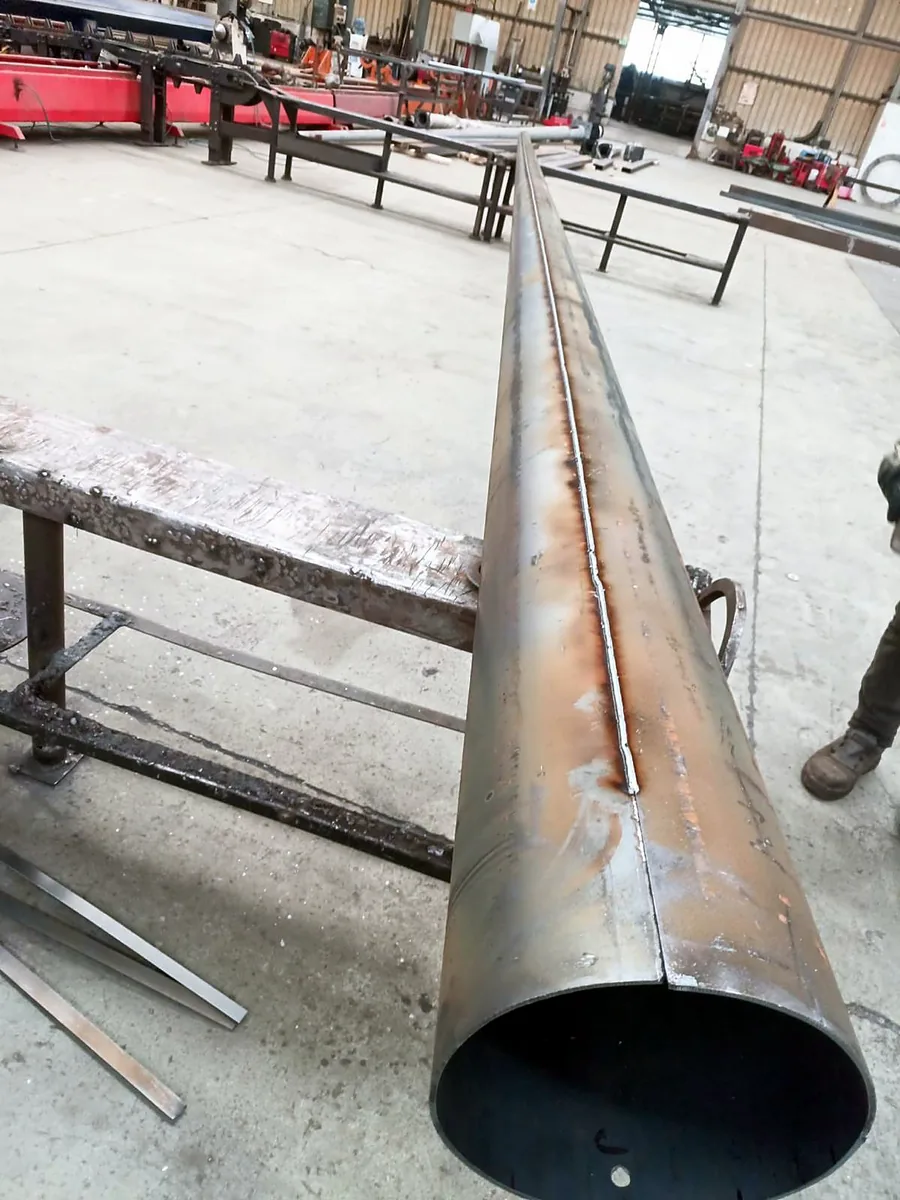
A steel lighting pole begins as a flat plate, not as a tube. The plate is cut to a long tapering shape, folded into a cone on a press brake, closed with a single weld running its whole length, and only then galvanized. Almost every dimension a specifier writes into a tender – height, base and top diameter, wall thickness, door position – is fixed at the cutting stage, which is why changing those numbers carries no tooling cost while changing the material changes everything downstream.

CNC plasma cutting of steel plate for a lighting pole shaft at Artay Lighting's workshop in Istanbul
Cutting. The taper, the door aperture and the cable entry are all cut in one operation on the CNC plasma table.

A pole of a different height, or with its door on the other side, is a different cutting file and nothing more. This is the practical reason dimensional changes are quoted without a surcharge across this category, and it is worth knowing before accepting a supplier who prices them as custom work.

Tapered steel lighting pole shaft on the roller conveyor at the press brake, with the access door aperture marked out
Folding. The plate is bent in successive passes along its full length until the two edges meet – the step that decides whether a pole is straight.

Folding is where a fabricated conical pole separates from a rolled tube. Both can meet the same wall thickness on paper, but the conical section puts material where the bending moment is highest and tapers it away where it is not, which is why conical poles reach useful heights at weights a parallel tube cannot match.

Longitudinal weld seam running the length of a tapered steel lighting pole shaft before galvanizing
Welding. One seam closes the cone along its full length; it is positioned away from the door aperture, where the section is already reduced.

After welding, the base flange, the door frame and any bracket sockets are fitted, and the assembled shaft goes to hot-dip galvanizing to EN ISO 1461. Galvanizing before coating rather than after is not a preference – the zinc has to be applied to bare, pickled steel, and a pole painted first has to be stripped.

How do you choose the right pole height?

Height comes from the lighting design, not from the pole catalogue: the required illuminance and uniformity on the road surface, the road width, and the spacing the layout allows. As a working orientation before the calculation is done, pedestrian areas and park paths are normally lit from 3-5 m, residential streets and car parks from 4-6 m, urban roads from 6-8 m, main roads and arterials from 8-12 m.

Two things change with height and both are frequently missed. Wind load rises sharply, so the pole, the base plate and the foundation anchors all have to be verified together – EN 40-3-1 covers characteristic loads and EN 40-3-3 verification by calculation. And maintenance access changes: above roughly 10 m, relamping needs a platform, which belongs in the operating cost the tender is compared on.

Which standards govern street lighting poles?

The EN 40 series is the reference for lighting columns: EN 40-2 for dimensions and tolerances, EN 40-3-1 for characteristic loads, EN 40-3-3 for verification by calculation, EN 40-5 for steel columns and EN 40-6 for aluminium columns. Galvanizing is governed by EN ISO 1461, and luminaires by EN 60598-2-3. For Turkish municipal and TEDAS work, TEDAS type-project approval is the document that will be asked for.

Artay luminaires are CE marked, and our manufacturing is certified to TSE under TS EN 40 for lighting columns and to ISO 9001 for quality management. Ask us for the certificate with its scope and expiry, and ask every supplier the same – a certificate whose scope covers luminaires does not cover poles.

What else belongs in the specification?

Beyond type, material and height, five details decide whether a delivered pole causes problems. Bracket and mounting: side-entry arms and post-top spigots are not interchangeable, and the spigot diameter has to match the luminaire – 60 mm and 76 mm are the common sizes. Base type: flange-plate poles bolt onto a cast foundation and can be replaced after a vehicle impact; root-mounted poles are planted directly and are cheaper but harder to replace. Access door: position, size and lockability, plus the earthing point inside it. Coating: polyester powder over a properly prepared surface, with the film thickness and the warranty stated in writing – and stated separately for coastal and inland conditions. Cable entry and sealing, which is where water gets in when it is left to the installer to improvise.

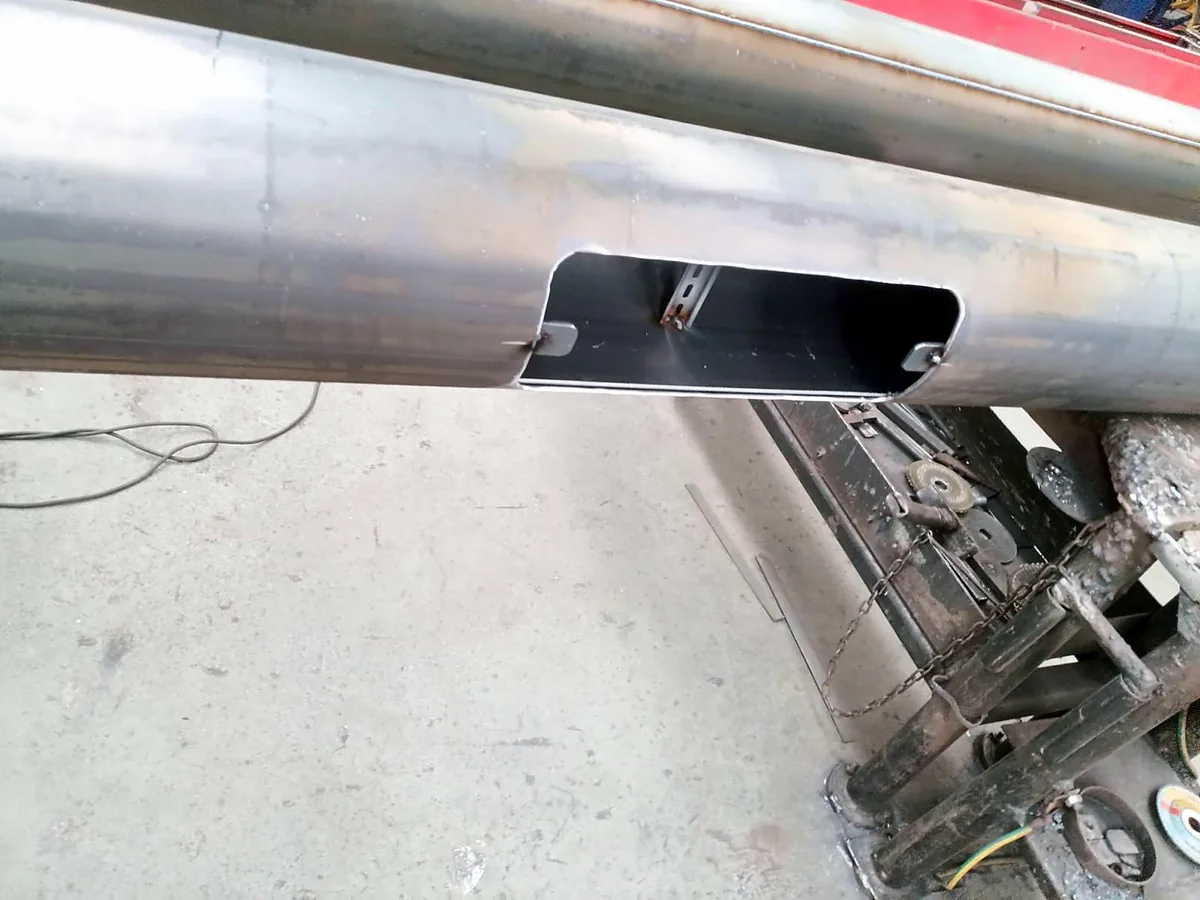
Access door aperture and internal mounting rail on a steel lighting pole shaft, before coating
The access door before coating. The frame welded into the aperture restores what the cut-out removed; the internal rail carries the terminal block and the earthing point.

All five are also where a pole can be tailored to a project without any tooling cost, which is worth remembering before anyone reaches for a custom mould.

Which pole type is right for your project?

Artay Tralleis ART-1317 lighting pole on a seaside boulevard
Tralleis ART-1317 on a seaside boulevard — the coastal case, where chloride exposure decides the material before anything else does. View the product.

Urban road or arterial, volume quantities. Conical hot-dip galvanized steel, 8-12 m, flange plate, single or double arm. Specify to EN 40-5 with the wind-load calculation covering the foundation anchors.

Coastal promenade, marina or island project. Extruded aluminium profile or cast aluminium, 4-6 m, with the coating system specified for chloride exposure and the warranty written for coastal conditions rather than a generic figure.

Park, plaza or pedestrian zone. Aluminium at 3-5 m, or bollards at 0.6-1.2 m where glare control matters more than reach. This is the family where decorative form usually earns its cost, because people are close enough to see it.

A heritage street, a signature square, or a municipality that wants its own identity. Die-cast aluminium on a galvanized steel shaft, cast to your drawing. This is the case the foundry exists for: an emblem in the base, a column profile matched to the architecture, a pole family unique to one city.

Distributor or private-label programme. Any of the above under OEM and private label agreements. We export to more than 33 countries and produce under other brands’ names as a matter of routine; the mould, once cut, stays reserved for you.

Send a drawing, a 3D model, a photograph or simply a written specification to info@artaylighting.com and we will come back with a technical drawing and a wind-load calculation.

Related guides

Specifying bollards? Bollard lights: how to choose and specify them — why they are aluminium and not galvanized steel, glare control at eye level, and which standard actually applies.
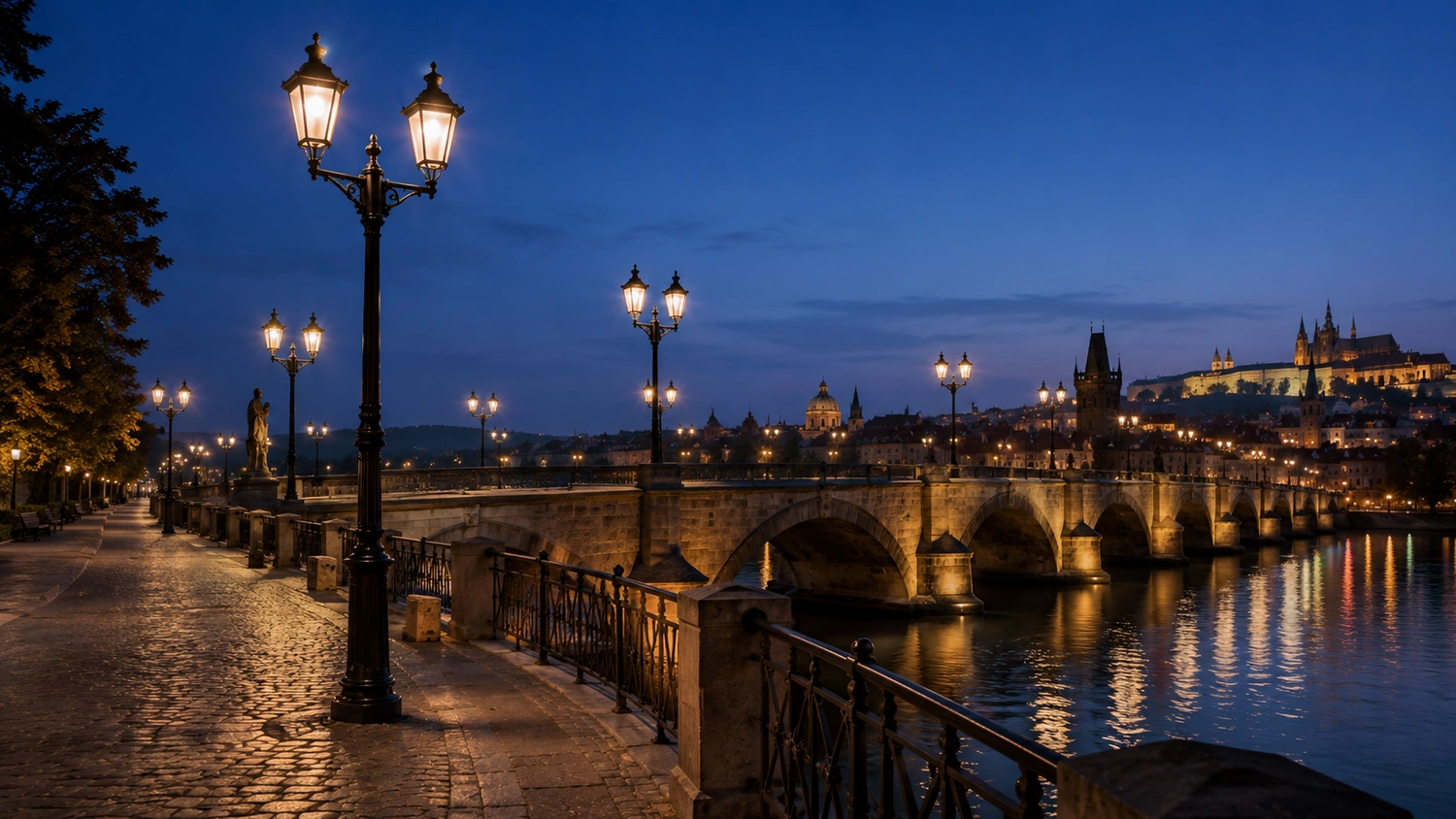
Steel or aluminium? Lighting pole materials: galvanized steel or aluminium — coastal performance, chromate pre-treatment, and what happens at the joint where the two metals meet.

Street Lighting Pole Manufacturers in Turkey: How to Compare Them (2026)

Press brake line at Artay Lighting's steel fabrication shop in Istanbul, with operators forming pole shafts

Turkey has dozens of street lighting pole manufacturers, and their websites say almost identical things. Modern facilities. Quality production. Customer satisfaction. None of that helps a specifier choose. So in August 2026 we read what nine Turkish pole manufacturers publish about themselves — ourselves included — and compared them on the four things that actually change a project outcome: which metal process they run in-house, which standards they name, what they will build to a drawing, and what figures they are willing to state in public.

This page reports what we found in aggregate, and gives you the questions that separate suppliers faster than a catalogue does. We have not named the other companies: comparative claims naming competitors are restricted under Turkish advertising rules, and the useful findings here are about the industry, not about any one firm.

Disclosure: this is published by Artay Lighting, one of the nine manufacturers reviewed. Where we are the wrong supplier for a job, we say so below.

What does “manufacturer” actually mean for a lighting pole?

This is the question almost nobody asks during tendering, and it is the one that explains why two quotes for the same pole can differ by weeks and by thousands of dollars.

A lighting pole passes through up to four processes. Casting melts metal into a mould to create a shape. Extrusion pushes aluminium through a die to form tube. Fabrication cuts, bends and welds steel sheet and tube. Finishing covers hot-dip galvanizing and powder coating. A company can accurately call itself a manufacturer while performing only one of these and buying in the rest.

Across the nine manufacturers we reviewed, the pattern was consistent. Five describe fabrication only — cutting, welding, turning, coating and assembly. Their poles begin as bought-in steel sheet and tube. That is real manufacturing and it is the right process for most road and highway poles. One publishes aluminium extrusion, forming and rolling extruded alloy tube. Two publish no process detail at all, describing themselves as manufacturers without saying what they make in-house. One publishes a die-casting foundry — that is us.

Our own position is a combination, and this article is about precision so we will be precise about it. We cast — aluminium and zinc alloy, in our own die-cast foundry in Istanbul, since 1999. We do not extrude. Like most of this market we buy in extruded aluminium profile and fabricate from it: pole bodies, luminaire housings, bollards and decorative products. Steel shafts are fabricated and hot-dip galvanized to EN ISO 1461. So we run one primary metal process in-house and buy the other in, and which one your project needs depends entirely on whether its shape requires a mould.

Two of the nine publish a specific finishing capability of their own rather than subcontracting it, which is worth asking about: a galvanized finish is one of the most common sources of dispute on delivered poles, and a supplier who controls the bath controls the outcome.

Why the distinction matters in practice: a fabricator can change a pole’s height, diameter and wall thickness, because those are cutting and rolling parameters. Changing its shape — a cast base carrying a municipality’s emblem, a housing profile matched to a facade detail — requires a mould. If your supplier does not cut moulds, that shape has to come from someone else’s catalogue.

Which standards do Turkish pole manufacturers actually name?

Naming a standard in text is a low bar, and most of the nine did not clear it. Four publish no identifiable standard at all — some post certificate images with no text naming what they certify, which cannot be checked and should not be relied on.

The relevant standard for lighting columns is the EN 40 series, which covers materials, dimensions, design and wind-load verification. Only three of the nine reference EN 40 or its Turkish adoption TS EN 40. Others publish general management-system certificates — ISO 9001, ISO 14001 — which say something about how a company is run and nothing about whether a pole will stand up in a storm. One publishes certificates citing superseded versions of those standards, which is a useful reminder to check dates.

For a Turkish municipal or TEDAS tender, TEDAS type-project approval is the document that will be asked for. For an export project or a private development, EN 40 and CE marking carry more weight.

Artay luminaires are CE marked, and our manufacturing is certified to TSE under TS EN 40 for lighting columns and to ISO 9001 for quality management. Ask us for the certificate itself, with its scope and expiry — and ask every other supplier the same. A logo on a website is not a certificate, and a certificate whose scope covers luminaires does not cover poles.

How much does a custom street lighting pole cost, and how long does it take?

Not one of the nine manufacturers we reviewed publishes a mould cost, a minimum order quantity or a lead time. Not one. That is the most consistent finding of the whole exercise, and it is why specifying a custom pole in Turkey usually begins with two weeks of emails before anyone can put a date in a programme.

So that at least one set of figures exists in public, here are ours. A new mould is a one-time cost of 4,000-50,000 USD depending on part size, and the tool stays reserved for the customer. Minimum order on a new mould is 1,000-2,000 units. Cutting the die takes 4-6 weeks, series production a further 3 weeks, so a first delivery lands 7-9 weeks after drawing approval. Every repeat order on that mould ships in 3 weeks, with no further mould charge and no minimum.

Those figures apply to cast parts only. Products built from extruded aluminium profile — a large share of our poles, luminaire bodies and bollards — carry no mould cost and no minimum order, because no die has to be cut. If the form you need can be achieved in profile rather than casting, that is the faster and cheaper route, and we will tell you so rather than sell you a mould.

Those numbers are specific to die-casting, and they cut both ways. A fabricated steel pole needs no mould at all, so for a standard galvanized road pole a fabricator will almost always beat us on both price and lead time. That is not a weakness we are hiding — it is how the two technologies differ, and sending a standard road pole to a foundry is the wrong tool for the job.

Which kind of manufacturer is right for your project?

Standard galvanized steel road and highway poles, in volume. This is fabrication work and a fabricator is the right call. Ask for tonnage capacity per year, maximum single-piece pole length, and whether static calculations cover the foundation anchors as well as the pole. Where the galvanized finish is the risk, ask whether galvanizing is in-house or subcontracted, and if in-house, ask for the bath dimensions — that number tells you the longest section they can dip in one piece.

Turkish municipal and TEDAS tenders. Ask first for TEDAS type-project approval and confirm the approval covers the pole type you are specifying, not a different one in the same catalogue.

Architectural aluminium poles for large or international projects. Ask for EN 40 design compliance and photometric data, and ask whether testing is done in-house in an accredited laboratory or sent out. An accredited in-house laboratory is rare in this market and it shortens the approval cycle considerably.

Aluminium poles, luminaire bodies and bollards in established forms. These are built from extruded profile and need no mould, so there is no tooling charge and no minimum order, and lead times are short. We produce this way too — it is a large share of what leaves our factory. For these products the questions that matter are alloy grade, wall thickness, coating film thickness and coating warranty, not foundry capability.

A pole or luminaire whose shape does not exist in any catalogue. This is where casting matters and it is where we would put ourselves. Artay casts aluminium and zinc alloy in its own die-cast foundry in Basaksehir, Istanbul, and has since 1999 — the company began as a die-casting manufacturer and moved into LED lighting in 2005. Housings and cast pole components are produced from EN AC-46000 (AlSi9Cu3) alloy in-house; steel shafts are fabricated and hot-dip galvanized to EN ISO 1461. Send a drawing, a 3D model or a photograph of a reference form and we will cut the die. Note the trade-off stated above: a mould cost and a minimum order come with it.

Five questions worth asking every supplier

  1. Which of these do you perform yourself: casting, extrusion, fabrication, galvanizing? Ask for the list, not the word “manufacturer”. Every company we reviewed calls itself a manufacturer, and they mean four different things by it.
  2. Send me the certificate, with its scope and expiry. Check that the scope names lighting columns and that the standard version is current.
  3. What is the mould cost and the minimum order for this shape? If nobody will answer before a drawing exists, ask for the range. A supplier who cannot give a range has probably not done it recently.
  4. What is the lead time for the first delivery, and for a repeat order? The gap between those two numbers tells you what your second project will look like.
  5. Who performs the wind-load calculation, and to which standard? EN 40-3-1 and EN 40-3-3 cover this. If the answer is vague, the calculation may not exist.

Specification guides

If you are still deciding on pole type, height or material, these guides cover the detail behind the questions above:

Specifying bollards? Bollard lights: how to choose and specify them — why they are aluminium and not galvanized steel, glare control at eye level, and which standard actually applies.
Steel or aluminium? Lighting pole materials: galvanized steel or aluminium — coastal performance, chromate pre-treatment, and what happens at the joint where the two metals meet.

Not sure which type you need? Street lighting pole types: how to choose the right one — steel, extruded aluminium, die-cast and bollards compared on height, corrosion environment, EN 40 standards and what changes when the form is made to your own drawing.

How this comparison was made

Nine Turkish manufacturers of street and decorative lighting poles were reviewed in August 2026, using only what each company publishes on its own website, with directory and trade-press sources used to corroborate. Counts above describe what companies publish, not what they are capable of: a company that does not mention a foundry may still have one, and we have been careful not to claim otherwise.

We have deliberately not ranked anyone. A pole is a structural component chosen against a specification, and the right supplier for a 12 m galvanized highway pole is the wrong supplier for a cast decorative bollard. Questions, or a drawing to quote against: info@artaylighting.com.

Published by Artay Lighting, Istanbul. Last checked: August 2026.

Street lighting poles: Types, Heights, Galvanized Steel, and How to Choose Poles for Road Projects

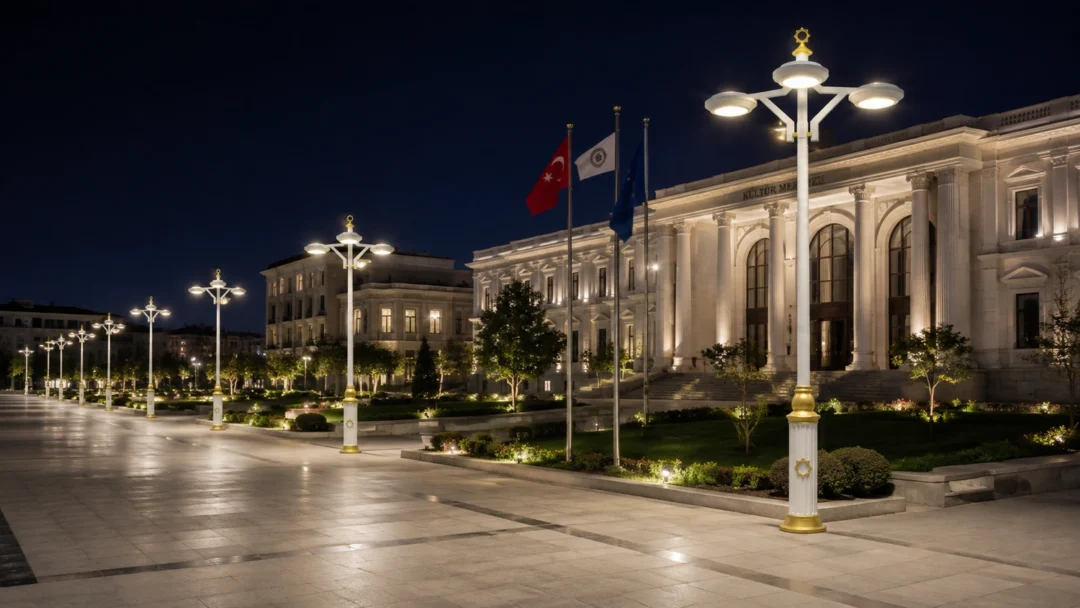
UFO urban lighting pole ART-1321 in cultural centre square lighting application

Artay Lighting manufactures street lighting poles in Istanbul, Turkey, casting housings and pole components in its own die-cast foundry since 1999. That means a project-specific pole is not a special favour here: when a municipality, contractor or distributor needs a form that does not exist in any catalogue, we cut the die and produce it. First delivery runs 7-9 weeks from drawing approval. Once the mould exists, repeat orders ship in 3 weeks. Artay exports poles and luminaires to more than 33 countries.

This guide covers the most common street pole types, recommended height ranges, the specifications worth checking, and what a custom pole actually costs.

How much does a custom street lighting pole cost, and how long does it take?

A new mould is a one-time cost of 4,000-50,000 USD depending on part size, and the tool stays reserved for the customer. Minimum order on a new mould is 1,000-2,000 units, again depending on part size. Repeat orders on an existing mould carry no further mould cost and no minimum.

Timing breaks down in two stages. Cutting the die takes 4-6 weeks from drawing approval. Series production takes a further 3 weeks. So a first delivery lands 7-9 weeks after you approve the drawing, and every order after that ships in 3 weeks.

Unit price depends on height, material, finish and quantity. Send a drawing, a 3D file or a photograph of a reference form to info@artaylighting.com and we return a technical drawing with a wind-load calculation and a quotation.

Figures reflect Artay production data at our Basaksehir foundry, August 2026.

Which standards do Artay street lighting poles comply with?

Artay luminaires are CE marked, and our manufacturing is certified to TSE under TS EN 40 for lighting columns, and to ISO 9001 for quality management. Die-cast components are produced from EN AC-46000 (AlSi9Cu3) aluminium alloy; steel shafts are hot-dip galvanized. For every project we confirm in writing, before production starts, which standards and which TEDAS specifications the delivered poles are built to.

What are street lighting poles used for?

Street poles are designed for vehicle-focused lighting, visibility, and road safety across different road classes:

  • Residential streets and local roads
  • Main roads and boulevards
  • Medians and divided highways (project dependent)
  • Intersections, roundabouts, and critical junctions
  • Industrial roads and logistics access routes

Types of street lighting poles

The correct type depends on road width, lighting layout, luminaire weight, and wind exposure.

1) Single-arm street lighting poles

  • Most common solution for standard streets
  • Clean appearance and easier maintenance
  • Arm outreach must match photometrics (avoid guessing)

2) Double-arm street lighting poles

  • Used for wider roads, medians, and boulevards
  • Can improve coverage symmetry when designed properly
  • Requires stronger foundation and wind verification

3) Tapered conical vs. octagonal poles

  • Tapered conical: minimal silhouette, strong wind behavior, very popular
  • Octagonal: sharper architectural look, common in modern streetscapes

4) Smart-ready street poles

  • Supports smart controllers, sensors, cameras, banners (project dependent)
  • Cleaner wiring paths and service access become critical

Recommended heights for street lighting poles

Use these ranges as a starting point. Final heights should follow spacing and luminaire photometrics:

  • 6–8 m: residential streets, local roads
  • 9–10 m: main roads and wider streets
  • 12 m: boulevards and large open road sections

Height choice is never “only aesthetic.” It controls spacing, uniformity, glare, and overall road visibility.

Materials: why galvanized steel dominates street projects

Hot-dip galvanized steel

  • Strong, durable, and cost-effective for road infrastructure
  • Excellent corrosion resistance when galvanizing is done correctly
  • Compatible with powder coating for premium finishes

Aluminum (when it makes sense)

  • Lightweight handling advantages
  • Naturally corrosion resistant
  • Often selected for premium or special-case installations

Important: long-term performance depends on manufacturing quality, coating system, and correct foundation detail—not only the metal type.

Coatings & finishes for street environments

Street poles face UV, rain, dust, and abrasion. Choose a finish system based on climate and expectations:

  • Hot-dip galvanizing: base corrosion protection
  • Powder coating: appearance + extra protection
  • Multi-layer systems: recommended for harsh climates (coastal/industrial)

Specify clearly:

  • Color (RAL code)
  • Texture (matte / satin)
  • UV resistance expectations
  • Maintenance/touch-up approach

Key specifications to check before ordering

1) Wind load and structural compliance

Wind exposure increases with height and bracket outreach. Confirm structural calculations suitable for the project location.

2) Bracket/arm outreach

  • Outreach affects beam distribution and glare control
  • Match arm selection to luminaire photometrics

3) Base plate, anchor bolts, and foundation detail

  • Foundation must match wind + height + luminaire weight
  • Ask for anchor bolt pattern and base dimensions

4) Access door, wiring, and grounding

  • Serviceability matters for maintenance teams
  • Ensure safe cable routing and grounding provision

5) Luminaire compatibility

  • Spigot/top diameter compatibility
  • Mounting method and tilt adjustability if needed

How to choose street lighting poles (simple checklist)

  1. Define road type and width (residential, main road, boulevard)
  2. Select target height range based on coverage and spacing
  3. Choose single or double-arm configuration
  4. Pick material + coating system for the climate
  5. Confirm wind load and foundation requirements
  6. Lock luminaire compatibility and service access
  7. Standardize pole families for consistent streetscapes

Browse street lighting models

Explore models and options in our Street Lighting category and select a pole family based on your target heights and bracket type.

Related pole guides

Specifying bollards? Bollard lights: how to choose and specify them — why they are aluminium and not galvanized steel, glare control at eye level, and which standard actually applies.
Steel or aluminium? Lighting pole materials: galvanized steel or aluminium — coastal performance, chromate pre-treatment, and what happens at the joint where the two metals meet.

Not sure which type you need? Street lighting pole types: how to choose the right one — steel, extruded aluminium, die-cast and bollards compared on height, corrosion environment, EN 40 standards and what changes when the form is made to your own drawing.

Choosing a supplier? Street lighting pole manufacturers in Turkey: how to compare them — what nine Turkish manufacturers publish about casting, standards, certificates and lead times, and the five questions worth asking every supplier.

All of these poles are produced by the same manufacturer: Artay casts housings and pole components in its own die-cast foundry in Istanbul, which is why a form that exists in no catalogue can still be produced. See the LED lighting fixtures manufacturer in Istanbul behind these guides, or browse the full outdoor and street lighting product range.

Need help selecting street lighting poles?

Share your project location, target heights, road width, and luminaire model. We can recommend a pole family and coating system designed for long-term street performance.

Related guides

Modern outdoor lighting poles: LED-Ready Designs, Materials, and How to Select Poles for Streets, Parks & Developments

Tralleis urban lighting pole ART-1317 in seaside boulevard lighting application

“Modern” in a lighting pole is a manufacturing question before it is a styling one. Clean lines, concealed wiring and a slim section are all decisions about how the part is made: a cast component can hold a shape a fabricated one cannot, and a fabricated one carries load a cast one need not. Which is why the useful question is not which style you prefer, but whether the supplier can produce the form at all.

Artay Lighting has cast aluminium in its own die-cast foundry in Istanbul since 1999 and exports to more than 33 countries. This guide covers the design decisions, the materials, the standards that apply, and what it costs to have a form made that is not in anyone’s catalogue.

What makes outdoor lighting poles “modern”?

“Modern” in outdoor lighting isn’t only a visual style—it’s a combination of form, engineering, and LED compatibility. Modern outdoor poles typically feature:

  • Minimal silhouettes: tapered conical, clean round, or crisp octagonal profiles
  • LED-ready integration: designed for modern luminaires and mounting standards
  • Cleaner details: tidy access doors, hidden cable routing, and refined base proportions
  • Project consistency: a family of matched heights, arms, and finishes across the site
  • Smart-ready options: support for controllers, sensors, cameras, or banners when needed

Where modern outdoor lighting poles are used

  • Urban streets and boulevards
  • Parks, pathways, and waterfront promenades
  • Residential communities and mixed-use developments
  • Commercial zones, parking areas, and business districts
  • Campuses, hospitals, and public institutions
  • Industrial sites where a clean, durable standard is required

Types of modern outdoor lighting poles

The “best” pole type depends on the lighting plan, area scale, wind exposure, and luminaire requirements. Here are the most common modern configurations:

1) Tapered conical modern poles

  • Most popular for streets and large outdoor projects
  • Strong structural behavior under wind load
  • Premium, minimal appearance

2) Straight round or octagonal poles

  • Sharper architectural expression than conical forms
  • Often used in campuses, plazas, and modern developments

3) Single-arm vs. double-arm modern poles

  • Single-arm: cleaner look, common for streets and one-side illumination
  • Double-arm: wider roads, medians, and boulevard projects

4) Smart-ready modern poles

  • Supports accessories (controllers, sensors, cameras, banners)
  • Requires cleaner wiring paths and service access

Recommended heights (practical ranges)

Use these as a starting point—final heights should follow photometrics and spacing design:

  • 3–5 m: pedestrian zones, parks, pathways
  • 6–8 m: residential streets, smaller roads, community areas
  • 9–12 m: boulevards, main roads, larger open spaces, parking areas and large commercial or industrial zones

Materials and durability: what to choose

Galvanized steel (hot-dip galvanized)

  • Strong and cost-effective for modern outdoor projects
  • Excellent corrosion resistance when galvanizing is done correctly
  • Ideal base for powder coating (premium finishes)

Aluminum

  • Lightweight and naturally corrosion resistant
  • Often selected for premium landscapes and easier handling
  • Supports refined finishing and clean surface appearance

Key point: long-term performance depends on coating quality and surface preparation as much as the metal itself.

Coatings & finishes for modern outdoor poles

Modern poles often use matte or satin powder-coated finishes for a premium look. To keep that look outdoors, the finish system must match the environment:

  • Hot-dip galvanizing as base protection
  • Powder coating for color + extra durability
  • Multi-layer coating systems for harsh climates (coastal/industrial)

Define in your spec:

  • Color (RAL code)
  • Texture (matte / satin)
  • UV resistance expectations
  • Touch-up and maintenance approach

Key specifications to check before you buy

1) Wind load and structural compliance

Modern poles can be slimmer and taller, so wind engineering is critical. Confirm structural calculations for the project location.

2) Base plate, anchor bolts, and foundation details

  • Foundation must match wind load + height + luminaire weight
  • Ask for anchor bolt pattern and base dimensions

3) Arm/bracket type and outreach

  • Outreach affects beam distribution and glare control
  • Match pole arms to luminaire photometrics

4) Access door, wiring, and grounding

  • Service access should be durable and easy for maintenance teams
  • Cable routing and grounding provision must be clear

5) Luminaire compatibility

  • Spigot/top diameter compatibility
  • Mounting method and tilt adjustability if needed

Which standards apply to a modern outdoor pole?

A slim silhouette does not exempt a column from verification. The EN 40 series governs lighting columns — EN 40-2 for dimensions and tolerances, EN 40-3-1 for characteristic loads, EN 40-3-3 for verification by calculation, EN 40-5 for steel and EN 40-6 for aluminium — and the slimmer the section, the more the calculation matters. Road lighting performance is set by the EN 13201 series. For Turkish municipal and TEDAŞ work, TEDAŞ type-project approval is the document that will be asked for.

Artay luminaires are CE marked, and manufacturing is certified to TSE under TS EN 40 for lighting columns and to ISO 9001 for quality management. Cast bodies are produced in EN AC-46000 (AlSi9Cu3) alloy with a chromate pre-treatment before electrostatic powder coating.

Can a modern pole be made to your own design?

Yes, and the cost depends entirely on which kind of change you mean. Changing dimensions — height, diameter, wall thickness, arm length, door position, base plate pattern, RAL colour — needs no tooling and carries no minimum order. Changing the form means cutting a die: 4,000–50,000 USD one-time depending on part size, minimum 1,000–2,000 units, die cut in 4–6 weeks, first delivery 7–9 weeks after drawing approval, repeat orders in 3 weeks with no further charge and no minimum.

Send a drawing, a 3D model or a photograph and we return a technical drawing with a wind-load calculation before anything is committed. Two limits stated plainly: we do not make high-mast poles, and we buy in extruded aluminium profile rather than extruding it ourselves, as most of this market does. The commercial detail is on the OEM and private label page; our own decorative range is indexed in the ancient cities collection.

How to choose modern outdoor lighting poles (simple checklist)

  1. Define the area type (street, park, development, parking)
  2. Select height range based on coverage and spacing
  3. Choose pole profile (conical/round/octagonal) for project style
  4. Pick arm/bracket type and outreach
  5. Select material + coating system for the climate
  6. Confirm wind load and foundation requirements
  7. Standardize a pole family for consistent design and maintenance

Browse modern outdoor pole models

If your project is street-focused, browse models in our Street Lighting category and select a modern pole family that matches your target heights and bracket style.

Need help selecting modern outdoor lighting poles?

Share your project location, target heights, road widths, wind exposure level, and the luminaire model. We can recommend a modern pole family and finish system designed for long-term outdoor performance.

Related pole guides

Specifying bollards? Bollard lights: how to choose and specify them — why they are aluminium and not galvanized steel, glare control at eye level, and which standard actually applies.
Steel or aluminium? Lighting pole materials: galvanized steel or aluminium — coastal performance, chromate pre-treatment, and what happens at the joint where the two metals meet.

Not sure which type you need? Street lighting pole types: how to choose the right one — steel, extruded aluminium, die-cast and bollards compared on height, corrosion environment, EN 40 standards and what changes when the form is made to your own drawing.

Choosing a supplier? Street lighting pole manufacturers in Turkey: how to compare them — what nine Turkish manufacturers publish about casting, standards, certificates and lead times, and the five questions worth asking every supplier.

All of these poles are produced by the same manufacturer: Artay casts housings and pole components in its own die-cast foundry in Istanbul, which is why a form that exists in no catalogue can still be produced. See the LED lighting fixtures manufacturer in Istanbul behind these guides, or browse the full outdoor and street lighting product range.

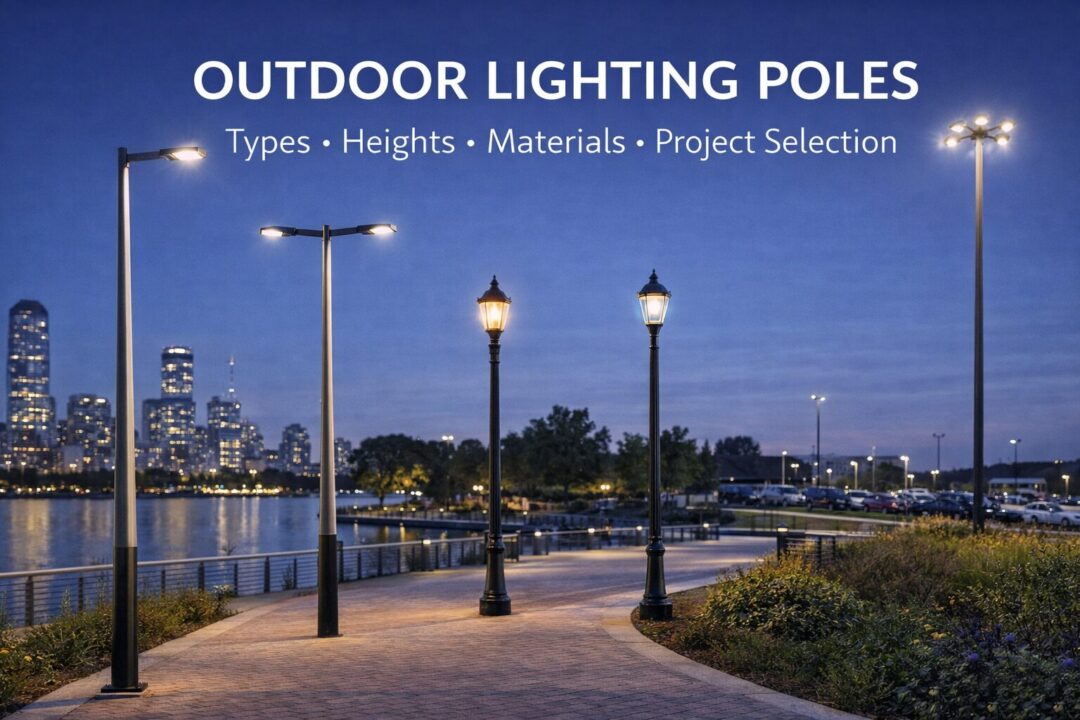
Outdoor lighting poles: Types, Heights, Materials, and How to Choose the Right Pole for Any Outdoor Project

Saturn F bollard light ART 1908 — Artay aluminium LED bollard, installed on site

An outdoor lighting pole is a structural component that happens to carry a light. It takes wind load on a lever arm, transfers it to a foundation, keeps water out of the wiring, and does all of that for decades in weather. Choosing one is therefore a structural and corrosion decision first, and an aesthetic one second — in that order, because the order is what people get wrong.

Artay Lighting has cast aluminium in its own die-cast foundry in Istanbul since 1999, fabricates hot-dip galvanized steel poles alongside it, and exports to more than 33 countries. This guide covers the types, the heights, the materials, the standards that govern them, and what it costs to have a pole made in a form that is not in anyone’s catalogue.

In this guide, we’ll cover outdoor pole types, typical heights, materials and coatings, essential technical specifications, and a simple checklist to help you choose correctly.

What are outdoor lighting poles used for?

Outdoor poles are used anywhere you need consistent night-time visibility, safety, and long-term durability:

  • Streets, boulevards, and highways (street lighting)
  • Parks, promenades, and walking paths
  • Parking lots and commercial zones
  • Residential communities and campuses
  • Ports, logistics areas, and industrial zones
  • Sports facilities and open public spaces

Types of outdoor lighting poles

Choosing the right type depends on area size, wind exposure, luminaire weight, and the lighting plan.

1) Street lighting poles

  • Designed for roads and vehicle-focused illumination
  • Commonly single-arm or double-arm configurations
  • Height selection is tied to road width and spacing

Browse models in our Street Lighting category.

2) Park & pathway poles

  • Lower heights for pedestrian comfort and visual harmony
  • Often paired with glare-controlled optics
  • Chosen for uniform light distribution without harsh hotspots

3) Parking lot poles

  • Higher mounting to cover wide areas with fewer poles
  • Requires careful wind and foundation design
  • Often uses stronger luminaires and wider optics

4) Decorative outdoor poles

  • Selected for plazas, promenades, and premium landscapes
  • Appearance is part of the project identity
  • Must still meet structural and durability requirements

Typical heights for outdoor lighting poles

Use these ranges as a practical baseline (final selection should follow the lighting design and photometrics):

  • 3–5 m: parks, pedestrian zones, pathways, landscaped areas
  • 6–8 m: residential streets, smaller roads, community areas
  • 9–12 m: boulevards, main roads, wider streets and open areas, large commercial zones, parking areas and industrial sites

Materials: galvanized steel vs. aluminum

Galvanized steel (hot-dip galvanized)

  • Strong, reliable, and cost-effective for outdoor projects
  • Excellent base corrosion protection when properly galvanized
  • Compatible with powder coating for premium finishes

Aluminum

  • Naturally corrosion resistant and lightweight
  • Useful where transport/handling advantages matter
  • Common in premium and decorative outdoor installations

Real durability is not just the metal: it’s also surface preparation, galvanizing quality, and the coating system used for the environment.

Coatings & finishes for outdoor environments

Outdoor poles face UV exposure, rain, salt, and abrasion. Choose a finish system that matches the climate and project expectations.

  • Hot-dip galvanizing: core protection against corrosion
  • Powder coating: aesthetic finish + added protection
  • Multi-layer paint systems: recommended for harsh climates (coastal/industrial)

What to specify:

  • Color (RAL code if needed)
  • Surface texture (matte / satin)
  • UV resistance expectations
  • Maintenance/touch-up approach for long-term appearance

Key specifications to check before you buy

1) Wind load and structural calculation

Wind engineering matters more as pole height and arm outreach increase. Confirm structural compliance for the project location.

2) Base plate, anchor bolts, and foundation detail

  • Foundation must match wind load + height + luminaire weight
  • Ask for anchor bolt pattern and base dimensions

3) Arm/bracket type and outreach

  • Outreach affects beam distribution and glare control
  • Match pole geometry to luminaire photometrics

4) Access door, wiring, and grounding

  • Serviceability matters (door quality, position, and size)
  • Safe cable routing and grounding provision should be clear

5) Luminaire compatibility

  • Spigot/top diameter compatibility
  • Mounting method and tilt adjustability if needed

Which standards govern an outdoor lighting pole?

The EN 40 series is the reference for lighting columns: EN 40-2 for dimensions and tolerances, EN 40-3-1 for characteristic loads, EN 40-3-3 for verification by calculation, EN 40-5 for steel columns and EN 40-6 for aluminium columns. Hot-dip galvanizing is governed by EN ISO 1461, and the luminaires themselves by EN 60598-2-3. Road lighting performance is set by the EN 13201 series, and for Turkish municipal and TEDAŞ work, TEDAŞ type-project approval is the document that will be asked for.

Artay luminaires are CE marked, and manufacturing is certified to TSE under TS EN 40 for lighting columns and to ISO 9001 for quality management. Cast bodies are produced in EN AC-46000 (AlSi9Cu3) alloy with a chromate pre-treatment before electrostatic powder coating. Ask any supplier for the certificate together with its scope — a certificate covering luminaires does not cover columns.

What does a custom outdoor pole cost, and how long does it take?

There are two different questions here and most suppliers answer them as one. Changing the dimensions of an existing pole — height, diameter, wall thickness, arm length, door position, base plate pattern, RAL colour — carries no tooling cost and no minimum order. Changing the form means casting a shape that does not yet exist, which needs a die: 4,000–50,000 USD one-time depending on part size, minimum 1,000–2,000 units, the die cut in 4–6 weeks, first delivery 7–9 weeks after drawing approval, and repeat orders on that die in 3 weeks with no further charge.

Two limits worth stating plainly. We do not make high-mast poles, and we buy in extruded aluminium profile rather than extruding it ourselves — as most of this market does. What is ours is the die-casting and the tool shop behind it. If your quantity does not justify a mould we will say so and propose the form in fabricated steel or profile instead. The full commercial picture is on the OEM and private label page, and coastal projects have their own requirements in the coastal lighting poles guide.

How to choose outdoor lighting poles (simple checklist)

  1. Define the area type (street, park, parking, industrial)
  2. Select target height range based on coverage and spacing
  3. Choose arm/bracket type and outreach
  4. Pick material + coating system based on climate
  5. Confirm wind load and foundation requirements
  6. Lock luminaire compatibility and service access
  7. Standardize models for consistency and easier maintenance

Common mistakes

  • Choosing height without lighting design: leads to poor uniformity or over-lighting
  • Ignoring wind exposure: taller poles need proper engineering
  • Weak coating choice: outdoor poles can age badly if the finish system is wrong

Need help selecting outdoor lighting poles?

Share your project location, target area type, preferred heights, and luminaire details. We can recommend a pole family and coating system suitable for long-term outdoor performance.

Related pole guides

Specifying bollards? Bollard lights: how to choose and specify them — why they are aluminium and not galvanized steel, glare control at eye level, and which standard actually applies.
Steel or aluminium? Lighting pole materials: galvanized steel or aluminium — coastal performance, chromate pre-treatment, and what happens at the joint where the two metals meet.

Not sure which type you need? Street lighting pole types: how to choose the right one — steel, extruded aluminium, die-cast and bollards compared on height, corrosion environment, EN 40 standards and what changes when the form is made to your own drawing.

Choosing a supplier? Street lighting pole manufacturers in Turkey: how to compare them — what nine Turkish manufacturers publish about casting, standards, certificates and lead times, and the five questions worth asking every supplier.

All of these poles are produced by the same manufacturer: Artay casts housings and pole components in its own die-cast foundry in Istanbul, which is why a form that exists in no catalogue can still be produced. See the LED lighting fixtures manufacturer in Istanbul behind these guides, or browse the full outdoor and street lighting product range.

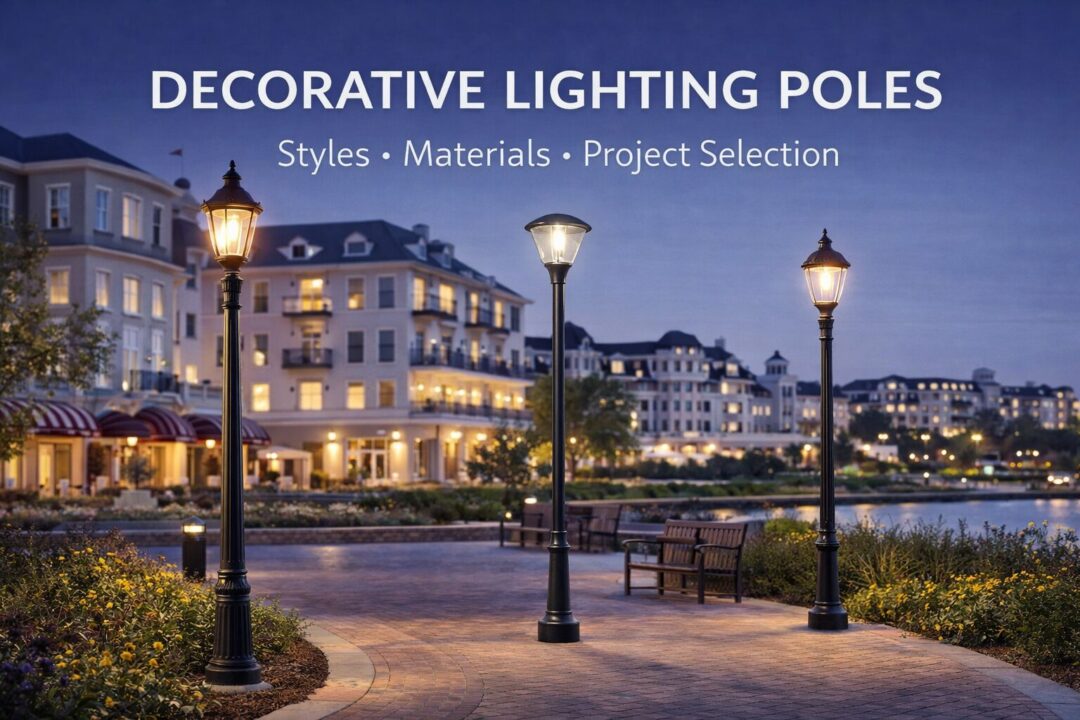
Decorative lighting poles: Styles, Materials, and How to Choose Poles for Parks, Streets & Plazas

Ephesus Dual bollard light ART 1903 — Artay aluminium LED bollard, product view

A decorative lighting pole is judged twice: once at night as a lighting instrument, and once by day as a piece of street furniture that will stand in the same spot for thirty years. That second judgement is why architects and municipalities specify decorative poles at all, and it is the one most catalogues ignore. A pole that photographs well and corrodes at the base flange has failed, and so has a pole that lasts thirty years in a form nobody wanted.

Artay Lighting has cast aluminium in its own die-cast foundry in Istanbul since 1999 and exports to more than 33 countries. Because the aluminium is cast rather than fabricated, a decorative form that does not exist yet can be made — which is a different conversation from choosing between catalogue styles, and this guide covers both.

What are decorative lighting poles?

Decorative poles are outdoor lighting structures designed with aesthetics as a primary requirement—without sacrificing structural safety and corrosion resistance. They commonly feature classic silhouettes, ornamental details, and styled brackets that fit specific environments such as heritage areas or premium landscapes.

Where decorative lighting poles are used

  • Historic streets & heritage zones
  • Parks, gardens, and promenades
  • Town squares and public plazas
  • Hotels, resorts, and waterfronts
  • Residential communities and premium landscapes
  • Retail streets and pedestrian-focused districts

In these areas, the “look” is not optional. The pole must match paving, benches, signage, and the overall architectural language.

Popular styles of decorative lighting poles

1) Classic / heritage poles

  • Traditional profiles with ornamental bases and classic brackets
  • Works well in old-town streets, heritage promenades, and municipal squares

2) Contemporary decorative poles

  • Cleaner lines than heritage poles, but still “designed” and premium
  • Common in modern plazas, mixed-use developments, and commercial landscapes

3) Lantern-style and globe-style decorative poles

  • Creates a recognizable “street identity” for pedestrian zones
  • Important to control glare and light spill with proper optics/shields

4) Single vs. multi-luminaire decorative poles

  • Single-head: cleaner look, easier maintenance
  • Multi-head: iconic appearance for squares and entrances (requires careful photometrics)

Materials: what works best for decorative poles

Galvanized steel

  • Strong and cost-effective for municipal and public projects
  • Excellent corrosion protection when hot-dip galvanized
  • Ideal base for powder coating (decorative color finishes)

Aluminum

  • Naturally corrosion resistant and lighter to handle
  • Common in premium landscapes and coastal-friendly selections
  • Supports refined detailing and smoother surface finishing

Reality check: A decorative pole is only as good as its coating system and manufacturing quality. If the base preparation is weak, the most beautiful pole will age poorly outdoors.

Finishes & colors: the “project identity” layer

Decorative poles are often specified in signature colors to match a district brand or architectural palette. The finish must resist UV exposure, moisture, and abrasion.

  • Powder coating (most common for decorative color finishes)
  • Hot-dip galvanizing as base protection
  • Multi-layer coating systems for harsh climates (coastal/industrial)

What to define in your spec:

  • Color code (commonly RAL)
  • Surface texture (matte / satin)
  • UV resistance expectations
  • Touch-up and maintenance approach

Key specifications to check before you buy

1) Pole height (match the area type)

  • 3–5 m: pedestrian areas, parks, paths
  • 6–8 m: streets, residential roads
  • 9–12 m: boulevards and wider roads (less common for “ornamental” styles)

2) Bracket style and outreach

  • Bracket outreach affects light distribution and uniformity
  • Choose bracket style that matches both aesthetics and photometrics

3) Glare control and optics

  • Lantern/globe designs can cause glare if optics are poor
  • Ask for shield/optical options for pedestrian comfort

4) Base design and anchor system

  • Decorative bases should still meet structural requirements
  • Confirm base plate, anchor bolt pattern, and foundation details

5) Service access and wiring

  • Access door quality matters for long-term maintenance
  • Ensure safe cable routing and grounding provision

What do architects actually ask for when specifying decorative poles?

In our experience the questions arrive in a consistent order, and almost none of them are about style. Can the form be changed? — whether the supplier can produce a shape that suits the facade rather than a catalogue silhouette. What is the daytime appearance? — the pole is a vertical element in the streetscape at eye level, so the section, the taper and the base profile matter more than the luminaire. What is the finish, exactly? — RAL number, gloss level and, on coastal or de-iced sites, what pre-treatment sits under the coating.

Then the practical ones. Does it match the rest of the street furniture? Benches, bollards and litter bins are usually specified together, which is why a supplier who can also cast a matching bollard is worth more than one who cannot. Can it be repeated in ten years? A municipality replacing a damaged pole in year twelve needs the same form, not the nearest current model — with a cast product the die still exists, and that is the honest reason to ask who owns the tooling. And what does the deviation cost? — the answer is different for a dimensional change and a form change, and most suppliers blur the two.

The last one is worth being precise about, because it decides the budget. Changing height, diameter, arm length, door position or RAL colour needs no tooling and carries no minimum order. Changing the form means cutting a die: a one-time cost of 4,000–50,000 USD with a minimum of 1,000–2,000 units, the die cut in 4–6 weeks, first delivery 7–9 weeks after drawing approval, and repeat orders on that die in 3 weeks with no further charge. The full commercial picture is on the OEM and private label page.

Can a city have a decorative pole of its own?

Yes, and this is the case our foundry exists for. A cast part comes from a mould, so a base carrying a municipality’s emblem, a fluted column matched to a historic street, or a pole family unique to one square is ordinary work rather than a special project. Send a technical drawing, a 3D model, or a photograph of a form you have seen somewhere, and we return a technical drawing with a wind-load calculation before anything is committed.

Two honest limits. If your quantity does not reach the minimum, say so early — in many cases the form can be achieved in fabricated steel or extruded profile without a die at all, and we will tell you that rather than sell you tooling you do not need. And we do not make high-mast poles, so a decorative treatment above 12 m is not something we can offer.

Our own decorative range runs to about fifty models named after ancient Anatolian settlements — Ephesus, Aphrodisias, Zeugma, Xanthos and others. The ancient cities collection lists all of them with the site behind each name.

Which standards apply to a decorative pole?

The same ones that apply to any lighting column, and a decorative form does not exempt a pole from them. The EN 40 series is the reference: EN 40-2 for dimensions and tolerances, EN 40-3-1 for characteristic loads, EN 40-3-3 for verification by calculation, EN 40-5 for steel columns and EN 40-6 for aluminium columns. Hot-dip galvanizing is governed by EN ISO 1461 and luminaires by EN 60598-2-3. For Turkish municipal and TEDAŞ work, TEDAŞ type-project approval is the document that will be asked for.

Artay luminaires are CE marked, and manufacturing is certified to TSE under TS EN 40 for lighting columns and to ISO 9001 for quality management. Cast bodies are produced in EN AC-46000 (AlSi9Cu3) alloy with a chromate pre-treatment before electrostatic powder coating. Ask any supplier for the certificate together with its scope — a certificate covering luminaires does not cover columns, and on a decorative project the column is the part being argued about.

How to choose decorative lighting poles (simple checklist)

  1. Define the environment style (heritage, modern plaza, resort, park)
  2. Select pole family (same silhouette across the whole area)
  3. Choose height based on mounting and spacing
  4. Confirm bracket style + outreach with luminaire photometrics
  5. Pick material + coating system based on climate
  6. Lock the finish color and texture (project identity)
  7. Standardize spare parts and maintenance access

Common mistakes

  • Choosing style without photometrics: beautiful poles can still produce poor lighting
  • Ignoring glare: decorative optics must protect pedestrian comfort
  • Inconsistent families: mixing silhouettes makes the streetscape look random
  • Weak coatings: decorative colors fade and chip if the system is not specified properly

Need help selecting decorative lighting poles?

Share your project location, target heights, area type (park/street/plaza), and preferred luminaire style. We can recommend a decorative pole family and finish system that matches both aesthetics and durability requirements.

Browse outdoor models in our Street Lighting category and select a consistent pole family for your project.

Related pole guides

Specifying bollards? Bollard lights: how to choose and specify them — why they are aluminium and not galvanized steel, glare control at eye level, and which standard actually applies.
Steel or aluminium? Lighting pole materials: galvanized steel or aluminium — coastal performance, chromate pre-treatment, and what happens at the joint where the two metals meet.

Not sure which type you need? Street lighting pole types: how to choose the right one — steel, extruded aluminium, die-cast and bollards compared on height, corrosion environment, EN 40 standards and what changes when the form is made to your own drawing.

Choosing a supplier? Street lighting pole manufacturers in Turkey: how to compare them — what nine Turkish manufacturers publish about casting, standards, certificates and lead times, and the five questions worth asking every supplier.

All of these poles are produced by the same manufacturer: Artay casts housings and pole components in its own die-cast foundry in Istanbul, which is why a form that exists in no catalogue can still be produced. See the LED lighting fixtures manufacturer in Istanbul behind these guides, or browse the full outdoor and street lighting product range.

Modern lighting poles: Design, Materials, and How to Choose the Right Pole for Streets & Public Spaces

Saturn Z bollard light ART 1909 — Artay aluminium LED bollard, installed on site
Modern Artay lighting poles installed along an urban street

A modern lighting pole is a structural component first and a design object second. It carries a luminaire on a lever arm in wind, stands in the same square for thirty years, and has to be verified to EN 40 before any of its styling matters. The design question — clean lines, concealed wiring, a form that suits the architecture — is real, but it is decided after the structure is settled, not instead of it.

Artay Lighting has cast aluminium in its own die-cast foundry in Istanbul since 1999 and fabricates steel and extruded aluminium poles alongside it, exporting to more than 33 countries. This guide covers what makes a pole modern, which materials and finishes matter, the standards that govern the structure, and what it costs and takes to have a pole made in a form that is not in anyone’s catalogue.

In this guide, we’ll break down what makes a pole “modern,” which materials and finishes matter most, what technical specs to check, and how to select the right pole for your project without guessing.

What makes a pole “modern” in lighting design?

“Modern” is not just a style label. In outdoor lighting, modern typically means:

  • Clean geometry: tapered round/conical, octagonal, or minimal square profiles
  • Integrated look: sleek brackets, hidden cable paths, tidy access doors
  • Material honesty: galvanized steel or aluminum with purposeful finishing
  • Performance compatibility: designed for modern LED luminaires and optics
  • Project consistency: a coherent family of heights, arms, and finishes across an area

A modern pole is intended to look intentional in daylight and perform reliably at night.

Where modern lighting poles are used

Modern poles are chosen when the environment is architectural, curated, or high-visibility:

  • Urban streets & boulevards
  • Public parks & walking paths
  • Residential communities & gated sites
  • Commercial zones, malls, and business districts
  • Campuses and hospitals
  • Airports / logistics zones (where durable, standardized solutions are needed)

Types of modern lighting poles

Even “modern” has categories. Choosing the right type is mostly about height, wind load, and the luminaires you plan to mount.

1) Tapered conical poles (most common)

  • Minimal silhouette
  • Strong structural behavior under wind load
  • Ideal for streets and large open areas

2) Straight round or octagonal poles

  • Sharper architectural expression
  • Often preferred for modern campuses, plazas, and promenades

3) Single-arm vs. double-arm modern poles

  • Single-arm: streets, one-side illumination, cleaner look
  • Double-arm: wider roads, medians, boulevards

4) Integrated / smart-ready poles

  • Designed to host add-ons: cameras, banners, sensors, smart controllers
  • Cleaner wiring and service access is critical here

Materials: what actually matters

Galvanized steel (hot-dip galvanized)

For most outdoor projects, galvanized steel is the workhorse:

  • Strong and cost-effective
  • Excellent corrosion resistance when properly galvanized
  • Compatible with additional powder coating for premium finishes

Best for: municipalities, streets, coastal-adjacent areas (with correct coating system), large-scale installations.

Aluminum

  • Naturally corrosion resistant
  • Lightweight (transport and handling advantages)
  • Often used in decorative/architectural contexts

Best for: premium landscapes, projects where weight and corrosion resistance are priorities.

Reality check: “Modern look” can be achieved with either material. Long-term durability depends more on the coating system and manufacturing quality than the word “modern.”

Finishes & coatings: the durability layer

A modern pole can look perfect for 6 months and then age badly if the finish is weak. For long service life, the finish system must match the environment.

Common systems:

  • Hot-dip galvanizing (base protection)
  • Powder coating (aesthetic + extra protection)
  • Optional multi-layer paint systems for harsh environments

What to specify:

  • Color (often RAL codes)
  • Surface texture (matte/satin)
  • UV resistance expectation (important in sunny climates)

Key specifications to check before you buy

If you want to choose modern lighting poles professionally (and avoid site headaches), verify these:

1) Pole height

  • 3–5 m: pedestrian zones, parks
  • 6–8 m: streets, residential roads
  • 9–12 m: boulevards, main roads, large open areas

2) Arm / bracket type and outreach

  • Outreach affects beam distribution and glare control
  • Match pole arm to luminaire photometrics (don’t guess)

3) Base plate and anchor bolts

  • Foundation detail must match wind load + height + outreach
  • Ask for anchor bolt pattern and base dimensions

4) Wind load and structural calculation

Modern poles are often slimmer, which makes wind engineering more important, not less.

5) Access door and wiring

  • Serviceability matters: access door size, position, and quality
  • Cable routing and grounding provision should be clear

6) Luminaire compatibility

  • Spigot/top diameter compatibility
  • Mounting method and tilt adjustability if needed

How to choose modern lighting poles (simple checklist)

  1. Define the area type (street, boulevard, park, campus)
  2. Select height based on required coverage and spacing
  3. Decide arm type (single/double, outreach)
  4. Choose material + coating based on climate and budget
  5. Confirm structural/wind requirements for the location
  6. Lock luminaire compatibility (top size, mounting, optics)
  7. Standardize models (choose 1–3 families to keep the project consistent)

Common mistakes (and how to avoid them)

  • Choosing by looks only: wind load and bracket outreach get ignored
  • One coating for every climate: coastal/industrial areas need stronger systems
  • Wrong arm/outreach: poor uniformity, glare, and complaints
  • No standardization: inconsistent look and harder maintenance
  • Copying competitor images: legal risk + weak SEO benefit

Which standards govern a modern lighting pole?

The EN 40 series is the reference for lighting columns: EN 40-2 for dimensions and tolerances, EN 40-3-1 for characteristic loads, EN 40-3-3 for verification by calculation, EN 40-5 for steel columns and EN 40-6 for aluminium columns. Hot-dip galvanizing is governed by EN ISO 1461, and the luminaires themselves by EN 60598-2-3. For Turkish municipal and TEDAŞ work, TEDAŞ type-project approval is the document that will be asked for.

Artay luminaires are CE marked, and manufacturing is certified to TSE under TS EN 40 for lighting columns and to ISO 9001 for quality management. Cast aluminium bodies are produced in EN AC-46000 (AlSi9Cu3) alloy, with a chromate pre-treatment before electrostatic powder coating.

Ask every supplier for the certificate together with its scope and expiry date, and read the scope rather than the logo — a certificate covering luminaires does not cover poles, and the two are frequently confused in tender documents.

What does a custom modern pole cost, and how long does it take?

This is the question almost nobody in this market answers publicly, so here are the figures. Changing the dimensions of an existing pole — height, diameter, wall thickness, arm length, door position, base plate pattern, RAL colour — carries no tooling cost and no minimum order, because those are cutting and rolling parameters rather than a new shape.

Changing the form is a different job. A shape that does not exist has to be cast, and casting needs a die. A new mould is a one-time cost of 4,000–50,000 USD depending on part size, with a minimum order of 1,000–2,000 units. Cutting the die takes 4–6 weeks and series production a further 3 weeks, so a first delivery lands 7–9 weeks after drawing approval. Every repeat order on that mould ships in 3 weeks, with no further mould charge and no minimum.

If your quantity does not reach that minimum, say so early. In many cases the form can be achieved in fabricated steel or extruded profile instead, without a die at all.

Where do modern poles fit in the Artay range?

The urban and decorative pole families are cast in our own foundry, and the models in them are named after ancient Anatolian settlements — Zeugma, Aspendos, Tralleis, Selge and others. The ancient cities collection lists all fifty with the site behind each name. For the technical decisions behind them, see street lighting pole types and lighting pole materials; for public-space projects specifically, the urban lighting guide covers the standards and the obtrusive-light requirement that arrives late in a project.

Why modern lighting poles are worth it

  • Cleaner streetscape and stronger project identity
  • Better LED integration (performance + maintenance)
  • Long-term durability with the right galvanized/coating system
  • Standardized parts that reduce operational cost

Need help selecting modern lighting poles?

Share your project location (wind/climate), required heights and road width, and preferred luminaire type. We can recommend a pole family and finish system that won’t age poorly.

Explore our Street Lighting product category to compare modern pole models for outdoor projects.

Related pole guides

Specifying bollards? Bollard lights: how to choose and specify them — why they are aluminium and not galvanized steel, glare control at eye level, and which standard actually applies.
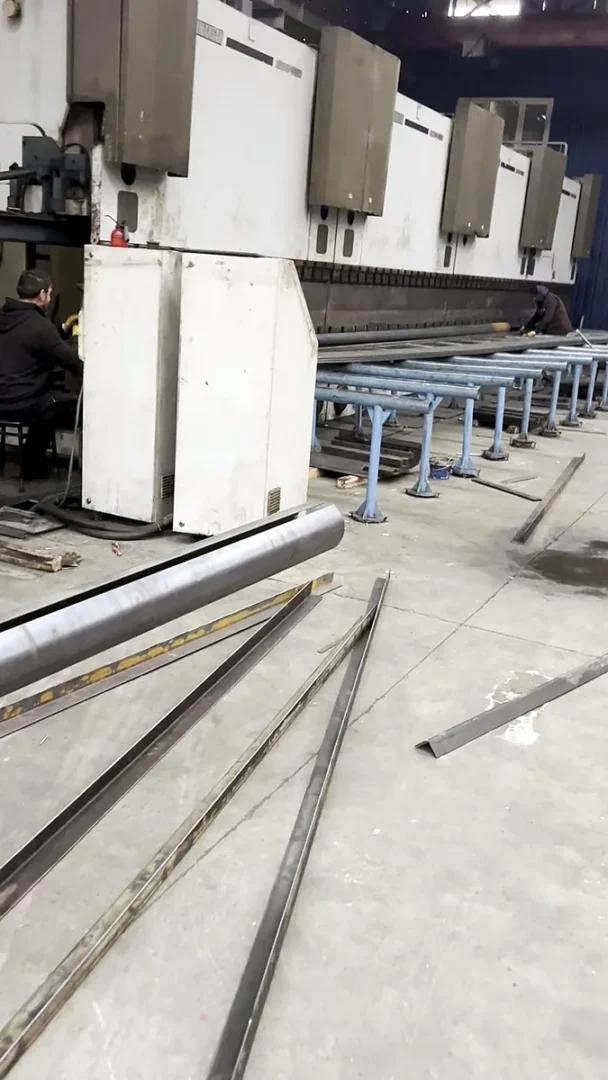
Steel or aluminium? Lighting pole materials: galvanized steel or aluminium — coastal performance, chromate pre-treatment, and what happens at the joint where the two metals meet.

Not sure which type you need? Street lighting pole types: how to choose the right one — steel, extruded aluminium, die-cast and bollards compared on height, corrosion environment, EN 40 standards and what changes when the form is made to your own drawing.

Choosing a supplier? Street lighting pole manufacturers in Turkey: how to compare them — what nine Turkish manufacturers publish about casting, standards, certificates and lead times, and the five questions worth asking every supplier.

All of these poles are produced by the same manufacturer: Artay casts housings and pole components in its own die-cast foundry in Istanbul, which is why a form that exists in no catalogue can still be produced. See the LED lighting fixtures manufacturer in Istanbul behind these guides, or browse the full outdoor and street lighting product range.