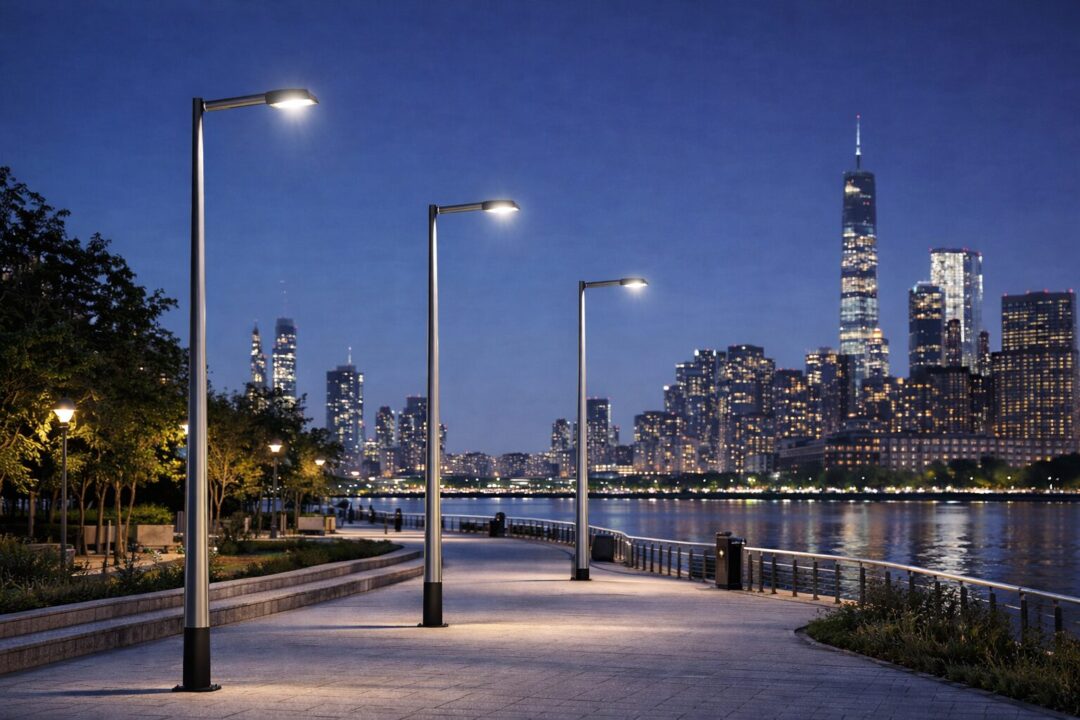


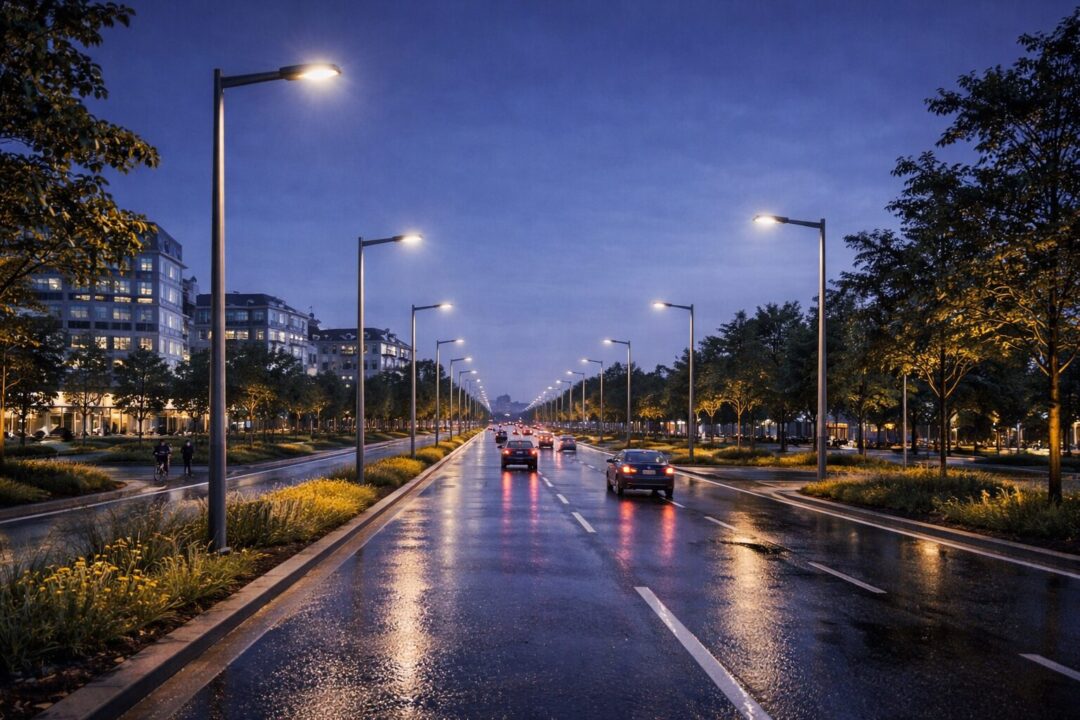
Street lighting poles: Types, Heights, Galvanized Steel, and How to Choose Poles for Road Projects

Street lighting poles are the structural foundation of road illumination. The right pole height, bracket outreach, and material/coating system determine safety, uniformity, and long-term durability—especially in windy or coastal environments.

In this guide, you’ll learn the most common street pole types, recommended height ranges, key specifications to check, and how to select poles for streets without costly mistakes.

What are street lighting poles used for?

Street poles are designed for vehicle-focused lighting, visibility, and road safety across different road classes:

  • Residential streets and local roads
  • Main roads and boulevards
  • Medians and divided highways (project dependent)
  • Intersections, roundabouts, and critical junctions
  • Industrial roads and logistics access routes

Types of street lighting poles

The correct type depends on road width, lighting layout, luminaire weight, and wind exposure.

1) Single-arm street lighting poles

  • Most common solution for standard streets
  • Clean appearance and easier maintenance
  • Arm outreach must match photometrics (avoid guessing)

2) Double-arm street lighting poles

  • Used for wider roads, medians, and boulevards
  • Can improve coverage symmetry when designed properly
  • Requires stronger foundation and wind verification

3) Tapered conical vs. octagonal poles

  • Tapered conical: minimal silhouette, strong wind behavior, very popular
  • Octagonal: sharper architectural look, common in modern streetscapes

4) Smart-ready street poles

  • Supports smart controllers, sensors, cameras, banners (project dependent)
  • Cleaner wiring paths and service access become critical

Recommended heights for street lighting poles

Use these ranges as a starting point. Final heights should follow spacing and luminaire photometrics:

  • 6–8 m: residential streets, local roads
  • 9–10 m: main roads and wider streets
  • 12 m: boulevards and large open road sections

Height choice is never “only aesthetic.” It controls spacing, uniformity, glare, and overall road visibility.

Materials: why galvanized steel dominates street projects

Hot-dip galvanized steel

  • Strong, durable, and cost-effective for road infrastructure
  • Excellent corrosion resistance when galvanizing is done correctly
  • Compatible with powder coating for premium finishes

Aluminum (when it makes sense)

  • Lightweight handling advantages
  • Naturally corrosion resistant
  • Often selected for premium or special-case installations

Important: long-term performance depends on manufacturing quality, coating system, and correct foundation detail—not only the metal type.

Coatings & finishes for street environments

Street poles face UV, rain, dust, and abrasion. Choose a finish system based on climate and expectations:

  • Hot-dip galvanizing: base corrosion protection
  • Powder coating: appearance + extra protection
  • Multi-layer systems: recommended for harsh climates (coastal/industrial)

Specify clearly:

  • Color (RAL code)
  • Texture (matte / satin)
  • UV resistance expectations
  • Maintenance/touch-up approach

Key specifications to check before ordering

1) Wind load and structural compliance

Wind exposure increases with height and bracket outreach. Confirm structural calculations suitable for the project location.

2) Bracket/arm outreach

  • Outreach affects beam distribution and glare control
  • Match arm selection to luminaire photometrics

3) Base plate, anchor bolts, and foundation detail

  • Foundation must match wind + height + luminaire weight
  • Ask for anchor bolt pattern and base dimensions

4) Access door, wiring, and grounding

  • Serviceability matters for maintenance teams
  • Ensure safe cable routing and grounding provision

5) Luminaire compatibility

  • Spigot/top diameter compatibility
  • Mounting method and tilt adjustability if needed

How to choose street lighting poles (simple checklist)

  1. Define road type and width (residential, main road, boulevard)
  2. Select target height range based on coverage and spacing
  3. Choose single or double-arm configuration
  4. Pick material + coating system for the climate
  5. Confirm wind load and foundation requirements
  6. Lock luminaire compatibility and service access
  7. Standardize pole families for consistent streetscapes

Browse street lighting models

Explore models and options in our Street Lighting category and select a pole family based on your target heights and bracket type.

Need help selecting street lighting poles?

Share your project location, target heights, road width, and luminaire model. We can recommend a pole family and coating system designed for long-term street performance.
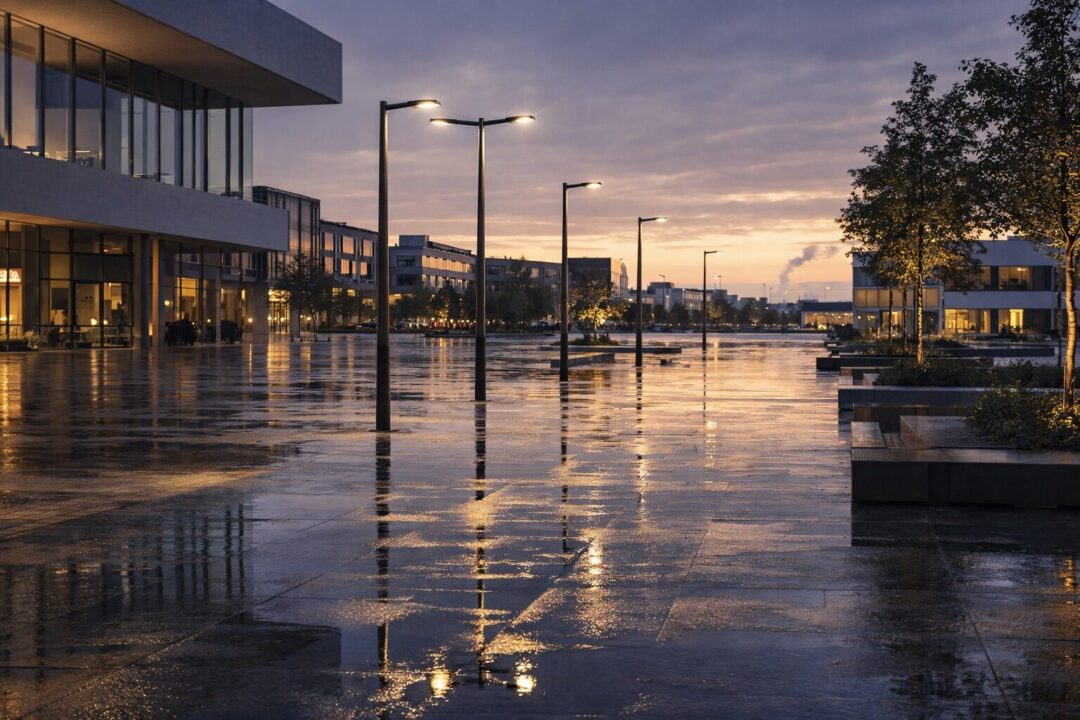
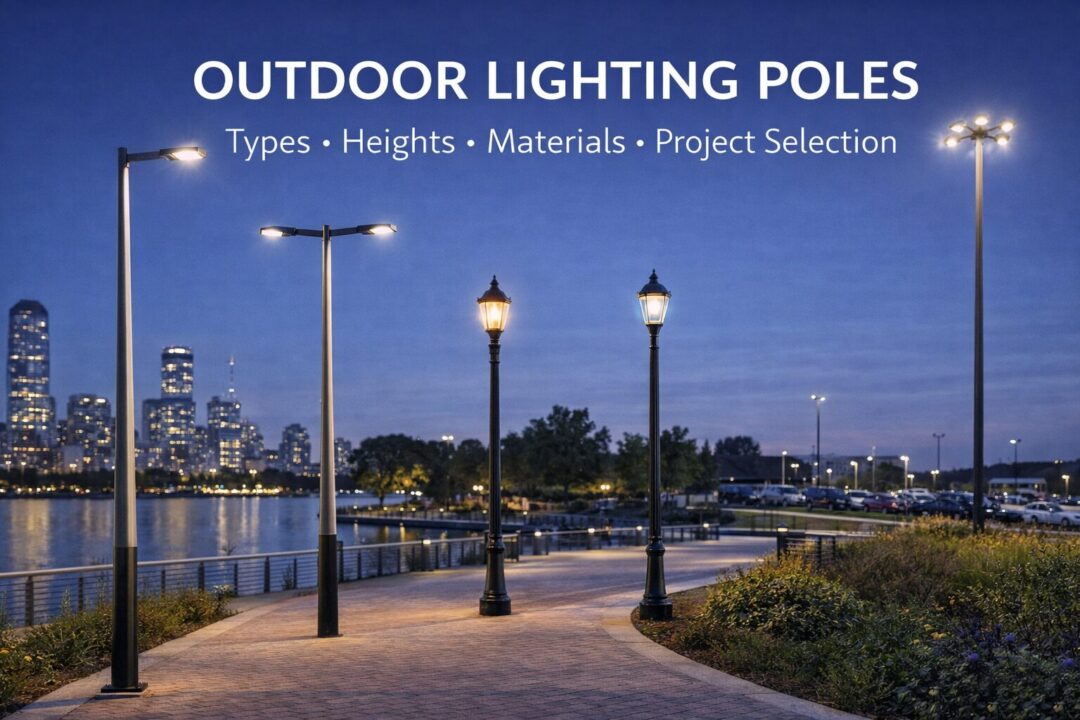
Modern outdoor lighting poles: LED-Ready Designs, Materials, and How to Select Poles for Streets, Parks & Developments

Modern outdoor lighting poles are built for today’s projects: clean architectural lines, reliable outdoor durability, and seamless compatibility with LED luminaires. They’re used in streets, parks, promenades, campuses, residential communities, and commercial landscapes where the pole must look premium in daylight and perform perfectly at night.

This guide explains what makes an outdoor pole “modern,” which materials and coatings last longest, the key specs to check, and a simple checklist to select modern poles without costly mistakes.

What makes outdoor lighting poles “modern”?

“Modern” in outdoor lighting isn’t only a visual style—it’s a combination of form, engineering, and LED compatibility. Modern outdoor poles typically feature:

  • Minimal silhouettes: tapered conical, clean round, or crisp octagonal profiles
  • LED-ready integration: designed for modern luminaires and mounting standards
  • Cleaner details: tidy access doors, hidden cable routing, and refined base proportions
  • Project consistency: a family of matched heights, arms, and finishes across the site
  • Smart-ready options: support for controllers, sensors, cameras, or banners when needed

Where modern outdoor lighting poles are used

  • Urban streets and boulevards
  • Parks, pathways, and waterfront promenades
  • Residential communities and mixed-use developments
  • Commercial zones, parking areas, and business districts
  • Campuses, hospitals, and public institutions
  • Industrial sites where a clean, durable standard is required

Types of modern outdoor lighting poles

The “best” pole type depends on the lighting plan, area scale, wind exposure, and luminaire requirements. Here are the most common modern configurations:

1) Tapered conical modern poles

  • Most popular for streets and large outdoor projects
  • Strong structural behavior under wind load
  • Premium, minimal appearance

2) Straight round or octagonal poles

  • Sharper architectural expression than conical forms
  • Often used in campuses, plazas, and modern developments

3) Single-arm vs. double-arm modern poles

  • Single-arm: cleaner look, common for streets and one-side illumination
  • Double-arm: wider roads, medians, and boulevard projects

4) Smart-ready modern poles

  • Supports accessories (controllers, sensors, cameras, banners)
  • Requires cleaner wiring paths and service access

Recommended heights (practical ranges)

Use these as a starting point—final heights should follow photometrics and spacing design:

  • 3–5 m: pedestrian zones, parks, pathways
  • 6–8 m: residential streets, smaller roads, community areas
  • 9–12 m: boulevards, main roads, larger open spaces
  • 14 m+: parking areas and large commercial/industrial zones (project dependent)

Materials and durability: what to choose

Galvanized steel (hot-dip galvanized)

  • Strong and cost-effective for modern outdoor projects
  • Excellent corrosion resistance when galvanizing is done correctly
  • Ideal base for powder coating (premium finishes)

Aluminum

  • Lightweight and naturally corrosion resistant
  • Often selected for premium landscapes and easier handling
  • Supports refined finishing and clean surface appearance

Key point: long-term performance depends on coating quality and surface preparation as much as the metal itself.

Coatings & finishes for modern outdoor poles

Modern poles often use matte or satin powder-coated finishes for a premium look. To keep that look outdoors, the finish system must match the environment:

  • Hot-dip galvanizing as base protection
  • Powder coating for color + extra durability
  • Multi-layer coating systems for harsh climates (coastal/industrial)

Define in your spec:

  • Color (RAL code)
  • Texture (matte / satin)
  • UV resistance expectations
  • Touch-up and maintenance approach

Key specifications to check before you buy

1) Wind load and structural compliance

Modern poles can be slimmer and taller, so wind engineering is critical. Confirm structural calculations for the project location.

2) Base plate, anchor bolts, and foundation details

  • Foundation must match wind load + height + luminaire weight
  • Ask for anchor bolt pattern and base dimensions

3) Arm/bracket type and outreach

  • Outreach affects beam distribution and glare control
  • Match pole arms to luminaire photometrics

4) Access door, wiring, and grounding

  • Service access should be durable and easy for maintenance teams
  • Cable routing and grounding provision must be clear

5) Luminaire compatibility

  • Spigot/top diameter compatibility
  • Mounting method and tilt adjustability if needed

How to choose modern outdoor lighting poles (simple checklist)

  1. Define the area type (street, park, development, parking)
  2. Select height range based on coverage and spacing
  3. Choose pole profile (conical/round/octagonal) for project style
  4. Pick arm/bracket type and outreach
  5. Select material + coating system for the climate
  6. Confirm wind load and foundation requirements
  7. Standardize a pole family for consistent design and maintenance

Recommended internal link (category)

If your project is street-focused, browse models in our Street Lighting category and select a modern pole family that matches your target heights and bracket style.

Need help selecting modern outdoor lighting poles?

Share your project location, target heights, road widths, wind exposure level, and the luminaire model. We can recommend a modern pole family and finish system designed for long-term outdoor performance.

Outdoor lighting poles: Types, Heights, Materials, and How to Choose the Right Pole for Any Outdoor Project

Outdoor lighting poles are the backbone of safe and reliable outdoor illumination. Whether it’s a city street, a park path, a parking area, an industrial site, or a residential community, the pole is the structural system that carries the luminaire, protects wiring, and survives weather year after year.

In this guide, we’ll cover outdoor pole types, typical heights, materials and coatings, essential technical specifications, and a simple checklist to help you choose correctly.

What are outdoor lighting poles used for?

Outdoor poles are used anywhere you need consistent night-time visibility, safety, and long-term durability:

  • Streets, boulevards, and highways (street lighting)
  • Parks, promenades, and walking paths
  • Parking lots and commercial zones
  • Residential communities and campuses
  • Ports, logistics areas, and industrial zones
  • Sports facilities and open public spaces

Types of outdoor lighting poles

Choosing the right type depends on area size, wind exposure, luminaire weight, and the lighting plan.

1) Street lighting poles

  • Designed for roads and vehicle-focused illumination
  • Commonly single-arm or double-arm configurations
  • Height selection is tied to road width and spacing

Browse models in our Street Lighting category.

2) Park & pathway poles

  • Lower heights for pedestrian comfort and visual harmony
  • Often paired with glare-controlled optics
  • Chosen for uniform light distribution without harsh hotspots

3) Parking lot poles

  • Higher mounting to cover wide areas with fewer poles
  • Requires careful wind and foundation design
  • Often uses stronger luminaires and wider optics

4) High mast poles (large-area illumination)

  • Used for ports, highways, airports, and large logistics zones
  • Very tall structures with multi-luminaire arrays
  • Engineering and wind load calculations are critical

5) Decorative outdoor poles

  • Selected for plazas, promenades, and premium landscapes
  • Appearance is part of the project identity
  • Must still meet structural and durability requirements

Typical heights for outdoor lighting poles

Use these ranges as a practical baseline (final selection should follow the lighting design and photometrics):

  • 3–5 m: parks, pedestrian zones, pathways, landscaped areas
  • 6–8 m: residential streets, smaller roads, community areas
  • 9–12 m: boulevards, main roads, wider streets and open areas
  • 14 m+: large commercial zones, parking areas, industrial sites (project dependent)

Materials: galvanized steel vs. aluminum

Galvanized steel (hot-dip galvanized)

  • Strong, reliable, and cost-effective for outdoor projects
  • Excellent base corrosion protection when properly galvanized
  • Compatible with powder coating for premium finishes

Aluminum

  • Naturally corrosion resistant and lightweight
  • Useful where transport/handling advantages matter
  • Common in premium and decorative outdoor installations

Real durability is not just the metal: it’s also surface preparation, galvanizing quality, and the coating system used for the environment.

Coatings & finishes for outdoor environments

Outdoor poles face UV exposure, rain, salt, and abrasion. Choose a finish system that matches the climate and project expectations.

  • Hot-dip galvanizing: core protection against corrosion
  • Powder coating: aesthetic finish + added protection
  • Multi-layer paint systems: recommended for harsh climates (coastal/industrial)

What to specify:

  • Color (RAL code if needed)
  • Surface texture (matte / satin)
  • UV resistance expectations
  • Maintenance/touch-up approach for long-term appearance

Key specifications to check before you buy

1) Wind load and structural calculation

Wind engineering matters more as pole height and arm outreach increase. Confirm structural compliance for the project location.

2) Base plate, anchor bolts, and foundation detail

  • Foundation must match wind load + height + luminaire weight
  • Ask for anchor bolt pattern and base dimensions

3) Arm/bracket type and outreach

  • Outreach affects beam distribution and glare control
  • Match pole geometry to luminaire photometrics

4) Access door, wiring, and grounding

  • Serviceability matters (door quality, position, and size)
  • Safe cable routing and grounding provision should be clear

5) Luminaire compatibility

  • Spigot/top diameter compatibility
  • Mounting method and tilt adjustability if needed

How to choose outdoor lighting poles (simple checklist)

  1. Define the area type (street, park, parking, industrial)
  2. Select target height range based on coverage and spacing
  3. Choose arm/bracket type and outreach
  4. Pick material + coating system based on climate
  5. Confirm wind load and foundation requirements
  6. Lock luminaire compatibility and service access
  7. Standardize models for consistency and easier maintenance

Common mistakes

  • Choosing height without lighting design: leads to poor uniformity or over-lighting
  • Ignoring wind exposure: taller poles need proper engineering
  • Weak coating choice: outdoor poles can age badly if the finish system is wrong
  • No internal linking: blog, category, and products should connect clearly

Need help selecting outdoor lighting poles?

Share your project location, target area type, preferred heights, and luminaire details. We can recommend a pole family and coating system suitable for long-term outdoor performance.

Decorative lighting poles: Styles, Materials, and How to Choose Poles for Parks, Streets & Plazas

Decorative lighting poles are chosen when the pole must do more than “hold a luminaire.” In parks, promenades, historic streets, boutique districts, and landscaped communities, the pole becomes part of the architecture. The goal is simple: visual character in daylight, reliable illumination at night, and durability for years of outdoor exposure.

In this guide, we’ll cover the main decorative styles, best materials and finishes, key technical specs to check, and a practical selection checklist so your project looks cohesive and performs correctly.

What are decorative lighting poles?

Decorative poles are outdoor lighting structures designed with aesthetics as a primary requirement—without sacrificing structural safety and corrosion resistance. They commonly feature classic silhouettes, ornamental details, and styled brackets that fit specific environments such as heritage areas or premium landscapes.

Where decorative lighting poles are used

  • Historic streets & heritage zones
  • Parks, gardens, and promenades
  • Town squares and public plazas
  • Hotels, resorts, and waterfronts
  • Residential communities and premium landscapes
  • Retail streets and pedestrian-focused districts

In these areas, the “look” is not optional. The pole must match paving, benches, signage, and the overall architectural language.

Popular styles of decorative lighting poles

1) Classic / heritage poles

  • Traditional profiles with ornamental bases and classic brackets
  • Works well in old-town streets, heritage promenades, and municipal squares

2) Contemporary decorative poles

  • Cleaner lines than heritage poles, but still “designed” and premium
  • Common in modern plazas, mixed-use developments, and commercial landscapes

3) Lantern-style and globe-style decorative poles

  • Creates a recognizable “street identity” for pedestrian zones
  • Important to control glare and light spill with proper optics/shields

4) Single vs. multi-luminaire decorative poles

  • Single-head: cleaner look, easier maintenance
  • Multi-head: iconic appearance for squares and entrances (requires careful photometrics)

Materials: what works best for decorative poles

Galvanized steel

  • Strong and cost-effective for municipal and public projects
  • Excellent corrosion protection when hot-dip galvanized
  • Ideal base for powder coating (decorative color finishes)

Aluminum

  • Naturally corrosion resistant and lighter to handle
  • Common in premium landscapes and coastal-friendly selections
  • Supports refined detailing and smoother surface finishing

Reality check: A decorative pole is only as good as its coating system and manufacturing quality. If the base preparation is weak, the most beautiful pole will age poorly outdoors.

Finishes & colors: the “project identity” layer

Decorative poles are often specified in signature colors to match a district brand or architectural palette. The finish must resist UV exposure, moisture, and abrasion.

  • Powder coating (most common for decorative color finishes)
  • Hot-dip galvanizing as base protection
  • Multi-layer coating systems for harsh climates (coastal/industrial)

What to define in your spec:

  • Color code (commonly RAL)
  • Surface texture (matte / satin)
  • UV resistance expectations
  • Touch-up and maintenance approach

Key specifications to check before you buy

1) Pole height (match the area type)

  • 3–5 m: pedestrian areas, parks, paths
  • 6–8 m: streets, residential roads
  • 9–12 m: boulevards and wider roads (less common for “ornamental” styles)

2) Bracket style and outreach

  • Bracket outreach affects light distribution and uniformity
  • Choose bracket style that matches both aesthetics and photometrics

3) Glare control and optics

  • Lantern/globe designs can cause glare if optics are poor
  • Ask for shield/optical options for pedestrian comfort

4) Base design and anchor system

  • Decorative bases should still meet structural requirements
  • Confirm base plate, anchor bolt pattern, and foundation details

5) Service access and wiring

  • Access door quality matters for long-term maintenance
  • Ensure safe cable routing and grounding provision

How to choose decorative lighting poles (simple checklist)

  1. Define the environment style (heritage, modern plaza, resort, park)
  2. Select pole family (same silhouette across the whole area)
  3. Choose height based on mounting and spacing
  4. Confirm bracket style + outreach with luminaire photometrics
  5. Pick material + coating system based on climate
  6. Lock the finish color and texture (project identity)
  7. Standardize spare parts and maintenance access

Common mistakes

  • Choosing style without photometrics: beautiful poles can still produce poor lighting
  • Ignoring glare: decorative optics must protect pedestrian comfort
  • Inconsistent families: mixing silhouettes makes the streetscape look random
  • Weak coatings: decorative colors fade and chip if the system is not specified properly

Need help selecting decorative lighting poles?

Share your project location, target heights, area type (park/street/plaza), and preferred luminaire style. We can recommend a decorative pole family and finish system that matches both aesthetics and durability requirements.

Browse outdoor models in our Street Lighting category and select a consistent pole family for your project.

Modern lighting poles: Design, Materials, and How to Choose the Right Pole for Streets & Public Spaces

Cities, municipalities, and private developments are moving away from bulky, outdated street fixtures toward cleaner, more architectural solutions. That’s exactly where modern lighting poles come in: engineered structures that combine design clarity, corrosion resistance, and real-world performance for roads, parks, boulevards, campuses, and commercial landscapes.

In this guide, we’ll break down what makes a pole “modern,” which materials and finishes matter most, what technical specs to check, and how to select the right pole for your project without guessing.

What makes a pole “modern” in lighting design?

“Modern” is not just a style label. In outdoor lighting, modern typically means:

  • Clean geometry: tapered round/conical, octagonal, or minimal square profiles
  • Integrated look: sleek brackets, hidden cable paths, tidy access doors
  • Material honesty: galvanized steel or aluminum with purposeful finishing
  • Performance compatibility: designed for modern LED luminaires and optics
  • Project consistency: a coherent family of heights, arms, and finishes across an area

A modern pole is intended to look intentional in daylight and perform reliably at night.

Where modern lighting poles are used

Modern poles are chosen when the environment is architectural, curated, or high-visibility:

  • Urban streets & boulevards
  • Public parks & walking paths
  • Residential communities & gated sites
  • Commercial zones, malls, and business districts
  • Campuses and hospitals
  • Airports / logistics zones (where durable, standardized solutions are needed)

Types of modern lighting poles

Even “modern” has categories. Choosing the right type is mostly about height, wind load, and the luminaires you plan to mount.

1) Tapered conical poles (most common)

  • Minimal silhouette
  • Strong structural behavior under wind load
  • Ideal for streets and large open areas

2) Straight round or octagonal poles

  • Sharper architectural expression
  • Often preferred for modern campuses, plazas, and promenades

3) Single-arm vs. double-arm modern poles

  • Single-arm: streets, one-side illumination, cleaner look
  • Double-arm: wider roads, medians, boulevards

4) Integrated / smart-ready poles

  • Designed to host add-ons: cameras, banners, sensors, smart controllers
  • Cleaner wiring and service access is critical here

Materials: what actually matters

Galvanized steel (hot-dip galvanized)

For most outdoor projects, galvanized steel is the workhorse:

  • Strong and cost-effective
  • Excellent corrosion resistance when properly galvanized
  • Compatible with additional powder coating for premium finishes

Best for: municipalities, streets, coastal-adjacent areas (with correct coating system), large-scale installations.

Aluminum

  • Naturally corrosion resistant
  • Lightweight (transport and handling advantages)
  • Often used in decorative/architectural contexts

Best for: premium landscapes, projects where weight and corrosion resistance are priorities.

Reality check: “Modern look” can be achieved with either material. Long-term durability depends more on the coating system and manufacturing quality than the word “modern.”

Finishes & coatings: the durability layer

A modern pole can look perfect for 6 months and then age badly if the finish is weak. For long service life, the finish system must match the environment.

Common systems:

  • Hot-dip galvanizing (base protection)
  • Powder coating (aesthetic + extra protection)
  • Optional multi-layer paint systems for harsh environments

What to specify:

  • Color (often RAL codes)
  • Surface texture (matte/satin)
  • UV resistance expectation (important in sunny climates)

Key specifications to check before you buy

If you want to choose modern lighting poles professionally (and avoid site headaches), verify these:

1) Pole height

  • 3–5 m: pedestrian zones, parks
  • 6–8 m: streets, residential roads
  • 9–12 m: boulevards, main roads, large open areas

2) Arm / bracket type and outreach

  • Outreach affects beam distribution and glare control
  • Match pole arm to luminaire photometrics (don’t guess)

3) Base plate and anchor bolts

  • Foundation detail must match wind load + height + outreach
  • Ask for anchor bolt pattern and base dimensions

4) Wind load and structural calculation

Modern poles are often slimmer, which makes wind engineering more important, not less.

5) Access door and wiring

  • Serviceability matters: access door size, position, and quality
  • Cable routing and grounding provision should be clear

6) Luminaire compatibility

  • Spigot/top diameter compatibility
  • Mounting method and tilt adjustability if needed

How to choose modern lighting poles (simple checklist)

  1. Define the area type (street, boulevard, park, campus)
  2. Select height based on required coverage and spacing
  3. Decide arm type (single/double, outreach)
  4. Choose material + coating based on climate and budget
  5. Confirm structural/wind requirements for the location
  6. Lock luminaire compatibility (top size, mounting, optics)
  7. Standardize models (choose 1–3 families to keep the project consistent)

Common mistakes (and how to avoid them)

  • Choosing by looks only: wind load and bracket outreach get ignored
  • One coating for every climate: coastal/industrial areas need stronger systems
  • Wrong arm/outreach: poor uniformity, glare, and complaints
  • No standardization: inconsistent look and harder maintenance
  • Copying competitor images: legal risk + weak SEO benefit

Why modern lighting poles are worth it

  • Cleaner streetscape and stronger project identity
  • Better LED integration (performance + maintenance)
  • Long-term durability with the right galvanized/coating system
  • Standardized parts that reduce operational cost

Need help selecting modern lighting poles?

Share your project location (wind/climate), required heights and road width, and preferred luminaire type. We can recommend a pole family and finish system that won’t age poorly.

Explore our Street Lighting product category to compare modern pole models for outdoor projects.