


Hot-dip galvanized steel is the right material for road and highway poles. Aluminium is the right material at the coast, at ground level, and wherever the pole’s shape matters. Those two sentences answer most projects. The rest of this guide is about the cases where they are not enough, and about the details that decide whether a pole reaches year fifteen looking acceptable.
Artay Lighting fabricates galvanized steel poles, fabricates poles and bollards from extruded aluminium profile, and casts aluminium in its own die-cast foundry in Istanbul. We make all three, so the comparison below is not a case for the material we happen to sell.
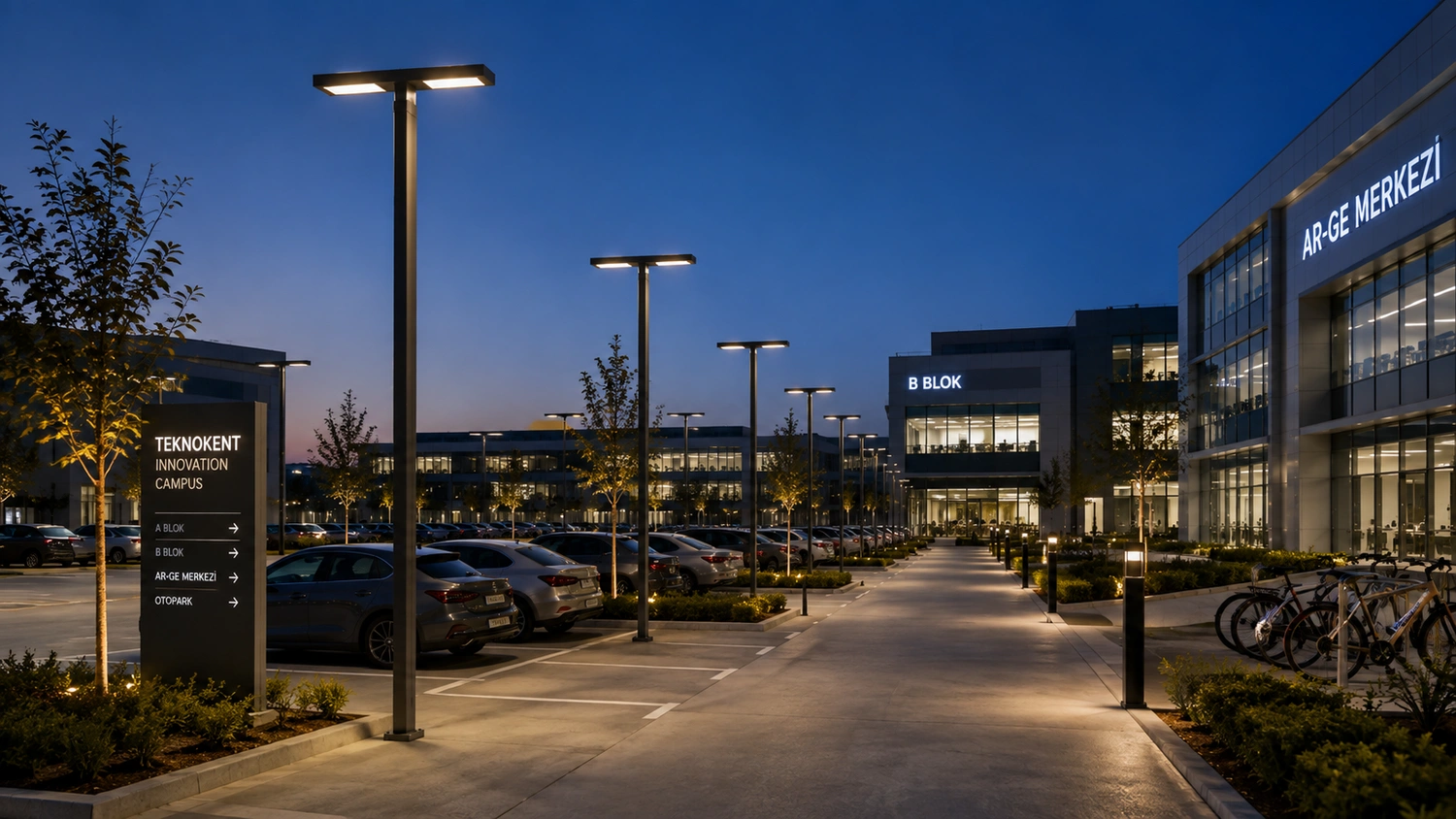
What are street lighting poles actually made from?
Three materials cover almost the entire market. Hot-dip galvanized steel — steel sheet cut, rolled and welded into a conical or cylindrical shaft, then dipped in molten zinc. Extruded aluminium profile — aluminium alloy pushed through a die into tube, then cut and fabricated. Die-cast aluminium — alloy melted and injected into a mould to produce a shape rather than a section. A fourth, composite or GRP, exists in specialist use and is rare in general street lighting.
Most delivered poles combine two of them. A cast decorative base and a cast luminaire housing on a galvanized steel shaft is the single most common specification in decorative street lighting, because it puts the shape where people see it and the structure where the wind load is.
When is hot-dip galvanized steel the right choice?
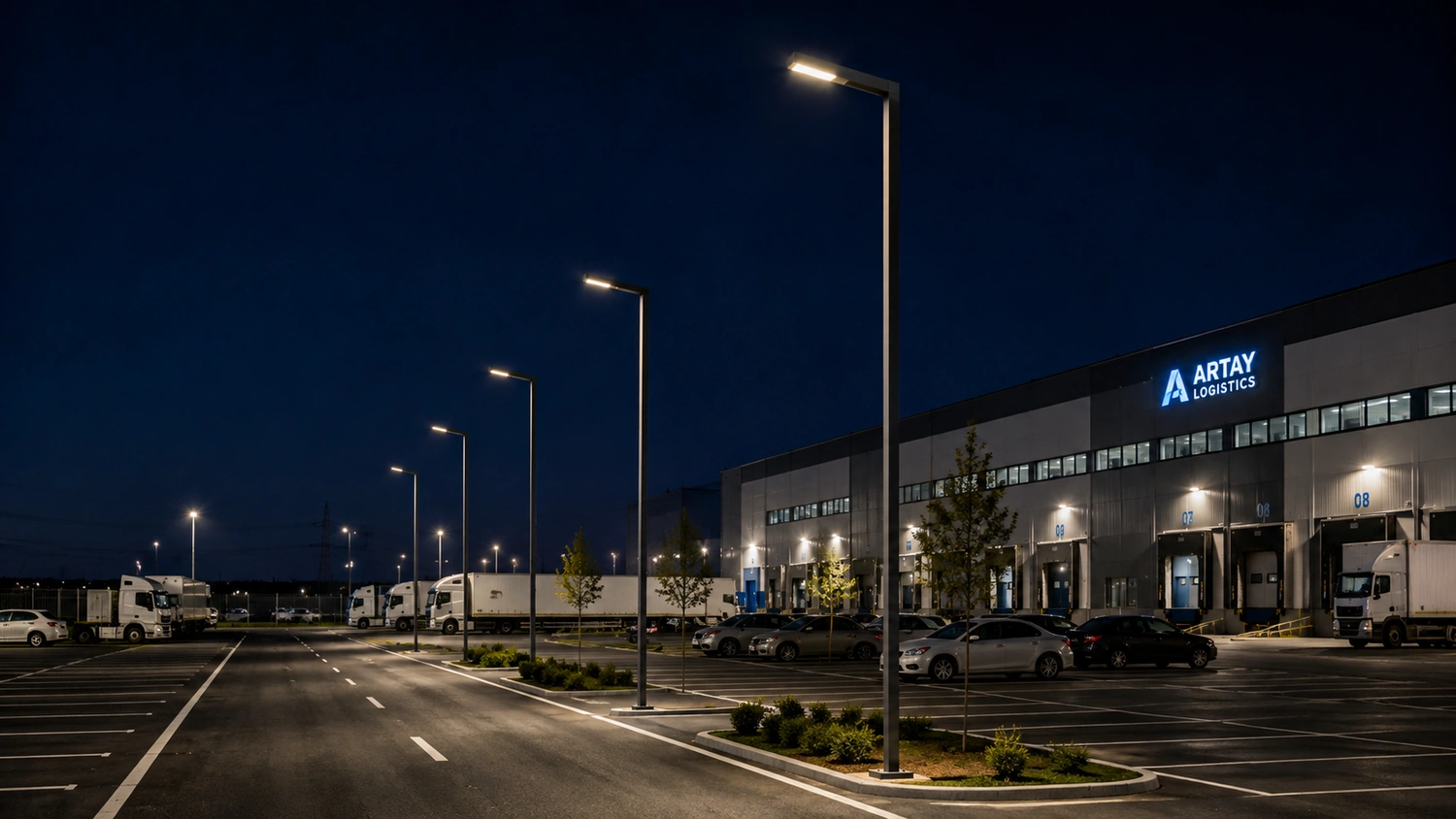
Steel wins on structure and on price. It carries higher loads for less money than aluminium, which is why every 8-12 m road pole you see is steel. Galvanizing to EN ISO 1461 is not paint: the zinc metallurgically bonds to the steel and protects it sacrificially, so a scratch that exposes bare steel still does not rust at that point — the surrounding zinc corrodes first. Inland, that gives decades of service with no maintenance.
Steel is also the material that can be repaired in the field. A pole grazed by a vehicle can be straightened, and damaged galvanizing can be made good with a zinc-rich repair coating. Aluminium in the same situation is usually replaced.
One weakness matters most. Chloride: on the coast, zinc consumption accelerates, and the coating system has to be specified for that environment rather than assumed. This is the point at which aluminium usually becomes the better answer.
Project-specific work on a steel pole means changing height, diameter, wall thickness, arm geometry, door position or base plate pattern. All of these are cutting and rolling parameters, so there is no tooling cost and no minimum order.
When is aluminium the right choice?
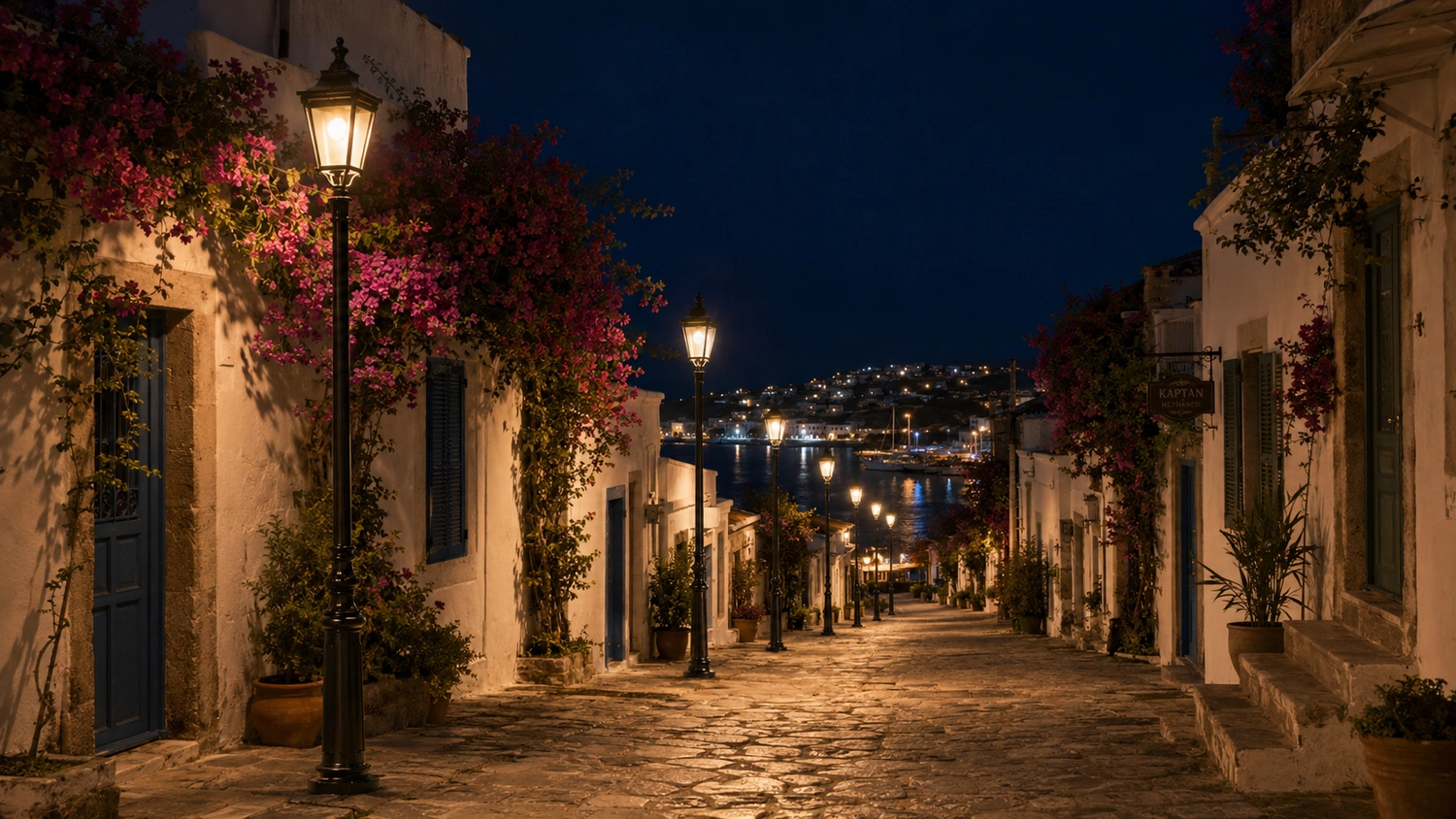
Aluminium does not rely on a coating to survive. It forms its own oxide layer immediately, so its corrosion behaviour is different in kind from steel’s rather than simply better or worse. That is why it dominates three situations.
Coastal and marine sites. Promenades, marinas, island projects and anywhere carrying salt-laden air. This is the clearest case for aluminium and it is worth paying for.
Ground level. A bollard sits in the splash zone, takes irrigation water, de-icing salt and cleaning chemicals, and is the first thing a mower reaches. We do not make bollards from galvanized steel at all — every Artay bollard is aluminium, cast or fabricated from profile.
Where the shape matters. Extrusion produces a section; casting produces a form. If a project needs a fluted column, a base carrying a municipal emblem, or a housing profile matched to a facade, that shape has to be cast, and casting needs a die. Our foundry in Basaksehir casts in EN AC-46000 (AlSi9Cu3) alloy, which is why a project-specific form is routine work here rather than an exception.
Aluminium’s own weaknesses are honest ones: lower stiffness per section, higher material cost, and poorer behaviour under impact repair. For a 10 m arterial pole in an inland city, steel is simply the better engineering answer.
How is aluminium finished, and why does it decide the outcome?
This is the part of the specification that gets written as three words — “electrostatic powder coating” — and then decides how the product looks in year five.
Aluminium is never coated straight from the die or the extruder. Every part first goes through a chromate conversion pre-treatment: the surface is cleaned and a chromate conversion layer is formed on the metal. That layer does two jobs. It gives the coating something to key into, and it stops corrosion creeping underneath the film from the first stone chip or scratch. Electrostatic powder coating follows, applied dry and oven-cured.
Leave the pre-treatment out and a powder coat can look perfect for one season, then lift in sheets from a single scratch. It costs little, it is invisible in the finished product, and it is the step most suppliers never mention. When you compare quotations, ask which conversion coating is used — not just which paint.
Steel or aluminium: side by side
| Hot-dip galvanized steel | Aluminium (profile or cast) | |
|---|---|---|
| Structural capacity | Higher — the default above 8 m | Lower per section |
| Corrosion protection | Sacrificial zinc, EN ISO 1461 | Self-passivating oxide + chromate pre-treatment and powder coating |
| Coastal performance | Needs a specified coating system | Preferred |
| Ground level and bollards | Not recommended | The correct choice |
| Repairable in the field | Yes — straightening and zinc-rich repair | Usually replaced |
| Custom dimensions | Yes — no tooling cost | Yes — no tooling cost |
| Custom shape | Limited to fabrication | Yes, by casting — mould required |
| Relative material cost | Lower | Higher |
What happens where steel meets aluminium?
This is the failure almost nobody specifies against, and it is worth a paragraph of its own.
When two dissimilar metals are in contact and moisture is present, you have a galvanic cell: the less noble metal corrodes preferentially. A cast aluminium base bolted directly onto a galvanized steel shaft, or a stainless fastener through an aluminium flange, will corrode at the joint long before either component fails on its own — and it fails exactly where nobody inspects, at the base, under a cover.
The remedies are simple and cheap: isolate the two metals with a gasket or sleeve, choose fastener materials deliberately rather than by what is in the box, and keep the detail drained so water does not sit in the joint. Ask any supplier offering a mixed-material pole how they handle it. If the answer is vague, the joint has not been designed — it has been assembled.
Which material for which project?
Urban road or arterial, inland, volume quantities. Hot-dip galvanized steel, 8-12 m, specified to EN 40-5 with the wind-load calculation covering the foundation anchors.
Coastal promenade, marina, island. Aluminium, 4-6 m, with the chromate pre-treatment and coating warranty written for coastal conditions rather than a generic figure.
Park, plaza, pedestrian zone. Aluminium at 3-5 m, or aluminium bollards at 0.6-1.2 m. Close enough for people to touch, so finish quality is what will be judged.
Heritage street or a municipality that wants its own identity. Cast aluminium on a galvanized steel shaft, cast to your drawing, with the galvanic joint properly detailed. A new mould is a one-time 4,000-50,000 USD depending on part size, minimum order 1,000-2,000 units, first delivery 7-9 weeks from drawing approval, and every repeat order on that mould ships in 3 weeks with no further mould charge.
Distributor or private-label programme. Any of the above under OEM and private label agreements; we export to more than 33 countries and the mould, once cut, stays reserved for you.
Send a drawing, a 3D model, a photograph or a written specification to info@artaylighting.com and we will return a technical drawing with a wind-load calculation.
Five material mistakes that cost money
- Specifying galvanized steel for bollards. Ground level is the harshest position on the site. Aluminium belongs there.
- Buying a coating without asking about pre-treatment. The paint is not what fails; the interface underneath it is.
- Mixing metals without isolating the joint. Galvanic corrosion at the base is a design decision, not bad luck.
- Using an inland coating warranty on a coastal project. Ask for the warranty to be stated separately for chloride exposure, in writing.
- Paying for a mould you do not need. If your specification differs from a catalogue only in numbers, that is a fabrication change with no tooling cost. Say so before anyone quotes a die.
Related guides
- What drives the cost of a lighting pole — what moves the price, what a quotation leaves out, and how to compare two of them.
- Coastal lighting poles — chloride, chromate pre-treatment and what changes in a seaside specification.
- Ancient cities collection — the fifty models named after ancient Anatolian settlements, with the site behind each name.
- Street lighting pole types — how to choose the right one for your project.
- Street lighting pole manufacturers in Turkey — what nine manufacturers publish about casting, standards and lead times.
- Street lighting poles — heights, galvanized steel and what a custom pole costs.
- Decorative lighting poles — styles and materials for parks, plazas and pedestrian zones.
- Outdoor lighting poles — types, heights and materials for any outdoor project.
- Street lighting poles for Iraq – what Ministry of Electricity specification D-13 requires, and why EN 40 alone is not an answer there.
- Lighting poles for Georgia – zero duty since 2008, diagonal cumulation with the EU, and what 2,435 mm of rain a year does to a pole.
- Lighting poles for Croatia – HRN EN editions, the exact date CE marking became mandatory, and designing for the bura.
- Lighting poles for Serbia – SRPS EN designations, CE alongside the domestic 3A mark, and a Serbian-language Declaration of Performance.
- Lighting poles for Kosovo – CE recognised in law, but duty on industrial goods is still being phased out.
- The EN 40 series explained – which part does what, which one carries CE marking, and what EN 40 leaves to other standards.
- Garden and landscape lighting — mounting heights, EN 13201 P classes and the obtrusive light zones that decide a park or garden scheme.
Specifying bollards? Bollard lights: how to choose and specify them — why they are aluminium and not galvanized steel, glare control at eye level, and which standard actually applies.