


Street lighting poles fall into four families: conical and cylindrical steel poles, die-cast aluminium poles, extruded aluminium profile poles, and decorative and architectural poles. Which one your project needs is decided by three things in this order — the mounting height the lighting design calls for, the corrosion environment, and whether the form has to be unique to your project. Everything else is detail.
This guide covers each family, what it is genuinely good at, the standards that govern it, and what changes when you need a pole that is not in anyone’s catalogue. Artay Lighting has cast aluminium in its own die-cast foundry in Istanbul since 1999 and fabricates steel and extruded aluminium poles alongside it, so the comparisons below come from making all three rather than selling one.
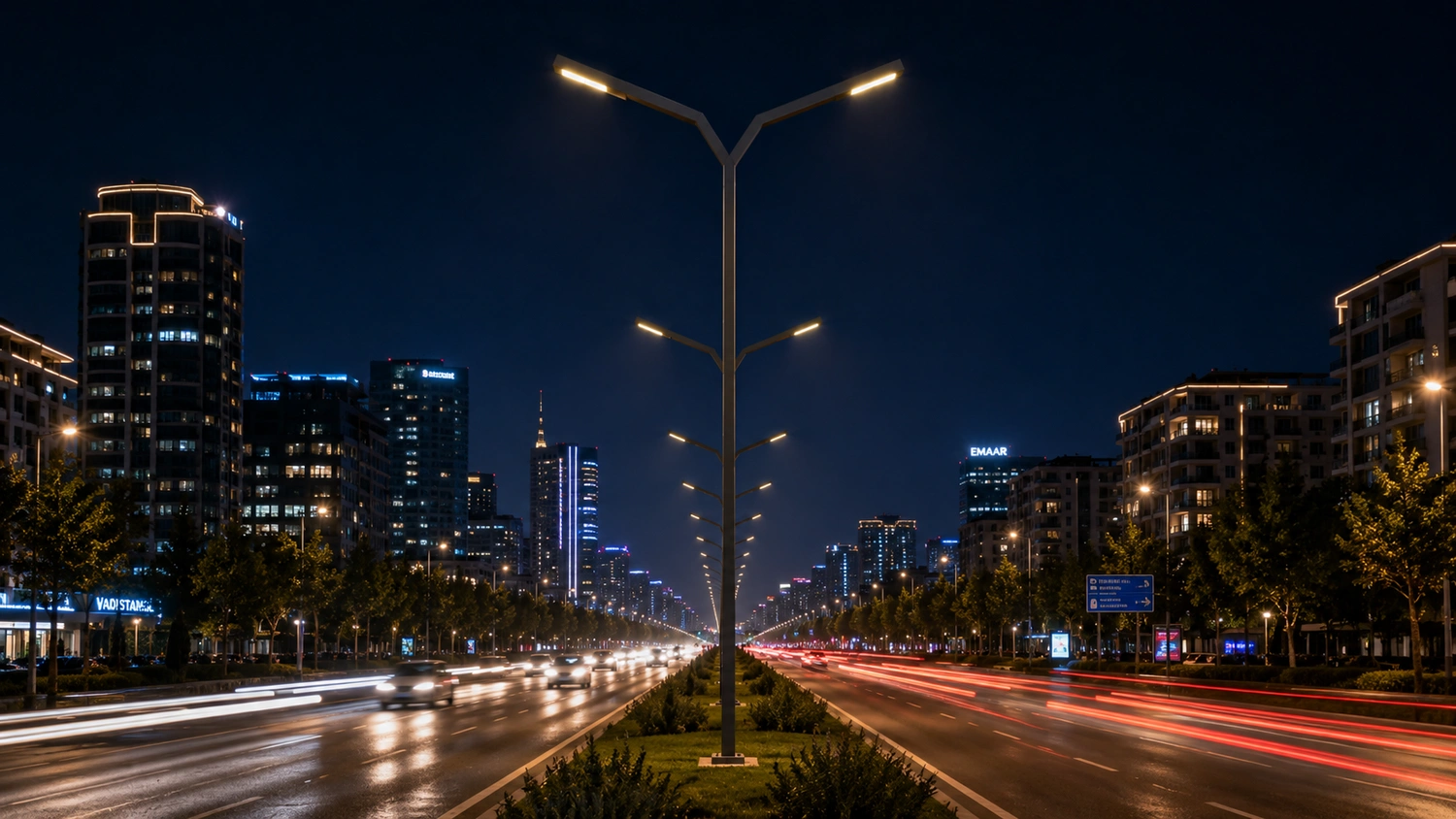
What are the different types of street lighting poles?
| Pole type | Typical height | Material | Best for | Custom form? |
|---|---|---|---|---|
| Conical (tapered) steel | 6-12 m | Hot-dip galvanized steel | Urban roads, arterials, highways | Dimensions only – no mould needed |
| Cylindrical steel | 4-10 m | Hot-dip galvanized steel | Residential streets, car parks, campuses | Dimensions only – no mould needed |
| Extruded aluminium profile | 3-8 m | Aluminium alloy profile | Coastal sites, pedestrian zones, plazas | Section and finish – no mould needed |
| Die-cast aluminium | 3-6 m | EN AC-46000 (AlSi9Cu3) | Decorative bases, emblem work, unique housings | Yes – cast to your drawing |
| Bollard | 0.6-1.2 m | Cast aluminium or profile | Paths, landscape, building approaches | Yes – cast or fabricated to drawing |
The families are not interchangeable. A 10 m road pole is a structural component carrying wind load and a luminaire at the end of a lever arm; a 4 m plaza pole is largely an aesthetic decision with a modest structural requirement. Specifying a decorative pole where a road pole belongs is the single most expensive mistake in this category, because it usually surfaces after installation.
Which material should you specify: galvanized steel, die-cast aluminium, or extruded profile?
Hot-dip galvanized steel is the default for road and highway lighting and it deserves to be. It carries the highest loads for the lowest cost, it can be repaired in the field, and galvanizing to EN ISO 1461 gives decades of service inland. Its weaknesses are weight, and coastal chloride exposure where the coating system has to be specified carefully. Custom work on a steel pole means changing height, diameter, wall thickness, door position or bracket geometry – all cutting and rolling parameters, so there is no tooling cost and no minimum order. We have set out the head-to-head reasoning, with the zinc corrosion figures behind it, in aluminium or galvanized steel: which should you specify.
Extruded aluminium profile is the right answer on the coast and anywhere weight matters. Aluminium forms its own oxide layer, so corrosion behaviour is fundamentally different from steel rather than simply better. Profile poles are also cleaner-looking, which is why they dominate pedestrian zones and plazas. Custom work here means selecting section, wall thickness, height and finish; again no mould, no tooling charge. Artay buys in extruded profile – like most of this market, we do not run an extrusion press – and fabricates poles, luminaire bodies and bollards from it.
Die-cast aluminium is the only one of the three that can produce a shape. Casting melts alloy into a mould, so a base carrying a municipality’s emblem, a fluted column, a housing profile matched to a facade – none of these exist without a die. This is what our foundry in Basaksehir does, in EN AC-46000 (AlSi9Cu3) alloy, and it is the reason a project-specific form is normal work here rather than an exception. Custom work means exactly that: we cut the die. The trade-off is real and stated below.
Most real poles are a combination. A common and sensible specification is a cast aluminium decorative base and luminaire housing on a hot-dip galvanized steel shaft – the shape where it is seen, the structure where it is needed.
Can a street lighting pole be made to your own design?
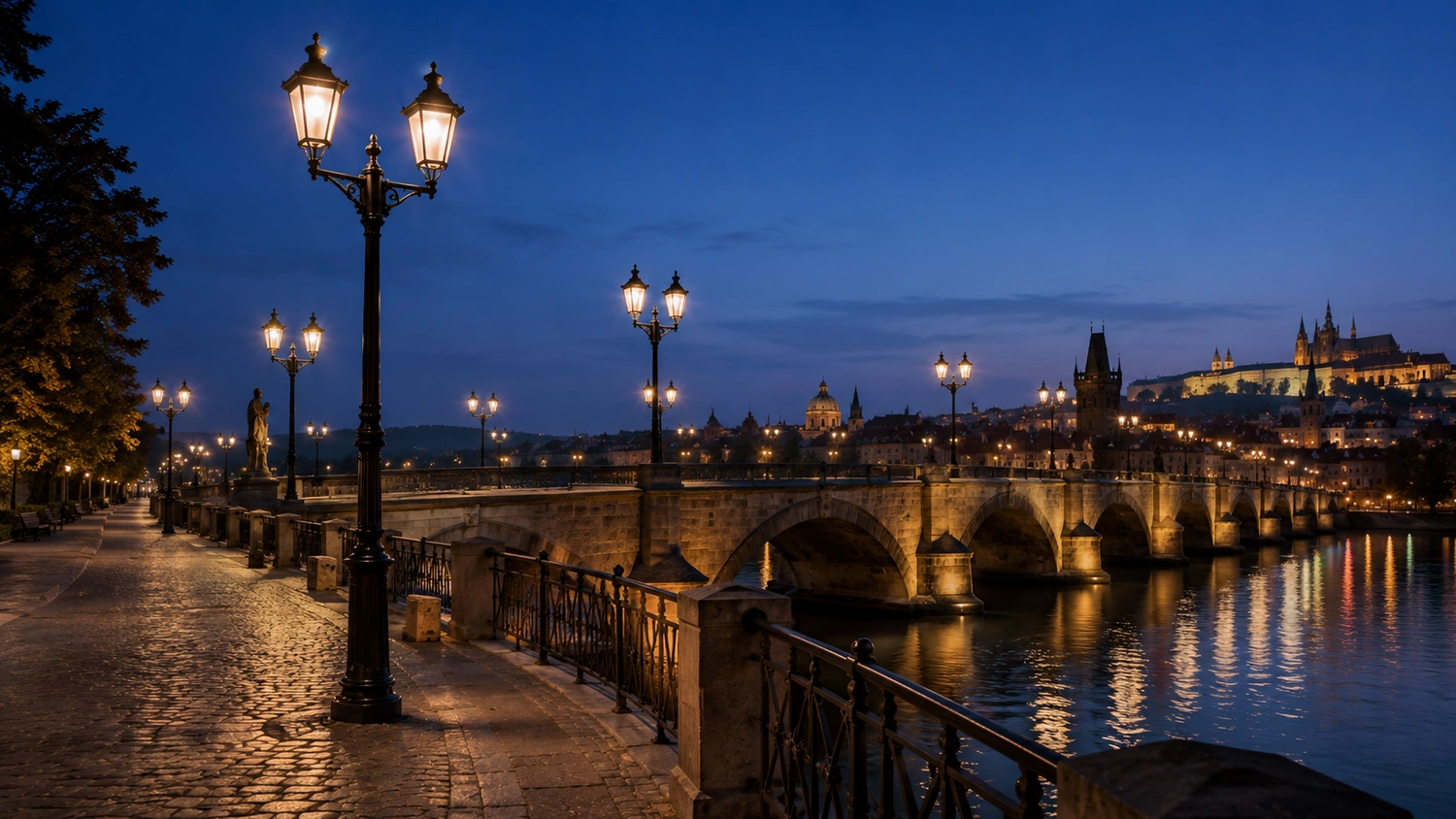
Yes, and this is worth separating into two different questions, because suppliers answer them as if they were one.
Changing the dimensions of an existing pole – height, diameter, wall thickness, arm length, door position, base plate pattern, RAL colour – is available from almost any fabricator, ours included, with no tooling cost and no minimum order. If your specification differs from a catalogue only in numbers, say so and ask for a price; you should not be paying for a mould.
Changing the form itself is a different job. A shape that does not exist has to be cast, and casting needs a die. Send a technical drawing, a 3D model, or simply a photograph of a form you have seen somewhere, and we return a technical drawing with a wind-load calculation. If it is approved, we cut the die in our own tool shop.
Here are the figures, because almost nobody in this market publishes them. A new mould is a one-time cost of 4,000-50,000 USD depending on part size, and the tool then stays reserved for you. Minimum order on a new mould is 1,000-2,000 units. Cutting the die takes 4-6 weeks and series production a further 3 weeks, so a first delivery lands 7-9 weeks after drawing approval. Every repeat order on that mould ships in 3 weeks, with no further mould charge and no minimum – which is why the second project with a custom form is usually easier than a standard one.
If your quantity does not reach that minimum, say so early. In many cases the form you want can be achieved in fabricated steel or profile instead, and we will tell you that rather than sell you a die you do not need.
How is a steel lighting pole actually made?
A steel lighting pole begins as a flat plate, not as a tube. The plate is cut to a long tapering shape, folded into a cone on a press brake, closed with a single weld running its whole length, and only then galvanized. Almost every dimension a specifier writes into a tender – height, base and top diameter, wall thickness, door position – is fixed at the cutting stage, which is why changing those numbers carries no tooling cost while changing the material changes everything downstream.
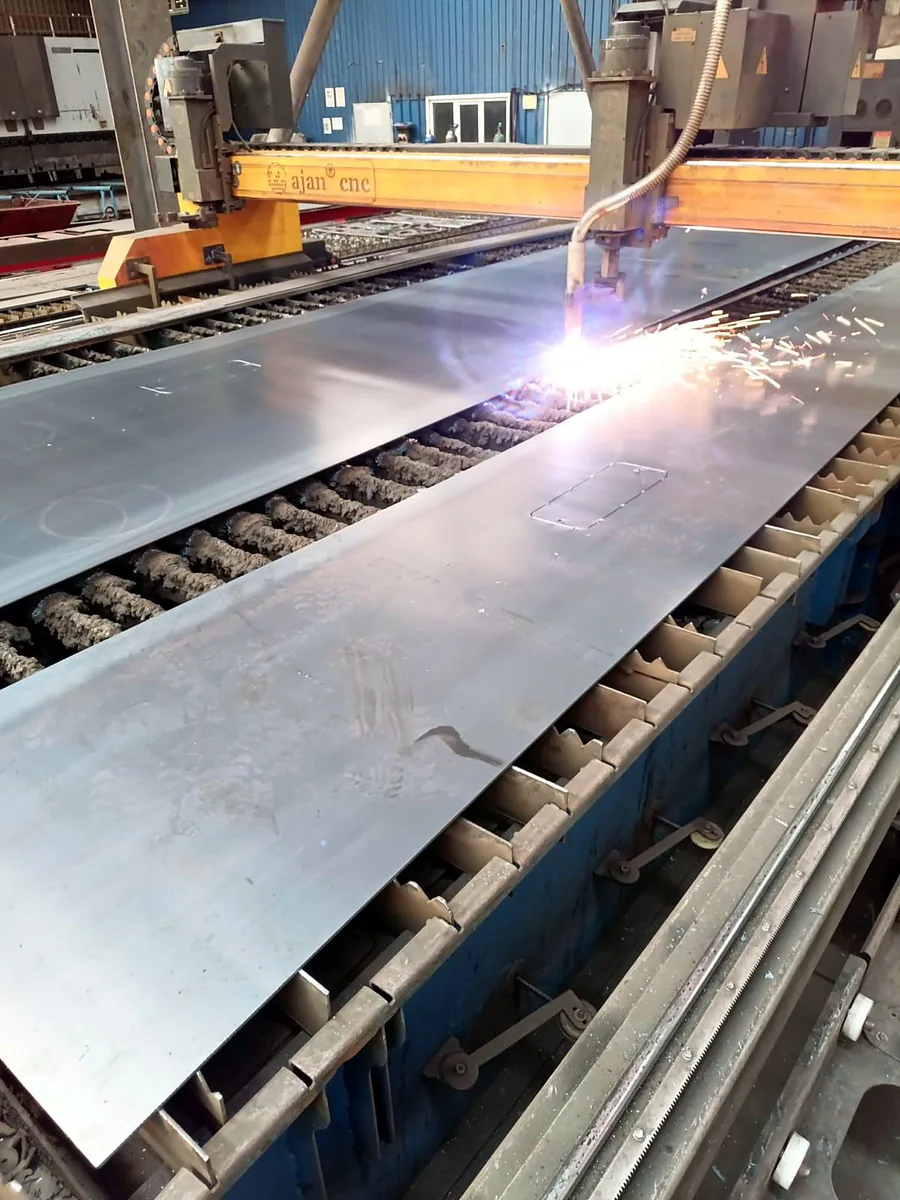
A pole of a different height, or with its door on the other side, is a different cutting file and nothing more. This is the practical reason dimensional changes are quoted without a surcharge across this category, and it is worth knowing before accepting a supplier who prices them as custom work.
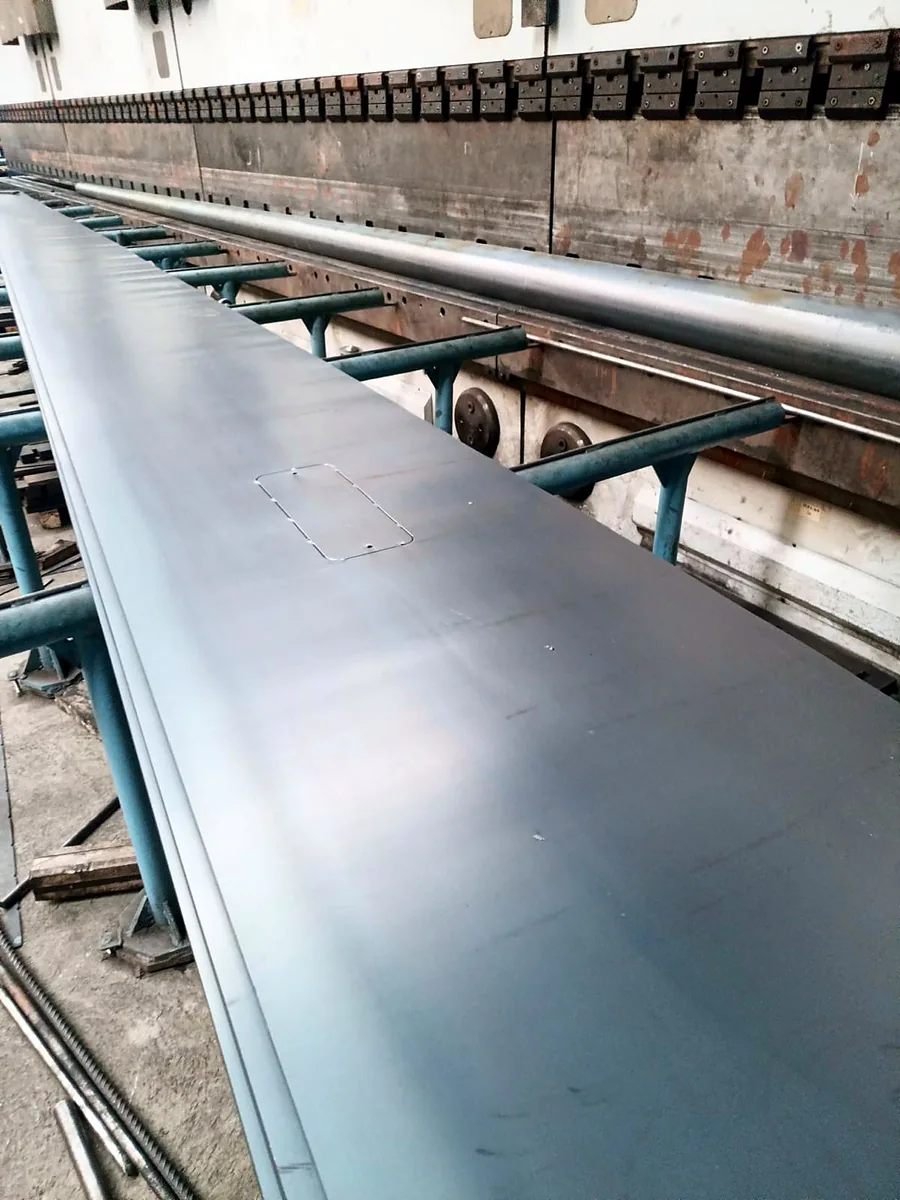
Folding is where a fabricated conical pole separates from a rolled tube. Both can meet the same wall thickness on paper, but the conical section puts material where the bending moment is highest and tapers it away where it is not, which is why conical poles reach useful heights at weights a parallel tube cannot match.
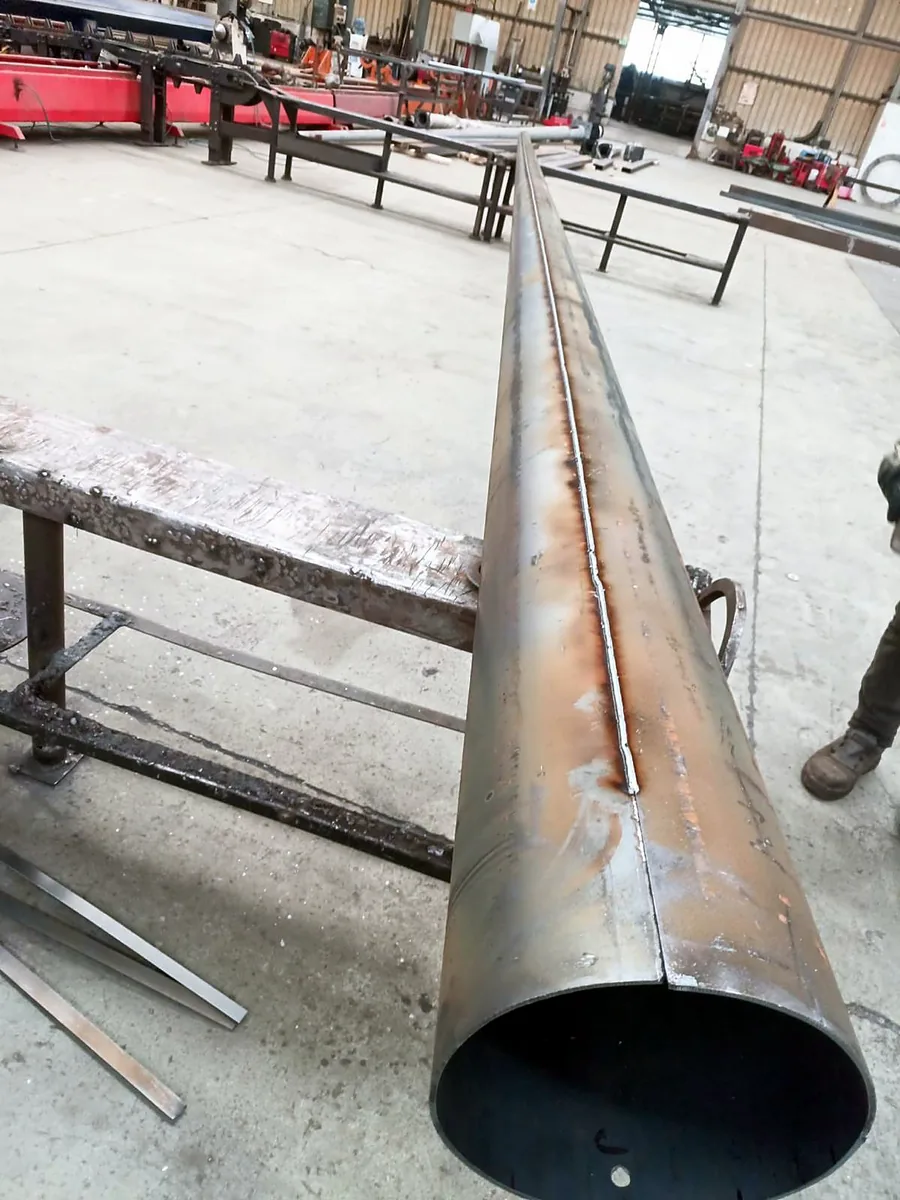
After welding, the base flange, the door frame and any bracket sockets are fitted, and the assembled shaft goes to hot-dip galvanizing to EN ISO 1461. Galvanizing before coating rather than after is not a preference – the zinc has to be applied to bare, pickled steel, and a pole painted first has to be stripped.
How do you choose the right pole height?
Height comes from the lighting design, not from the pole catalogue: the required illuminance and uniformity on the road surface, the road width, and the spacing the layout allows. As a working orientation before the calculation is done, pedestrian areas and park paths are normally lit from 3-5 m, residential streets and car parks from 4-6 m, urban roads from 6-8 m, main roads and arterials from 8-12 m.
Two things change with height and both are frequently missed. Wind load rises sharply, so the pole, the base plate and the foundation anchors all have to be verified together – EN 40-3-1 covers characteristic loads and EN 40-3-3 verification by calculation. And maintenance access changes: above roughly 10 m, relamping needs a platform, which belongs in the operating cost the tender is compared on.
Which standards govern street lighting poles?
The EN 40 series is the reference for lighting columns: EN 40-2 for dimensions and tolerances, EN 40-3-1 for characteristic loads, EN 40-3-3 for verification by calculation, EN 40-5 for steel columns and EN 40-6 for aluminium columns. Galvanizing is governed by EN ISO 1461, and luminaires by EN 60598-2-3. For Turkish municipal and TEDAS work, TEDAS type-project approval is the document that will be asked for.
Artay luminaires are CE marked, and our manufacturing is certified to TSE under TS EN 40 for lighting columns and to ISO 9001 for quality management. Ask us for the certificate with its scope and expiry, and ask every supplier the same – a certificate whose scope covers luminaires does not cover poles.
What else belongs in the specification?
Beyond type, material and height, five details decide whether a delivered pole causes problems. Bracket and mounting: side-entry arms and post-top spigots are not interchangeable, and the spigot diameter has to match the luminaire – 60 mm and 76 mm are the common sizes. Base type: flange-plate poles bolt onto a cast foundation and can be replaced after a vehicle impact; root-mounted poles are planted directly and are cheaper but harder to replace. Access door: position, size and lockability, plus the earthing point inside it. Coating: polyester powder over a properly prepared surface, with the film thickness and the warranty stated in writing – and stated separately for coastal and inland conditions. Cable entry and sealing, which is where water gets in when it is left to the installer to improvise.
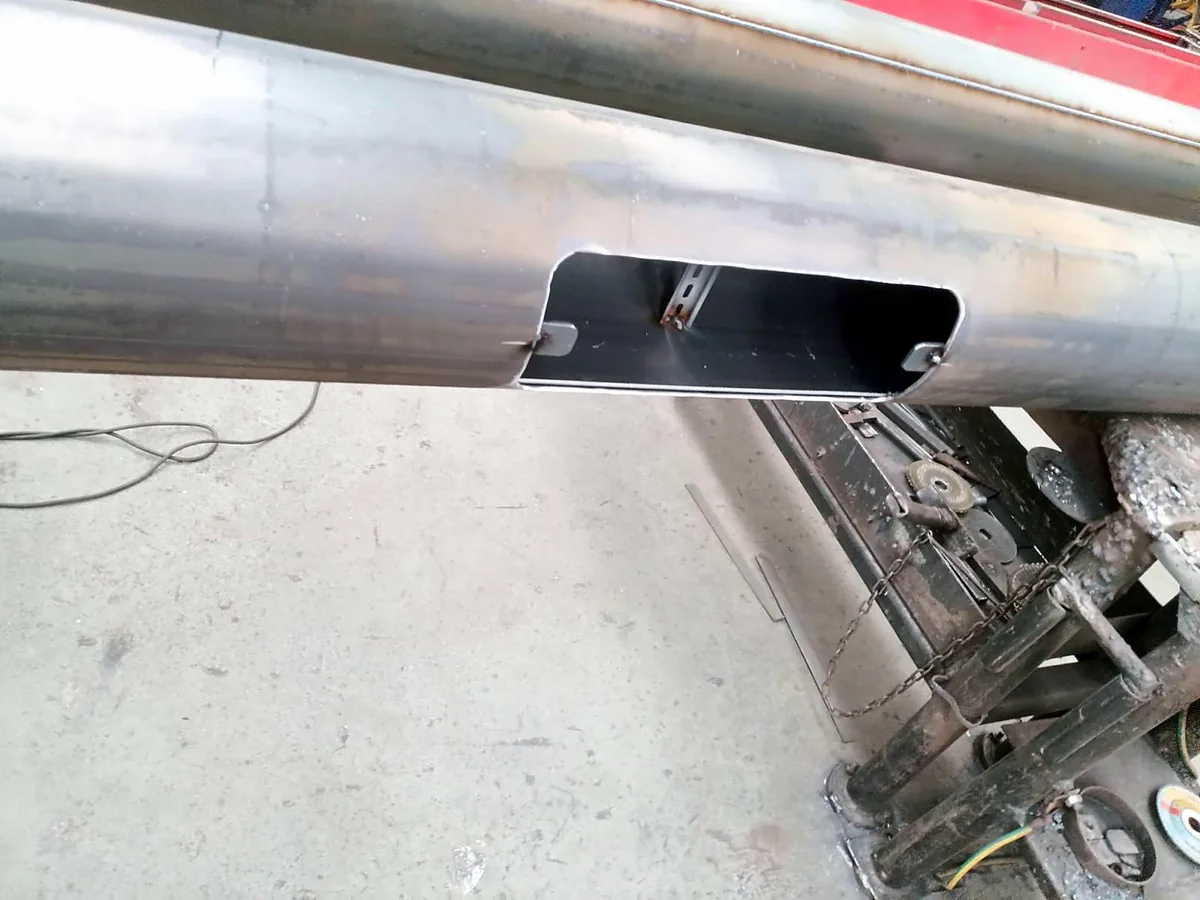
All five are also where a pole can be tailored to a project without any tooling cost, which is worth remembering before anyone reaches for a custom mould.
Which pole type is right for your project?
Urban road or arterial, volume quantities. Conical hot-dip galvanized steel, 8-12 m, flange plate, single or double arm. Specify to EN 40-5 with the wind-load calculation covering the foundation anchors.
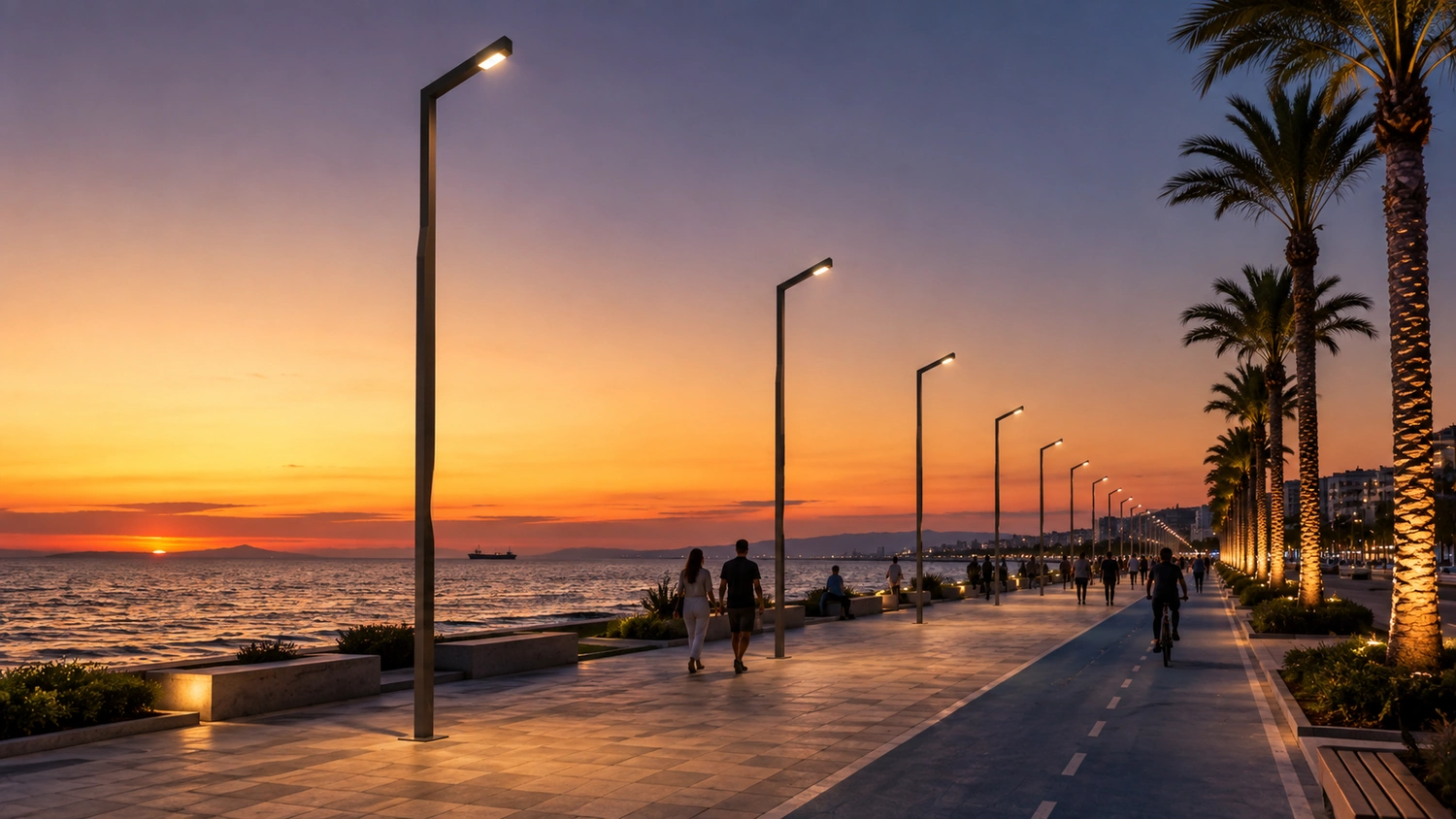
Coastal promenade, marina or island project. Extruded aluminium profile or cast aluminium, 4-6 m, with the coating system specified for chloride exposure and the warranty written for coastal conditions rather than a generic figure.
Park, plaza or pedestrian zone. Aluminium at 3-5 m, or bollards at 0.6-1.2 m where glare control matters more than reach. This is the family where decorative form usually earns its cost, because people are close enough to see it.
A heritage street, a signature square, or a municipality that wants its own identity. Die-cast aluminium on a galvanized steel shaft, cast to your drawing. This is the case the foundry exists for: an emblem in the base, a column profile matched to the architecture, a pole family unique to one city.
Distributor or private-label programme. Any of the above under OEM and private label agreements. We export to more than 33 countries and produce under other brands’ names as a matter of routine; the mould, once cut, stays reserved for you.
Send a drawing, a 3D model, a photograph or simply a written specification to info@artaylighting.com and we will come back with a technical drawing and a wind-load calculation.
Related guides
- What drives the cost of a lighting pole — what moves the price, what a quotation leaves out, and how to compare two of them.
- Coastal lighting poles — chloride, chromate pre-treatment and what changes in a seaside specification.
- OEM and private label manufacturing — mould cost, minimum order and repeat-order lead times.
- Ancient cities collection — the fifty models named after ancient Anatolian settlements, with the site behind each name.
- Street lighting poles — heights, galvanized steel and what a custom pole costs.
- Street lighting pole manufacturers in Turkey: how to compare them — what nine Turkish manufacturers publish about casting, standards and lead times.
- Decorative lighting poles — styles and materials for parks, plazas and pedestrian zones.
- Modern outdoor lighting poles — LED-ready designs for streets, parks and new developments.
- Outdoor lighting poles — types, heights and materials for any outdoor project.
- Modern lighting poles — design and material choices for public spaces.
- Street lighting poles for Iraq – what Ministry of Electricity specification D-13 requires, and why EN 40 alone is not an answer there.
- Lighting poles for Kuwait – why MEW/S-1 excludes street lighting columns, and what applies instead.
- Lighting poles for Greece – the ELOT technical specification a tender actually cites, CE marking and the A.TR certificate.
- Lighting poles for Croatia – HRN EN editions, the exact date CE marking became mandatory, and designing for the bura.
- Lighting poles for Serbia – SRPS EN designations, CE alongside the domestic 3A mark, and a Serbian-language Declaration of Performance.
- Lighting poles for Kosovo – CE recognised in law, but duty on industrial goods is still being phased out.
- Lighting poles for Moldova – the EN 40 series named by the energy regulator, and a 64-degree annual range.
- The EN 40 series explained – which part does what, which one carries CE marking, and what EN 40 leaves to other standards.
Specifying bollards? Bollard lights: how to choose and specify them — why they are aluminium and not galvanized steel, glare control at eye level, and which standard actually applies.
Steel or aluminium? Lighting pole materials: galvanized steel or aluminium — coastal performance, chromate pre-treatment, and what happens at the joint where the two metals meet.